Catégories
Around the world etourism and technology Management Marketing @en

Interhome: a good example of best practices

At the 2007 ITB Berlin Trade Fair, Simon Lehmann, CEO of Interhome, spoke on the topic of Customer Relationship Management (CRM), an approach adopted by Europe’s largest holiday rental accommodation agency. The impressive results testify to CRM’s undeniable impact when used in conjunction with a personalized marketing strategy.

What is CRM?

The goal of CRM is to collect as much information about one’s clients as possible, and to combine these individual pieces of information into targeted, personalized marketing initiatives in order to recruit and retain clients and encourage them to spend more.

Interhome and the reassessment of previous practices

Interhome has offices in 20 countries. Each year, it rents over 20,000 vacation homes and apartments to over 500,000 guests, for over 7 million overnight stays and sales of 120 million euros. In order to promote an inventory of this size to such a large number of potential clients, Interhome uses a variety of communication, promotion and sales methods including distribution networks, advertising, a sales force, catalogue, and the internet. Although the company’s management team believes this number of methods is unavoidable, it is also convinced that using them prevents it from developing an accurate assessment of the profile and habits of its clients.Reflecting on this fact, Interhome’s managers began to ask themselves whether the impressive catalogues listing all the available homes were, in fact, relevant or effective. Producing them involved costs which were not necessarily offset by the relatively low reservation (or conversion) rate. The company also realized that client‑related information was distributed throughout a number of databases.

Know your client

It was then that Interhome decided to invest in CRM in order to consolidate and improve its client‑related information. This new database stores three different kinds of information:

  1. history of the consumer’s contact with the company (catalogue orders, reservations, comments and complaints, etc.);
  2. data collected during each consumer contact (visiting the site, requesting information, reserving a home, etc.) regarding his/her vacation preferences;
  3. complementary information obtained via surveys (lifestyle, purchasing habits, household composition, habits and leisure activities, etc.).

Thanks to this information, Interhome was able to develop a system that creates a profile for each customer. These profiles list the customer’s profile, his/her loyalty index and the complete history of his/her interactions with the company.

FGC_2007-07_interhome_img1

  • prior expenditures
  • preferred destinations
  • preferred travel periods
  • favourite type of accommodation
  • family situation: number of children and their ages
  • leisure activities, interests and motivating factors
  • preferred method of communication

CRM enables companies to gather the information they need to create detailed consumer profiles which they can then use to implement marketing strategies based on personalized offers.

1‑to‑1 marketing

In order to bring consumer preferences in line with their offer, Interhome developed a new method of classifying residences based on the client’s stated preferences: spa, family, sports, comfort, pleasure, rest, snow and dream destination. Interhome analyzed the client profile in order to identify the product categories likely to interest him/her. It then analyzed the characteristics of each vacation home (location, accommodation capacity, price, availability, etc.) so it can propose to each of its clients places that are perfectly suited to their preferences. Henceforth, instead of receiving an exhaustive catalogue, the client receives a brochure listing no more than 8 prospective residences that both fulfill his/her requirements and are available during his/her preferred travel periods. This also enables Interhome to prioritize homes that will generate the highest profit margins.

FGC_2007-07_interhome_img2

This personalized brochure is either mailed or e‑mailed depending on the customer’s stated preferences. Automatic follow‑ups are generated by the system and all reservations can be made through Interhome’s website. It goes without saying that all action (requests for information, reservations, etc.) generated by this mailing will be added to the client’s profile, thus further increasing Interhome’s effectiveness.

Telling results!

Lehmann emphasized that the cost per reservation is 10 times lower with the personalized, or “1 to 1” marketing approach than it is with the undifferentiated, catalogue approach. Some of the results he mentioned are as follows:

  1. a 30% reservation rate following a request for information (as opposed to a 7% rate with the catalogue);
  2. the average rate is one reservation for every 12 direct mail messages, a higher‑than‑average conversion rate for direct marketing;
  3. significant savings on postage, since two‑thirds of mailings are done electronically;
  4. a savings of 500,000 euros on the cost of printing catalogues;
  5. because the company was able to prioritize homes that would generate the highest profit margins as well as profitable complementary sales (transportation, car rentals, ski tickets, trips, packages, etc.), revenue per reservation increased by up to 30%;
  6. every year, over 200,000 new client‑related information items are added to the database.

During his presentation, Lehmann did not reveal how much his company spent to develop such an effective CRM system but the results he presented lead one to believe that the move was a profitable one.

Will other tourism companies follow suit?

Many tourism companies have already gathered a significant amount of information about their clients and a number of these companies would probably benefit from adopting the same type of CRM that Interhome did. After all, client data is a gold mine; once data is collected, all the company has to do is put the data to work to make its marketing efforts more targeted and effective. Source: * Lehmann, Simon, “Best Practices in CRM & Personalisation, 1 to 1 Marketing @ Interhome,” PhoCusWright conference – ITB Travel Technology, Berlin, March 8, 2007.

Catégories
etourism and technology Management Marketing @en

Web marketing for SMEs

You may think it’s impossible to increase your company’s Internet effectiveness with a marketing budget of only $3,000, but a variety of low‑cost strategies exist, whether you need to enhance your Web presence or conduct an email campaign. According to Merrill Lynch, over 39% of all travel‑related transactions will be conducted online by 2007. Many hotels already book over half their rooms online. For other businesses, embracing the World Wide Web is more difficult and takes longer to produce results.

Start with a Website

The first basic principle is that no business is ever too small for a website. Many web design tools do not even require specialized computer knowledge. This accessibility is just one reason that the number of online blogs has mushroomed in the last year (over 100 million).

However, the best solution is to call on the services of a web design firm, who will be able to produce professionally looking content that delivers the desired result. By the way, not all site design techniques are created equal. It is crucial that the selected supplier be well-versed in tourism marketing. On average, a small inn would need to set aside a budget of $2,000 to $4,000 for the design and creation of a website.

Search engine optimization

If a site is well designed, it will be easily found by search engines. However, there are many strategies for increasing site traffic. The technique of search engine optimization can be very effective, but it may be too expensive for organizations with limited budgets.

Another, less expensive, way to increase visibility is to get other sites to include links to yours. Link popularity is an important criterion used by search engines like Google and Yahoo when ranking sites in search results. Incoming links to a site are interpreted as a « vote of confidence » by search engines and are considered in placement rankings. In a Google search using the same terms, this can make the difference between appearing on page 1 or page 10. Regardless of the strategy used, time is also an important factor. Often, the longer a site has been online, the more success it enjoys with search engines.

Develop networking opportunities

One does not need an enormous marketing budget to build online business connections, simply some time. Here are some strategies for increasing the number of sites with links to yours:

  • Explore and identify the main points of contact with potential customers. Place a link to your organization on sites containing some tourism-related content such as your local business development centre, a directory of small hotels and inns, a tourist attraction in your region, a snowmobile club, your regional tourism association, etc.
  • Create links on sites frequented by potential customers, even if they are not exactly travel-related (e.g., a bird club, wedding planner, chamber of commerce, etc.).
  • Target only high-quality sites relevant to both your product and your clientele.
  • Ensure your website address is clearly visible in all your communication tools, especially your email signature.

One way to assess the performance of your referencing strategy and the true contribution of your business partners, in terms of incoming links, is through tracking tools such as Alexa. This site instantly supplies very pertinent data on any website, completely free of charge. As an example, we used Alexa to analyze the site for Auberge des Falaises in Charlevoix (Illustration 1). Although not an exact science, Alexa produces statistics like traffic generated, number of pages visited, percentage increase in the past three months, etc. If a site generates enough traffic, one can also get graphs illustrating the breakdown of visitors and visits during a specified time period.

Illustration 1

Alexa1

The Related Links section in particular contains highly relevant information to help you better understand the influence of other sites in relation to your organization. Alexa draws up a list of the sites that send visitors to your site (Illustration 2). This data enables you to quickly see which sites send the most visitors and their traffic ranking, whether you are familiar with these sites or unaware of their existence.

Illustration 2

Alexa2

Finally, it is interesting to find out where else your visitors browse. If you have a lot of traffic but very few transactions, this information will give you a better idea of where your lost customers are going. You will also find out more about your potential customers’ interests. In our example, the most popular site among browsers of the Auberge des Falaises site was that of the Corporation du parc régional du mont Grand-Fonds (Illustration 3).

Illustration 3

Alexa3

Convert visitors into customers

The ultimate goal of attracting a visitor to one’s site is obviously to encourage this potential customer to make a reservation. However, according to search engine statistics, only 3.7% of visits to hotel websites translate into a sale. What usually makes the difference is the site’s professional appearance and usability.

The firm eMarketer has published a ranking of the best online marketing tactics, as well as the worst performing, according to a survey of tech-savvy online advertisers (Figure 1). Paid search ads and house email lists are the two methods that received the highest ranking. On the other hand, sending emails using rented lists was relatively ineffective.

Figure 1

CP_2007-02_marketing_web_grphq1

Email segmentation

If you operate a small business, segmenting your email lists may be an effective marketing strategy. Purchasing email lists from specialized distributors may well be beyond your means and this strategy offers mixed results at best, so the ideal solution is to build your own email list.

Segmenting your list means grouping current and potential customers together by what they have in common: interests, purchasing behaviour, demographics, etc. Compiling this data enables you to more effectively target your efforts, adapt your message and obtain a better response rate than you would with blanket email marketing initiatives. On average, specialized firms that conduct such email campaigns charge anywhere from $15 to $150 per month, depending on the size of your list.

Regardless of the company’s size, a well-segmented house email list can encourage customer loyalty and increase sales, convey information relevant to the needs of potential customers, and create a high-quality channel of communication with customers.

There are many tools and strategies available to business owners; one has only to adopt them and use them effectively. We live in an era when the role of technology is to further the development of small business, not hinder it. With a minimum of investment, some good advice, several hours of research, a little curiosity and a dash of resourcefulness, you will be well positioned to market your business like the big players.

Sources:
– eMarketer. « What Works, and What Doesn’t, in Online Marketing, » February 7, 2007.
– Goodman, Gail. « Email Segmentation for Small Businesses, » iMedia Connection, August 30, 2006.
– Husin, Linda. « Booking Is the Keyword, » ehotelier, November 29, 2006.
– Salerno, Neil. « So, You Have a New or Improved Hotel Web Site – Now What – How to Promote Your Web Site, » HotelOnline, November 2006.
– Salerno, Neil. « Production Benchmarks for Your Hotel’s Web Site, » HotelOnline, August 2006.
– Max Starkov and Jason Price. « Strategic Linking in Hospitality: Build a Robust Link Popularity, » HotelOnline, September 2006.

Catégories
Customer segments Marketing @en

Familiar with tweens? You should be…

A recent development in marketing has been to define a new customer segment: « tweens » or preteens. While young people ages 9 to 14 are no longer children, they are not yet teens, either. With surprising purchasing power and influence on a variety of family decisions, they are an attractive market. Although manufacturers have recognized the potential of this market, the travel industry is just beginning to clue in. In fact, tweens now make up another type of traveller. This does not mean family vacations are a thing of the past; they have simply changed direction – to follow tweens!

What is a tween?

« Tween » is a marketing term used to describe preteens ages 9 to 14. Straddling childhood and adolescence, they have a foot in both worlds. When it comes to technology, they rule: they are online longer, adopt and master new technologies faster than adults and participate in a wider variety of online activities. In Canada, 85% of tweens have access to a computer, 82% to a video game system, 25% to an iPod or MP3 player and 16% have a cell phone (this number rises to 26% among 12 to 14 year-olds).

While their favourite medium is still television (50%), 27% of American 9 to 14 year-olds watch it on the internet. Figure 1 lists their favourite online activities.

activites_tweens

Purchasing power and influence on family decisions

Spending by tweens has doubled every decade for the past 30 years. In the US today, between spending their own money and influencing their parents’ purchasing decisions, this segment controls or influences approximately US$260 billion in spending. According to the BRANDchild study (conducted by Millward Brown among 2,000 young people ages 9 to 14 years in several countries), tweens influence 80% of their parents’ brand purchases.
Tweens2

In 2005, there were approximately 2.5 million tweens in Canada and their average annual income was CAN$1,155. This means they controlled CAN$2.9 billion of their own money in addition to influencing another CAN$20 billion in family purchases.

It is this financial power that differentiates tweens from earlier generations; never has this age group exercised such influence. The generation is populous enough to ruin a brand it does not like or catapult another to success by adopting it. The influence of tweens is particularly noticeable when it comes to choosing a restaurant, groceries and even cars, but they can also affect travel-related decisions:

  • Over 40% of young people believe they have some or a lot of influence when it comes to choosing a vacation destination.
  • Although only a small percentage of tweens feel they have a strong influence on hotel choices, 59% believe they have some influence. Also, 20% of parents say they « always or sometimes » ask for their tween’s opinion when selecting a hotel.
  • Tweens believe they influence the planning of vacation activities 55% of the time.

achat_tweens3

They may be plugged in, but do they shop online?

Surprisingly, tweens and teens are shopping online in increasing numbers, thanks to prepaid gift cards. Major companies now offer prepaid credit cards designed especially for young people. The Visa Buxx card is just one example and can be used everywhere Visa is accepted, particularly online!

Tweens5

Receptiveness to advertising

Young people in the United States, Australia and Great Britain see an average of 20,000 to 40,000 commercials per year and spend 60% more time in front of the television than at school. Two surveys conducted by The Harris Interactive Youth and Education Research Group in May 2006 offer more insight into young people’s attitudes towards advertising:

  • Tweens attach a great deal of importance to objects and brands « cool. »
  • Friends have a tremendous influence on their preferences and they want what their friends have. Their consumer choices are also influenced by advertising.
  • More than earlier generations, tweens are very receptive to celebrity-driven advertising.
  • Young people say they are most influenced by television commercials (54%), magazine ads (23%) and movie-theatre commercials (19%).
  • Advertisements for food seem to attract the most attention from tweens.

Generally speaking, marketing specialists use the strategy of treating tweens like teens. The marketing industry has forced children to grow up faster and studies show that those aged 11 and older no longer consider themselves children.

Ethical debate

There is a major debate concerning the ethics of tween-oriented marketing. By treating these young people like mature, independent consumers, advertisers are taking parents out of the decision-making process and thereby making children more susceptible to unhealthy messages about body image, sexuality, relationships and violence. This is an emotional issue that creates sharp divides. Although the tourism industry is less involved in such marketing, it is important to be aware of the issues.

Some tourism examples

In terms of the tourist experience, tweens are often too old for activities aimed at children and too young for teen and adult activities. Very few tourism-based businesses offer products specifically for tweens. However, some businesses have adapted their products for this segment.

Club Med offers two programs designed for 11 to 17 year olds: Junior Club Med, which supervises young people and organizes group activities (beach volleyball, trapeze, trampoline, sailing, inline skating, tennis, etc.), and Club Med Passworld, an exclusive new zone with special high-tech equipment. Specially-trained counsellors facilitate the discovery of new activities designed specifically for them and encourage their development and socialization.

Some Four Seasons hotels (Atlanta, New York, London, Chicago, Philadelphia and Toronto) have added a youth concierge to their service teams to deal specifically with tweens and teens. These hotels have also conducted focus groups with tweens in the aforementioned cities to identify cool things to do locally. They now have an updated idea of this clientele’s preferences and interests. These hotels also provide special amenities to this customer category, offering things like popcorn, recent magazines and films, an indoor pool, and balanced meals designed especially for them. For its part, the Ritz Carlton in South Beach, Miami, provides a tech centre for tweens and teens.

Finally, the Florida tourism portal lists activities aimed at tweens, like scuba diving, an indoor rink for roller-skating and skateboarding and water skiing.

Be among the first!

Given their economic muscle, tweens will no doubt continue to be targeted by businesses. In addition, since relatively few tourism businesses target this clientele in particular, doing so would probably provide a competitive edge. A few suggestions for reaching this market segment:

  • Carefully analyze their likes, dislikes and influences, to offer products and services tailor-made for them.
  • Speak their language: tweenspeak is the system of abbreviations, symbols, icons and numerals used for text messaging and in chat rooms. This new language enables them to communicate with each other around the world without even speaking the same language!
  • Keep wait times to a minimum. Although no longer interested in colouring, tweens still don’t have much patience.
  • Offer cool products traditionally aimed at older customers, but ensure they are closely supervised to reassure parents.

Sources:
– Business Wire. « iGillottResearch Finds Significant Opportunities for Wireless Devices in the Tween Segment, » July 22, 2005.
– De Mesa, Alycia. « Marketing and Tweens, » Business Week Online, October 12, 2005.
– eMarketer. « What Do Kids, Tweens and Teens Do Online? » www.emarketer.com, October 10, 2006.
– Lindstrom, Martin. « Branding Is No Longer Child’s Play! » Journal of Consumer Marketing, Vol. 21, No. 3, 2004.
– Martin, Suzanne. « Advertising to Youth: What Youth Want And What Advertisers Need to Know, » Trends & – Tudes, Harris Interactive, Vol. 5, No. 7, August 2006.
– Media Awareness Network. « Special Issues for Tweens and Teens, » www.media-awareness.ca.
– Shohan, Aviv and Vassilis Dalakas. « He Said, She Said, They Said: Parent’s and Children’s Assessment of Children’s Influence on Family Consumption Decisions, » Journal of Consumer Marketing, Vol. 22, No. 3, 2005.
– YTV, Corus Media. « 2002 YTV Tween Report: Special Kidfluence Edition » and « Winter 2006–YTV Kids Trend Report. »


Catégories
Accommodation

Marketing 101 for small inns and hotels

Marketing is never an easy undertaking, especially for small inns and hotels with limited time and budgets. While the following does not provide an exhaustive list of advice, options and how-tos, it does offer a checklist of various suggestions for improving visibility.

Turn an improvised strategy into an effective one

Starting with some general information (e.g. the typical guest at a small inn or hotel is a leisure tourist who has selected this type of lodging for its ambience and personalized service, and more often than not, these customers reserve by phone) and doing a little background work (defining the target audience, determine distinctive features, etc.), a business can begin the marketing process.

Exploiting the opportunities of the internet

Although the internet is not currently the means by which most small inn and hotel guests make their reservations, it is still a primary source of information. More and more people are automatically turning to the Web when they need to find or recommend a place to stay.

While the internet offers a sea of opportunities, there is also the danger of drowning in it. For this reason it is not enough to have a Web presence; the site must also be searchable. However, understanding how search engines work is a complex task requiring time and expertise. At the same time, because these engines evolve and change along with the competition’s positioning, there must be a strategy for periodically reviewing the process.

Trying to compete with the major players on their own territory is a waste of time, so small inns and hotels are better off using other methods. Instead of associating the site with the most popular terms typed into search engines, focus on those used by the target audience. For example, many such people will refine a search by typing « Saguenay inn » rather than « Quebec hotel. » Another option is to sponsor a link on the search result page of a local festival.

Improve and assess the effectiveness of methods used

Once again, to make a product stand out from competing major hotel chains, one must innovate and adopt original presentation methods (visuals, ways of communicating, etc.).

  • Clearly define the target audience so reach it effectively
  • Develop a specific niche (such as family parties, company activities, honeymoons, special events, etc.)
  • Establish partnerships with companies – even those outside the industry – to develop an unusual product or innovative marketing strategy

To measure the validity of promotional efforts and retain only the most effective measures, ask guests where they found about the establishment and how they made their reservation.

Sources:
– Carroll, William J. et al. « A Comprehensive Guide to Merchandising Bed and Breakfast Inns, » Cornell University, School of Hotel Administration, The Center for Hospitality Research, CHR Tools, No. 8, August 2006.
– Hursh, Patricia. « Winning Big with a Small Search Marketing Budget, » [searchenginewatch.com], August 28, 2006.

Catégories
Management

Is your destination in decline?

« Tell me who visits your destination, and I’ll tell you whether it’s in decline! » This was the bet made by Stanley Plog when he developed his model of matching traveller profiles with phases in a destination life cycle. When a destination is visited by large numbers of tourists, it has reached a critical phase in this cycle; to avoid decline, destinations must understand that tourism growth must be planned and controlled.

The life cycle of a destination: from discovery to decline

There are five different traveller profiles in Stanley Plog’s model: from venturers to dependables. According to Plog, these various tourist personality types are associated with phases in a destination life cycle because the type of tourist who visits a region indicates the area’s level of development, and in some ways determines its life cycle. Figure 1 illustrates the various phases in a tourist area’s life cycle (TALC), which were developed by R.W. Butler, Ph.D, in 1980.

Figure 1

MLa_talc


Discovery
During this phase, a little known destination is visited by the first venturers in search of new discoveries and unexplored areas. Through word-of-mouth, the area begins to attract more tourists.

Discovery – Development
Once venturers have begun exploring a destination, they are followed by near-venturers. This creates the first major wave of visitors who – because they are more demanding in terms of services – initiate real development.

Development
With the destination’s notoriety growing, the media, always looking for something new, show up in the region and enthusiastically report on its charm and cachet. This then « condemns » the destination to rapid growth and the arrival of so-called centric travellers. Growth continues and everyone is happy: the number and value of hotels increases; jobs multiply; government coffers overflow with taxes; many areas are enhanced; local stakeholders smugly congratulate themselves on finding a gold mine and believe that tourism is the perfect industry to ensure longevity and unlimited growth. By this time, venturers and near-venturers have abandoned the area and mass tourism has arrived.

This phase is crucial because when a destination is really booming, no one cares about planning or controls. For this reason, it is important to take action at this stage to manage development and define a long-term vision.

Maturity – Decline
Riding this wave of popularity, a destination is too often lax in its regulations: the number of hotels continues to grow; fast-food restaurants pop up everywhere; shops, movie theatres and other forms of entertainment multiply; wholesalers develop packages. The area starts to get « touristy » and there is unchecked development. The destination is unable to resist the easy money of tourism and unsustainable development. Under such pressure, the destination loses its distinctiveness and looks like any other destination. The centrics now stop coming and the near-dependables start to frequent the area. According to Plog, if 30% or more of a destination’s reservations come from package deals, the destination has begun a decline that will last for several decades.

Decline
Despite the boom, decline is now inevitable. The destination now only attracts dependables, who prefer to visit and revisit well-established known quantities. Though often more loyal, this clientele spends less, stays a shorter time and is less active. The destination becomes less lucrative. Deserted by the other tourist segments, the market gets smaller. Managers don’t understand what has happened because arrivals kept rising. The destination must then try to differentiate itself and reposition itself in the market.How many times has this happened? Emerging destinations suddenly become popular and then are ignored as travellers head to newly discovered destinations. Over-crowding leads to decline and a different traveller clientele, and then everything changes!

Obviously, Plog’s model does not apply to every destination, but it does provide food for thought. Furthermore, a destination may find itself in a different position on the curve depending on whether one is considering local, regional, national or international travellers.

Can decline be overcome?

According to Michael Leven, a 45-year hotel-industry veteran, only an earthquake can revive a product at the end of its life cycle. One way to overcome decline is for a destination to develop a new product to give itself a boost or reposition itself and change its marketing strategy. As an example, Leven points to the cruise industry, which languished for many years and then successfully rallied by developing products to meet the needs and preferences of different types of travellers, from Antarctic cruises to classic luxury cruises to thematic cruises.

The case of Costa Rica

A group of researchers from the Cornell University School of Hotel Administration used Plog’s model to examine the profile (behaviour and preferences) of American travellers to Costa Rica. From 1999 to 2003, the number of tourists in Costa Rica grew 20%, with Americans accounting for the biggest jump, 30%. The country’s beautiful landscape make it one of the most popular destinations in Central America and it definitely attracts more international travellers than its neighbours (Belize, Salvador, Guatemala, Honduras, Nicaragua and Panama).

With such an increase in tourist arrivals, one would say the destination is in the development phase. The study findings confirm this as well, indicating that the country is becoming more popular with centrics and that fewer near-venturers are visiting now. If Costa Rica wants to continue riding this crest, it must orchestrate its growth so as to avoid excessive or inappropriate development, because it enjoys a high profile as an ecotourism destination.

Plog’s model applied to US visitors to Canada

Although statistics show Americans are travelling abroad in record numbers, the drastic drop in their numbers to Canada could signal the decline of Canada as a destination. On the other hand, perhaps the exchange rate, the price of gas and upcoming heightened security measures are the only reasons behind this dip. Still, near-dependables and dependables (who make up the smallest percentage of the population) may continue to visit Canada, while the centrics (who make up a majority of the population) will abandon it for more exciting or attractive lands. It may be time for Canada to start courting other American states, revamp and reposition its product for its neighbours or even target other clienteles.

Maintain attractiveness, or perish!

If there were a magic formula, many destinations would have adopted it long ago. However, once a destination understands how the life cycle works, it can control development and maintain its ideal position. Here are a few suggestions:

  • Understand what makes the destination attractive and capitalize on its features and distinctiveness
  • Develop new products that reflect travellers’ changing socio-demographics and values
  • Become familiar with the profile of tourists
  • Plan and control development
  • Preserve the original character of spaces
  • Do not allow business to call the shots
  • Orchestrate marketing for the target clientele
  • Encourage locals to take part in the success of the experience (after all, residents don’t want to lose their quality of life and the things that make their community special)

According to Stanley Plog, destinations that do not plan their development are only harming themselves – by losing the charm that attracted venturers in the first place!

Sources:
– Enz, Cathy A. et al. « Competitive Destination Planning: The Case of Costa Rica, » Cornell University, Center for Hospitality Reports, Vol. 6, No. 12, October 2006.
– Plog, Stanley. « Why Destination Areas Rise and Fall in Popularity, » Cornell Hotel and Restaurant Administration Quarterly, Vol. 42, No. 3, June 2001.
– Weiermair, Klaus. « Le vieillissement – Une réalité qui s’impose aux destinations touristiques, » Espaces, No. 235, March 2006, p. 18-20.

Catégories
Customer segments

Make the most of market segmentation with geomarketing

As marketing experts promote the benefits of segmentation and niche marketing, the tourism sector would do well to investigate geomarketing. This new approach classifies and geographically pinpoints population groups to both identify potential markets and determine the best ways to reach them.

There’s « geo-info »…

Although it is crucial for companies in the tourism industry to know their markets and clientele, many of them view compiling lists of client postal codes as an onerous task.`

It is, however, well worth the effort since grouping clients geographically enables companies to pinpoint their current markets. Knowing the regions and municipalities their clients come from enables marketing executives to more effectively target their advertising messages. While this time-honoured practice provides companies with information about their current client base, it does not allow them to identify and penetrate new markets – the primary basis for growth.

… and then there’s geomarketing!

Briefly, geomarketing is a marketing concept that uses geographical data to analyze consumer behaviour and expectations. The value-added factor derives from the application of location-based information, combined with segmentation.

By examining demographic, economic and sociological data through the filter of the environment in which client segments live, geomarketing enables tourism companies to make new connections between geography-based market data and client segmentation based on consumer habits.

Birds of a feather…

One of the principles of geomarketing is that people with similar tastes, values and behaviour will tend to congregate. It therefore follows that, once the company has compiled information on its customers’ lifestyle types, it can use geomarketing to identify the neighbourhoods where this type of clientele represents a significant percentage of the population.

Consumer segmentation systems by lifestyle types

The current popularity of this marketing approach has led a number of research firms to develop consumer segmentation systems by lifestyle types. Some of the more well-known ones are:

  • PRIZM CE from the Canadian company Environics Analytics, based on the PRIZM system developed by American company Claritas. This system classifies Canadians into one of 66 groups (www.environicsanalytics.ca);
  • PSYTE@ADVANTAGE, by Mapinfo Corporation and Compusearch Canada, divides the Canadian population into 65 different lifestyle segments (www.mapinfo.com);
  • FOCUS, by Quebec’s Optima Marketing, has a different approach; it divides the population along provincial and territorial lines, with 20 segments in Quebec alone (www.optimarketing.com).

Each of these companies has drawn on information from a variety of sources, such as Statistics Canada or the Print Measurement Bureau (PMB), in order to develop client segmentation systems that take into account demographic, economic and consumer data.

What can it do for you?

If your company or organization wants to try this approach, read on for a basic introduction to geomarketing:

Step 1: Find out where your clientele comes from:

  • Determine which segment(s) of your clientele you want to target by this approach (pleasure or business, summer or winter, etc.). This classification usually focuses on a number of factors: reason and frequency of visits, choice of activities, services used, average spending, etc.
  • Use postal codes to determine where the clients in each of the segments come from. Choose a research firm to create a map that represents this information visually.
  • Identify the areas (regions, cities or neighbourhoods) with a high concentration of your clients. Note absolute values as well as penetration rate (percentage of clients in terms of total population).
  • This will help you pinpoint your « success areas », i.e., those areas where your company’s clientele comes from.

Step 2: Next, identify the client lifestyle types originating in each of these success areas:

  • Find a company that specializes in geomarketing and choose a segmentation system that identifies lifestyle types by residential area.
  • Have the geomarketing specialist help you analyze each of your chosen geographical areas and identify the lifestyle types that represent the highest percentage of area residents.
  • Compare these sociodemographic descriptions (habits, interests, consumer profile) with the characteristics displayed by your clients on-site, in order to identify the lifestyle type(s) that correspond to these clientele segments.
  • This will enable you to identify the lifestyle types of your clientele – or, at least, that segment of your clientele targetted by this process.

Step 3: Find new areas where clients from the same lifestyle segment are likely to live:

  • Have the geomarketing specialist help you draw up a list of places where much of the population has a lifestyle profile similar to the one displayed by your current clientele.
  • You will obtain a list of areas (regions, cities or neighbourhoods) in which the residents are more likely to be interested in your product or service since they have the same lifestyle profile as your current clientele.

If your company plans to follow up by implementing a marketing plan, geomarketing tools can also generate the kind of information that will maximize your campaign’s effectiveness. For example:

  • Identifying the postal codes of high-potential areas means you can pinpoint the best strategies to use for mass-mailings or newspaper inserts;
  • Combining a specific aspect of a consumer profile (such as interest in a certain activity) with a list of pre-selected postal codes enables you to purchase or rent address lists for a targetted mailing;
  • Identifying the reading habits (newspapers, magazines, etc.) of your selected profiles enables you to maximize the effectiveness of your media advertising budget;
  • Identifying purchasing habits not related to travel and tourism also paves the way for the creation of non-traditional business alliances and partnerships.

Make your client database work for you

The more varied and specific kinds of information you have about your clients, the more marketing opportunities you have at your disposal. Since it is increasingly becoming both impossible and unprofitable for companies to try and reach every customer out there, it is high time they focussed on currently available client data. Geomarketing could be an interesting way for some of these companies to put that data to use.

Sources:
– Institut d’analyse géographique (ISG). Qu’est ce que geomarketing?, [www.iag.asso.fr] www.iag.asso.fr/questions/geomarketing.htm.
– Latour, Philippe. Geomarketing, vite!… mais pas trop, [www.visionarymarketing.com] visionarymarketing.com/articles/geomarketing.html.
– Niot, Carine. Géomarketing: un nouvel outil au service des entreprises, Indexel [www.indexel.net], January 3, 2002. www.indexel.net/doc.jsp?id=1341.

Catégories
Marketing @en

« Seduce » your clients!

Within ten years, more than half of the world's population will be living in cities. Tourism regions can get ready to capitalize on the business potential represented by stressed-out urbanites. Mutually beneficial relationships could develop between city-dwellers in need of a short-term getaway and the surrounding areas, rich in wide-open spaces and numerous opportunities for relaxation.

Hoping for a magic solution

Most participants who attend conferences, conventions and workshops are hoping to discover the next big trend that will magically solve all their problems. All too often, they are presented with information they already know: growth in short-term trips and nearby destinations, rapid urbanization, extending the tourism season, strong competition among destinations, etc. Is there anything to be learned here?

How about combining trends?

We all know about the rapid growth of urban populations. By 2015, more than half of the world's population will be city-dwellers; by 2020, close to 90% of Canadians will be living in the country's 25 greater metropolitan areas.

« Urbanization » means a large number of tired, stressed-out people, many of whom are desperate to escape to the country and enjoy nature. Rapidly increasing urbanization, combined with the growing trend towards short-term stays, could well be the magic solution we have all been hoping to find.

First seduce, then pounce

Rural areas are blessed with a natural resource that can meet the physical and mental needs of city-dwellers year-round. How can these stressed-out individuals resist the invitation to relax, slow down, drink in the fresh air, escape the rat-race, reconnect, enjoy interacting with others, savour a sense of well-being… these all constitute persuasive arguments for companies eager to attract this kind of clientele.

Some Club Med brochures have been designed with this principle in mind. The first two or three pages flaunt the country's charms and highlight its most seductive aspects. The contact information for the relevant Club Med offices is printed on the final page, to capitalize immediately on the customer's decision to purchase.

Seductive marketing

Your « seduction campaign » will be even more effective if, in addition to highlighting your region's assets, you segment the information based on the lifestyles of your prospective clientele. For example, the marketing strategy developed by the CDT (Comité départemental du tourisme or Regional tourism committee) of Orne, France focuses on the « sheer pleasure » of its weekend getaways:

Experience a weekend of Sheer Pleasure in the Orne region of Normandy, France.

  • If you love golf or riding, click the Great Outdoors icon
  • If you prefer setting your own pace, click the Relaxation icon
  • If you'd rather laze in the sun, click the Beach Bum icon
  • If you're the get-back-to-nature type, click the Country Style icon


The Aube region in Champagne, France is marketing itself as « Aube, the place you've been longing for ». A number of French tourism organizations have used the slogan « Go ahead; indulge yourself » to emphasize the pleasure factor of their weekend getaways, resorts and other tourism products. And, the phrase « No artificial colours or additives » is the perfect endorsement for a region's natural charms!

Perhaps reading these examples has inspired you to develop a strategy that relies less on enumerating the various activities on offer, and more on seducing the potential consumer with your region's unique appeal.

Sources:
– Dany, Carole. « Enjeux et pratiques de désaisonnalisation dans les territoires ruraux, » Agence de communication Cadran Solaire, colloque Imatourisme 2004, Moliets – Landes, France, 5 octobre 2004.
– Laliberté, Michèle. « Boule de cristal, que nous prédis-tu?, » Réseau de veille en tourisme, 31 mai 2004.

Catégories
Management

Cookies, vacations, and other choices…

Many people believe that consumer satisfaction in every conceivable area will automatically increase with the number of choices – but not Barry Schwartz. In his book The Paradox of Choice: Why More Is Less, he explains that the more alternatives people have, the more stressed-out and indecisive they become as they struggle to make the best possible choice. This belief was confirmed in a taste test, where those consumers who were offered a four-fold increase in jam choices registered a decreased purchase rate.

Who has the time to choose?

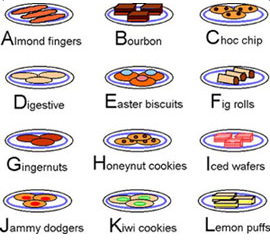
We are constantly dealing with choices. American supermarkets stock 285 different kinds of cookies, 21 of which are of the chocolate chip variety. The drug store has 40 kinds of toothpaste, there are 110 choices of TV (high definition, different kinds of screens, sound quality, etc.) – and it’s the same story, from insurance to jeans, and even for schools. And now, there is a dizzying array of rates and airline companies waiting to whisk you off to your destination, as well as hundreds of activities offered closer to home, on which people can spend their free time – if they have any left!

People associate choice with the independence, freedom and power they confer. It would seem evident that the opportunity to make more and more choices in every conceivable area would tend to increase consumer satisfaction. However, according to Barry Schwartz, the opposite is true: people think they want to have more choice but – the more they have, the less satisfied they are with the choices they make.

 MLa_biscuits

Who has time to look at the 300 different kinds of cookies on the supermarket shelves before making a decision? When faced with such overwhelming choice, the consumer will usually purchase his regular brand, without paying the slightest attention to at least 75% of the brands clamouring for his attention and his grocery dollars.

Too many choices negatively affect consumers

Human nature being what it is, too much choice makes us stressed out, unhappy and dissatisfied. Why? Because we don’t have the time or the information to make an informed decision. Suppose it turns out to be the wrong decision? Suppose I could have found something better? Will I end up regretting my choice?

Modern consumers end up putting more effort in making a decision, and less into enjoying the results. And while it’s true that choices made in the cookie aisle are not earth-shattering, the higher the amount of money involved, the more important the decision becomes. For example, how can anyone make an informed decision about which cell phone to buy? By the time you’ve compared the vast array of models, options and plans available, the technology will already have changed!

In this context, two types of personalities emerge: the « maximizer » (the one who makes every effort to find the best possible option in terms of price and quality) and the « satisficer » (who establishes criteria to reduce the number of possibilities and thus facilitate the decision-making process).

Schwartz maintains that it,s better to be a « satisficer », since his way of thinking leads to less dissatisfaction. After all, do we really need the best product in every single category, along with all the stress that searching for it involves? Or could we simplify our life by settling for a « good enough » kind of choice that we can live with?

What if we applied the « jam principle » to tourist products?

Living as we do in a society with extremely varied tastes, it is natural to suppose that if merchants limit their offerings, they are likely restricting their potential clientele. However, this statement is only partially true, for a greater number of products does not necessarily translate into higher sales, as illustrated by the following test, in which consumers were asked to taste different kinds of jam and then decide whether or not to buy them.

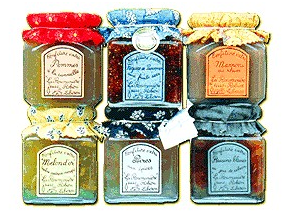
Close to one third of the people who only had to choose between six kinds of jam bought a product. When the number of choices was increased to 24 ? with the obvious intention of appealing to a greater range of tastes ? the purchase rate dropped to 3%! It seems that the stress of having to choose between so many products outweighed any interest the consumer had in acquiring the product.

MLa_confiture

If more choice attracts more people, but fails to persuade them to buy, then merchants have not accomplished their primary objective of making a sale. Barry Schwartz believes most people are comfortable choosing between 6 to 12 different alternatives. Here are a few ways we can put into action the lessons to be learned from this paradox of choice:

  • Restrict choice. On your brochures or website, group products according to theme. Or, show only your top 5 to 10 products on the site, and provide a link where customers can go to see more. Try it; the results will surprise you.
  • Facilitate choice. Faced with a confusing array of products, the consumer needs help making a choice; the merchant who can quickly and simply convey the advantages or distinctive features of a certain product has made the consumer’s life easier and beat out the competition. The best price guarantee instituted by many large hotel chains to attract internet users to their sites is an example of this approach.
  • Provide positive reinforcement. Once the sale is made, many clients agonize over their decision. This is the time to deliver some positive reinforcement; provide your client with some solid reasons for his choice, so he has can counter his neighbour’s claims that he paid half as much for something twice as good.
  • Target specific markets. Faced with such a multitude of products and the difficulty of making a choice, the client must restrict his alternatives. Faced with a multitude of clients – and the difficulty of differentiating his product from the many competing products – the merchant must follow the same approach: he must focus his efforts on reaching the people most likely to be interested in his product, i.e., segment his clientele.

Sources:
– Hurst, Mark. « Interview: Barry Schwartz, author, -The Paradox of Choice », [www.goodexperience.com/blog/archives/2005_01.php#000106], 20 janvier 2005.
– Pollack-Pelzner, Emma. « You Choose, You Lose – Does the Freedom to Choose Make Us Unhappy? », The Yale Review of Books, vol. 8, no 1, hiver 2005.
– Schwartz, Barry. « Excerpt – The Paradox of Choice », USA Today, 16 janvier 2004.
– Solman, Paul. « The Paradox of Choice », [Online NewsHour], 26 décembre 2003.

Catégories
Ailleurs dans le monde @en

Are senior travellers really so different?

The tourism industry has been watching closely as aging baby-boomers gradually shift into the seniors category. And with good reason because, for all that it requires special treatment, this category has undeniable appeal. However, an informed approach to the senior market must be rooted in an understanding of its behaviours. Research shows this market is not a homogenous one; certain segments are more profitable than others.

Why target the senior market?

Demographics is one of the few fields capable of generating fairly reliable forecasts. Here are a few interesting statistics concerning the senior (50 +) market:

  • In the United States, a baby-boomer becomes a senior every 8.4 seconds;
  • People born in 1950 live 20 years longer than those born in 1900;
  • In 2025, there will be 63 million Americans over 65 years old;
  • Florida currently has the highest concentration of people over 65, and will continue to do so until 2025;
  • In 2025, 30% of the French population (over 16 million people) will be over 60 years old;
  • Given current demographic trends, there will soon be more grandparents than there are young people;
  • On average, seniors spend more than any other population segment on a variety of consumer goods, one of which is travel;
  • In 2001, more than 50% of Americans between the ages of 50 and 64 were using the Internet.

William S. Reece (West Virginia University) studied the senior market by isolating specific sociodemographic variables likely to have a positive or negative impact on senior demand for travel. He based his findings on two sample groups: one consisting of senior American leisure travellers (average age: 69) and another one of non-senior travellers (average age: 40).

Certain variables can have a greater or lesser impact on seniors’ demand for travel. Study findings revealed that propensity to travel varied between groups of individuals that were defined by a specific variable. Thus, 40-year-olds with an annual household income between $75,000 and $100,000 are more likely to travel than seniors in the same income category.

The accompanying figure shows the extent of each factor’s influence. The orange arrow (1.96+) marks the point beyond which the variables become significant. Only two criteria reach that threshold: the distance from residence to destination, and the type of residence (house). Based on these variables, seniors show a markedly greater demand for travel than people in their 40s. One possible explanation for this is that older consumers generally have fewer financial obligations: 80% of Americans over 65 are home-owners, and 80% of that group are no longer paying off a mortgage. As for the other criteria, the differences are not great enough to be deemed significant.

The study’s author rejects the idea that senior travellers behave the same as other travellers, although the differences are not as marked as one might have expected. However, the results do show that older people travel further than the average.

The term « baby-boomers » refers to people in the 40- to 60-year age bracket. Within that group, those over 50 are called « young seniors. » Even though their demand for travel may – by and large – be the same as that of their older counterparts, their reasons for travelling are significantly different. According to Lalia Rach of the Tisch Center for Hospitality, understanding the new reality for seniors is key to grasping their influence on the tourism industry.

The new generation of 50+ seniors was born in the 1950s and lived through the dramatic social changes of the 60s. As a result, people in this consumer segment no longer conform to the stereotype of an elderly stay-at-home. Inaccurate assumptions about seniors abound:

  • They are brand loyal;

  • They are not comfortable with technology;

  • They prefer organized travel (such as senior tours);

  • They prefer activities geared towards older people;

  • They retire at 65;

  • They live a slow-paced lifestyle.

The 50-year-old senior is much more likely to be:

  • highly educated;

  • completely independent;

  • experiencing a sort of personal awakening;

  • living a fast-paced lifestyle;

  • able to enjoy life on their own terms;

  • eager to make choices;excited to learn.

Strategic Approaches

These days, tourists in the over-50 set are more adventurous than ever. According to a survey of UK residents conducted by NOP World, seniors are now choosing far-flung destinations over the traditional beach holiday, with roughly 65% expressing the desire to go on a safari. The survey also showed that fully two-thirds of individuals over 50 find they are still able to enjoy all aspects of life. Tourism products and marketing strategies need to reflect that reality.

Certain industries are ahead of the game in this area, offering innovative equipment that allows older people to keep practicing their chosen sport for longer. Skiers can wear the much more comfortable soft boot (see illustration), and golfers can use the «Big Bertha» club (see illustration), enabling them to hit a long, straight shot with less effort.

Senior_travellers_image1

Advertising campaigns have not adapted to certain aspects of the aging boomers’ sociodemographic profile (for example, 31% of this group are single). Destinations should make a point of showing photos of radiant older people in their advertising material. Seniors have never felt so youthful ? roughly 63% say they feel younger than their actual age, and they want to see that perception acknowledged when they purchase a product. To win over this market segment, be prepared to do the following:offer them a product that is simple, yet original;

  • provide an activity that others are unwilling or unable to offer;
  • don’t try pigeonhole them;
  • encourage them to get involved;
  • offer an experience, not a product;
  • guide but do not manage them;
  • build in frequent breaks and rest stops.

Advertising messages aimed at seniors must be pitched in such a way that they target them without pandering to blatant stereotypes. Seniors do not want to be thought of as ?old,? or consumer automatons. Merchants take note: the following terms are to be avoided when speaking of seniors: golden agers, the elderly, senior citizens, retirees, the grey rinse set, etc.

Companies will have to adapt their approach to the new reality. Golden age discounts can stay, but they should be renamed ?specials for 60+ customers,? in order not to stigmatize those who use them. Finally, managers should be constantly evaluating their products or services for signs that they are no longer relevant to an aging clientele.

Sources:

– Direction du Tourisme de France – Département de la Stratégie, de la Prospective, de l’Évaluation et des Statistiques. «Les pratiques touristiques des seniors en 2003», octobre 2004.
– Littrell, Mary A., Rosalind C. Paige et Kun Song. «Senior travellers: Tourism activities and shopping behaviours», Journal of Vacation Marketing, vol. 10, no 4, 12 mai 2004.
– Outburst Advertising/Marketing News. «Why Target the Senior Market?», octobre 2004.
– Rach, Lalia. «The Aging Society: Realities and Perspectives Impacting the Travel Industry», 18th Annual Governors Conference on Travel & Tourism, 29-30 mars 2005.
– Reece, William S. «Are Senior Leisure Traveler Different?», Journal of Travel Research, vol. 43, août 2004.

Catégories
Management Marketing @en

Finding your (new) niche!

Competing with Marriott, Disney and Air France is not an easy task, but it is possible to carve out a place among the giants. This product or service « niche » represents a small, unexploited or underexploited market segment that appeals to a particular clientele.

Dream big but think small

When you're playing with the big boys, creating a niche is the best way to eliminate direct competition. At a time when clients are demanding increasingly personalized services, the niche meets a previously overlooked or neglected consumer need, such as focusing on the specific requirements of a certain group.

Rather than focusing on price, the best strategy for small and medium-sized businesses that want to develop a market niche is to narrow their business focus, since niche customers prefer to deal with companies that have specialized expertise.

Listen for the sound of opportunity knocking

Niche ideas are not shouted from the rooftops. To find them, you need to know how to listen to people, understand their problems, pick up on casual remarks and analyze lifestyles.

After a staff member overheard a group of expectant mothers nostalgically recalling their vacations, Woodside Hotels and Resorts (that operates 5 luxury California hotels) developed the « babymoon. » This product is aimed at couples who want a trip or weekend away to help them relax and reconnect before baby arrives. Socio-demographic data prove the relevance of this new niche: couples are waiting longer before starting a family and, because they usually have two incomes, are fairly prosperous and used to spending money on themselves.

Leave your competition in the dust

Simply put, the way to stand out in a highly competitive market is to develop a different approach. To do so, you need to venture off the beaten track and explore new horizons. Here are some strategies to help you carve out a niche for yourself:

  • Create a specialized product within an existing product market;
  • Adapt your product to target another market segment (expectant mothers, for example);
  • Discover a promising product and invest in it;
  • Examine what works in other businesses or industries and see if you can adapt those strategies to your product;
  • Add elements the competition doesn't have, or create new combinations of elements that either improve your product or produce a new one;
  • Find ways to personalize your product;
  • Look for an area in which you can beat out the competition: safety, speed, quality, ease, convenience, (opening hours), etc.

Venture off the beaten track

Striking out on your own can mean improving the product or service itself, the way it is distributed, managed or advertised, and so on. Here's what some enterprising travel industry players are doing:

  • After analyzing consumer behaviour and changes in luxury travel, some tour operators have come up with stylish, unique concepts: 4-wheel-drive your way through Chile with breakfast in front of a geyser, travel through India like a Maharaja, stay in a beach bungalow on stilts and stroll among the seabirds, have a bottle of champagne delivered to your home when you reserve and a fresh bouquet of flowers awaiting your return.
  • Other operators are exploring more unusual leisure activities: driving around a track at the wheel of a Formula 1 racing car, taking part in a modeling shoot or riding in a hot air balloon. The French company MagicDay packages its products as original gift ideas.
  • When tourism authorities at Fairbanks, Alaska decided to capitalize on the Northern Lights, they negotiated with the Japanese government to attract Japan Airlines flights to the city's airport.
  • Disney Theme Parks have always revolved around storytelling, with employees as the actors, visitors the audience and the park as the stage. Artistic directors and stage managers work out the overall theme and individual roles.
  • In an attempt to revive tradition, the historic city of Kyoto, Japan is providing free access to public transit and museums to anyone wearing traditional Japanese dress. Foreign tourists are invited to learn how to put on a kimono.
  • The slow travel movement, an offshoot of the slow food movement, is based on the idea that tourists can discover a region and its customs at their own pace by renting an apartment or villa.

So, why not try something a little offbeat? After all, remember all the things people find they can do with duct tape!

Sources:
– AFP. « Métro et musées de Kyoto gratuits pour les porteurs de kimono, » 8 mars 2005.
– CCT. « Le tourisme auroral a le vent dans les voiles, »mars 2005.
– Chanial, Jean-Pierre. « Tour-opérateurs de charme », Le Figaro, 8 décembre 2004.
– Fralic, Shelley. « Babymoons: the final fling, » National Post, 31 juillet 2004.
– Hanzal, Al. « Niche Your Way to Profits, » [www.ecomhelp.com].
– Primm, Roy. « How To Create A Niche – And Grow Rich!, » [www.ecomhelp.com].
– Primm, Roy. « The 14 Commandments Of Creating A 'Wealth Pulling' Niche!, » [www.ecomhelp.com].