Catégories
Accommodation

Green hotels confuse consumers

Marketing or public relations?

According to Cronin, Smith, Gleim, Ramirez and Martinez (2011), businesses are expected to commit to green marketing strategies because of the increasing public pressure and declare that subscribing to the triple bottom line can increase consumer demand.

With the increasing demand for sustainable tourism comes the increase in green marketing. Consumers wanting to make the ‘right’ choice are bombarded with green options but must be wary and have the ability to decipher between green tourism and green wash. Within the tourism industry, green, sustainable or eco has gained considerable attention in the past few years and the number of green programs in hotels have increased. These programs claim to offer operational efficiencies, cost savings, employee values connection, marketing, and improved public relations. The question, however is – is it working with regard to marketing and public relations?

There have been numerous studies done to ascertain sustainable tourism behavior (see sustainabletourism.net for numerous studies). For example, a study done in 2012 by TripAdvisor stated that 71% of those surveyed would make environmentally friendly choices in the next twelve months. In 2012, TUI, the worlds largest travel provider found that 54% of those surveyed were highly familiar with sustainability and 40% very interested in it. In 2011, 93% of Conde Nast Traveler readers thought travel companies should be responsible for protecting the environment and 58% said their choice of travel is influenced by the support it gives to the local community.

Confusing information

To determine green hotel practices, an in-depth Web search was conducted between September and December 2013. Over 100 pages of Google were analyzed on five different occasions using terms such as ‘Green hotels’, ‘Ecohotels’ ‘Sustainable hotels’.

A number of discrepancies result from the findings. Results show that some hotels that come up on Google searches for ‘eco’ or ‘green’ do not offer very much in terms of ‘green’ practices. One hotel in British Columbia for example, markets itself as an ecoresort but they are not even off the grid and their biggest environmental practice is recycling and composting.

There is also no clear ‘green hotel’ site globally accepted ranking system. Currently in the tourism industry there are a number of certification programs yet none have critical mass. Alternatively, some programs that are gaining ground do not show up in search engine results as they are named something other than ‘green’ or ‘eco’. With so many different terms in the industry such as ‘sustainable’, ‘responsible’, ‘eco’, ‘green’, etc – the industry, the consumer may be getting confused.

Websites from searches fall primarily into four main categories:

  1. Individual hotels promoting their own green programs. These are mainly large hotel groups (e.g. Kimpton, Marriott etc.)
  2. Websites that certify hotels on a specific set of criteria and award a ranking. Within this category there is a distinction between:
    1. Organizations that provide specific, quantifiable, and detailed criteria  – Green Key, Green Globe, LEED, ISO 1400, Green Seal, Energy Star GSTC and;
    2. Organizations for which the criteria are vague and hard to quantify – Eco Luxury hotels, Eco hotels of the World etc.
    3. Websites that list environmentally friendly hotels based on other providers criteria (e.g. Expedia, TripAdvisor)
    4. Websites that list information and tools on how to become more environmentally friendly (e.g. usually magazine articles providing advice to hotels on how to reduce their footprint)

The majority of Web search results listed environmentally friendly hotels based on other provider’s criteria. For example, Eco lodge, Element, and Green Tourism are all Websites that list hotels that had been awarded LEED certification, or used energy star appliances. In this case the Website was not independently certifying the hotels rather providing a list of green hotels based on established certification systems. These criteria were almost entirely environmental and did not necessarily touch on community or other social issues that many consumers wish to see. Other search results included Websites that list information and tools on how to become a more environmentally friendly hotel (or g ‘greener’ traveler). In this case actual hotels were not listed rather training materials and service providers for implementing sustainable solutions.

Conclusions

From this research, two things are clear. First, many claims of ‘green’ may just be ‘greenwash’. Green wash, or green washing is a term used when referring to business operations that utilize marketing tactics to create the perception of being green through deceptive or exaggerated environmental claims [1]. The primary objective of this marketing ploy is to convince consumers that the businesses or hotels in this case, are implementing sustainable initiatives when in reality they may be doing very little. Today, much of consumers awareness is still around towel washing and hotels have not yet increased awareness about other issues such as waste, electricity, heating/cooling or social and community elements.

The second thing that is clear is that ‘green’ is gaining traction. Although information may be confusing – there is more of it. It is potentially good news that TripAdvisor now has a ‘green’ rating (http://green.tripadvisor.com/) as it has become powerful enough to force hotels to improve quality or whatever element reviewers complain about. With over 40 million monthly viewers, it can be a strong influencer for consumers to make more sustainable choices. Unfortunately it only rates hotels based on environmental choices rather than social or community criteria. As many travelers want to know what the hotel is doing for the local community, this is unfortunate.

Although the benefits of capturing the revenue and business of the green-oriented traveler is an attractive prospect  – many consumers may struggle to make informed green choices based on the information currently available. Hotels shouldn’t just rely on attracting the green consumer though as green programs also improve operational efficiencies, save costs and attract, retain, and inspire employees – worth implementing even if marketing is not necessarily working.

If the tourism industry truly wishes to influence the consumer to make ‘green’ choices, then some key elements need to be addressed:

  1. Websites should be transparent for consumers to determine what is green
  2. There is a need for one main website compiling all hotels globally so that a search is easy
  3. Criteria must be consistent so that the consumer knows what is being evaluated

[1] The term was first used by environmentalist Jay Westerveld when objecting to hoteliers’ practice of placing notices in hotels rooms, which asked their guest to reuse towels to ‘save the environment’. In practicality this initiative was more likely motivated by a cost concern that would be reduced by washing fewer towels (Motavalli, 2011).

In collaboration with Julie Ellefsen

Julie graduated from the University of Western Ontario with an honors specialization in Geography before going on to complete her post graduate diploma at Niagara College’s Environmental Resource Management and Assessment Program. She has worked as an environmental consultant completing on site waste, energy and water audits for retail and commercial office spaces and assisting properties with certification process for LEED and BOMA Best. Julie also spent a year abroad in Melbourne Australia working for a solar energy company in sales and business development. Julie’s passion for travel and the environmental issues has naturally sparked interest in sustainability and how it is incorporated into the tourism industry. She has deepened her knowledge of the industry and sustainable tourism through personal travels throughout over 20 countries. She currently is working in as a Marketing Analyst.

Catégories
Sustainable tourism

Community Based Tourism Gives Sustainability a Local Flair

Recent growth and popularity has made sustainable tourism better known and has lead to the introduction of many addition alternative forms of tourism that focus on the social and environmental pillars of sustainability. One of these forms of alternative tourism is CBT (community based tourism) and is characterized as “being local and managed by the community that consequently receives a significant portion of the benefits” (Trejos & Chiang, 2009). It often also works to promote environmental sustainability, especially in protected areas.

Ideally, CBT should be focused on improving the livelihood of the community through the three pillars of sustainability – economic, social and environmental. Recent research by the author into CBT has found that this can be achieved through 6 key elements:

  1. Community participation and training
  2. Private/ commercial partnerships and collaboration
  3. Local management and empowerment
  4. Establishment of environmental and community goals
  5. Assistance from the public and private sectors
  6. Financial considerations for long term sustainability

Community Participation and Training

The success of CBT greatly depends on the community’s ability to work together and agree on a plan of action for their tourism strategy. Community members need to be able to select key leaders and decision- makers so that conflicting viewpoints do not constantly impede the decision- making process. The leaders must also make sure that the community remains actively involved in the project, as CBT in communities that are open and accepting of tourists fare far better than those which show disinterest or resentment towards visitors.

Although cohesiveness and attitude are import for success, having adequate skill and education is also vital for a community. Since many communities that are interested in offering CBT generally have low levels of education, offering courses in hospitality and tourism management, marketing, communication, finance, governance, guiding and English language skills improvement are also vital to the success of a destination.

Private/ Commercial Partnerships and Collaboration

Even if CBT destinations, especially those focusing on rural tourism, seek out educational courses, collaborating with other companies in the tourism industry can still significantly lower a destination’s risk of failure. Partnering with hotels and tour operators can expose a destination to a much wider marketplace through increased exposure and marketing.

Local Management and Empowerment

If the local community has the capacity to successfully manage their own CBT project, this amount of empowered control will create a positive cycle for the area. Community members will be able to further increase their abilities to maintain the wellbeing of the community and increase their local and cultural pride. These skills and pride will then attract more visitors to the area, making the CBT project even more successful.

However, this key must find a balance with the previous key of private/ commercial partnerships and collaboration as too much external ownership will decrease community involvement, but little will limit the market size the community is able to reach.

Establishment of Environmental and Community Goals

Establishing these goals can demonstrate a community’s commitment to sustainability. It is particularly important to establish environmental goals to ensure that the community does not become too focused solely on financial gain. Common environmental goals include conservation projects, waster, water and energy management, organic farming and reforestation.

Since CBT is focused on improving living conditions for the community, social goals are equally important. They often include efforts such as school building, supplying water to residents and training and employing local residents in tourism attractions.

Assistance from the Public and Private Sectors

CBT projects often need assistance funding their ventures, so funding agencies and non- government organisations are often approached to help fund infrastructure improvements, the purchase of equipment and training.

Many countries are also now beginning to introduce national policies for implementing CBT. These policies include technical and financial assistance for CBT development.

Financial Considerations for Long-Term Sustainability

Long-term financial stability is difficult for many CBT projects to achieve due to a general lack of financial knowledge. For this reason, it is suggested that tourism be approach as a means of earning income only in addition to the community’s traditional means of financing itself. Coffee farmers, for example, could achieve this, by introducing coffee tourism, where they would offer visitors tours of their plantations.

Achieving Success

Altogether, achieving success in CBT can be a difficult task, and overcoming barriers such as a lack of capacity, management, marketing and financing can be difficult. However, when balanced leaderships are achieved, a community can enjoy significant benefits in an environmental, social and financial context.


Sources:

– Ping, W. “Community-Based Ecotourism and Developmen in Northern Thailand”.

– Trejos, B. & Chiang, L.-H. “Local economic linkages to community-based tourism in rural Cost Rica”, Singapore Journal of Tropical Geography vol 30, 2009, p 373.

Catégories
Products and activities Sustainable tourism

Eco-Friendly Beaches Lead to Higher Profits

As the spring and summer months approach, our heads begin to fill with thoughts of sun, sand and surf, but with every beach offering plenty of all three, locations need to find other ways of setting themselves apart from the competition. Many beaches in Europe and now Ontario are accomplishing this by adopting the Blue Flag certification program: a widely recognised eco-label developed especially for beaches.

Source: Rachel Dodds

About Blue Flag

The Blue Flag program was developed in France in 1987 by the Foundation for Environmental Education in Europe (FEEE) and has since certified over 3000 beaches in 44 countries across the globe, making it the most well- recognised eco- certification program for beaches (www.blueflag.org). While the majority of the certified beaches are in Europe, the program has been gaining popularity in Canada and 16 have been certified in Ontario. For a beach to become Blue Flag certified, it must meet standards in the 4 categories outlined below:

  • Environmental education and information
  • Water quality
  • Environmental Management
  • Water safety

Once these standards are met, the beach can begin flying its Blue Flag and enjoying free promotion on the Blue Flag website (www.blueflag.org).

Choosing a Beach for Your Vacation

A recent study in Ontario funded by the Ausable Bay Conservation Region (Dodds, 2010), found that the health of a beach was a key factor in their overall beach satisfaction and although many Canadians don’t check the health and safety status of a beach before embarking on their vacation, 26% would pack up and leave for another beach if it was deemed unsafe for swimming.

In Ontario, Blue Flag certification was not found to be a significant influencing factor for beach selection as the majority of beach- goers are still generally unaware of the program. However, a similar survey in done in Wales, a country with 42 Blue Flag certified beaches (over 2.5 times as many as the amount in Canada), found that over 63% of survey respondents were aware of the program and that a beach’s certification status was more important than the distance they had to travel to reach the beach (Dodds, 2010). Since Canada is currently planning to expand its portfolio of Blue Flag beaches, it can be expected that certification will become an increasingly significant factor in years to come.

Source: Rachel Dodds

What This Means for a Beach’s Popularity and Profitability

Since local residents spend about $10 each time they visit a beach in their area (about 3 times per week during the summer), their total beach expenditures for July and August total $270. Meanwhile, tourists visit less often, but spend closer to $50 each time they visit a beach. This means that a beach will lose a significant amount of income if patrons, especially locals, decide to leave for another location if their current beach becomes unsafe for swimming.

If a beach chooses to become Blue Flag certified, it will ensure that the beach consistently meets and exceeds safety standards by making sure that water clarity, quality and cleanliness are up to standard and that lifeguards and beach patrols are ready available in case of emergency. These standards will put beach- goers at ease and keep them happy and spending money for longer periods of time.

In addition, certification also requires beaches to have garbage and recycling containers, washrooms and change rooms, access for persons with disabilities and dog- friendly beach areas. Research has found the presence of these features be related to overall beach satisfaction, further improving the beach’s profitability.

Forward Thinking

A sustainable beach can enjoy a wide variety of benefits expanding out not only to the environmental side of sustainability with improved water quality and clarity and protection against erosion, but also towards the social and economical sides of the equation by improving beach patron satisfaction and increasing local business. European beaches have found that by implementing the Blue Flag certification program and increasing its awareness, they have been able to successfully promote this concept. As this idea is just in the process of developing in Canada, it can be expected that as more beaches become certified, Blue Flag status will begin to play a more significant role in influencing where patrons choose to spend their beach vacations.


Sources:

– Blue Flag. “Programme eco-label for Beach and marinas” www.blueflag.org, 2012

– Dodds, R. “Determining the Economic Impact of Beaches: Lake Huron Shoreline from Sarnia to Tobermory”. Ryerson University and Ausable Bayfield Conservation Authority, Toronto, 2010

– Tudor, D. & Williams, A. “A rationale for beach selection by the public on the coast of Wales, UK”, Area, vol 38 no 2, 2006, p. 153


Rachel Dodds, Professor, Ted Rogers School of Hospitality and Tourism Management à l’Université de Ryerson
spitality & Tourism Management, Ryerson University
Rachel Dodds is recognized around the world as an expert on sustainable tourism. She is professor at the Ted Rogers School of Hospitality and Tourism Management at Ryerson University and Director of Sustaining Tourism consulting firm. She is the author of the books « Power and Politics » and « Sustainable Tourism in Islands ». Her fields of expertise focus on sustainable tourism, climate changes and social responsibility firms. She holds a Ph.d. from the University of Surrey in England and a master’s degree in tourism management at Griffith University in Australia. She is a founding member of the Canada’s Icarus Foundation, participated in the Sustainability Council for the Tourism Industry Association and is former member of the Travel and Tourism Research Association of Canada. She has lived and worked on four continents and traveled in more than 75 countries. Web siteRachel Dodds analysis


Catégories
Accommodation Around the world

Albergo diffuso: An alternative form of hospitality

Buildings located in historic areas are given a second life as they welcome visitors eager to learn about and experience local culture. This is the albergo diffuso, an Italian concept that combines the very old with the contemporary.

Concept

An albergo diffuso is a type of accommodation that offers the services of a traditional hotel along with a space that is like a rented private home. One of the special features of this Italian concept is its horizontal structure, which spreads the hotel services over several buildings. For example, the guest rooms and apartments may be located on different streets in the same neighbourhood, while the reception area is located in location X, the restaurant in location Y and other services in location Z, all within a 200-metre radius.

International publications have sometimes described the concept as a hotel-village.

Source: Villa Retrosi

Another distinctive feature of the albergo diffuso is the age of the buildings that compose it. In fact, one of the goals of the concept is to repurpose abandoned buildings, houses and even monuments. The idea is not to build anything new, but to reuse.


Source: Castello di Montignano Relais & Spa

The guidelines of the albergo diffuso model respect the values of sustainable development in many respects:

  • Promote local culture: one reason visitors select this type of accommodation is to enjoy an authentic local experience.
  • Stimulate the local economy: the creation of an albergo diffuso encourages one or more homeowners to participate in an organization that is usually a cooperative and supports the development of small businesses working in traditional sectors like handicrafts and food preparation.
  • Protect the environment: preserving existing buildings and giving them a second life helps safeguard the area’s history and limits the environmental damage that could be caused by new construction.

This type of hospitality is also reminiscent of the old European tradition of hosting tourists in homes.

An increasingly structured concept

To be able to call itself an albergo diffuso, an accommodation must meet several conditions, summarized as follows:

  • The idea must be launched by local stakeholders
  • Hotel services (reception, restaurant, etc.) must be provided
  • There must be a sole management entity: a single entrepreneur or any other efficient form of association, with a cooperative being the most commonly used form
  • There must be a minimum of seven rooms, located within 200 metres of each other and made available for a period of at least nine years
  • The town or village where the albergo diffuso is located must offer a minimum of services such as a pharmacy, grocery store, etc.
  • The albergo diffuso must take root in a lively, welcoming community that is open to sharing experiences with visitors


In the past few years, an association, the Associazione Nazionale Alberghi Diffusi (ADI), has been founded to help its members market themselves. At the same time, the Scuola Internazionale di Specializzazione in Albergo Diffuso, a school specializing in albergo diffuso, offers seminars, training and tools to assist property owners, management companies and local communities who are implementing this concept in their area.

Examples

The tiny medieval village of Smerillo is a centre of poetry that hosts the festival Le Parole della Montagna (“the words of the mountain”). Since 1998, the local authorities have been inviting certain homeowners to renovate their properties so they could be part of an albergo diffuso. Despite its population of 400, Smerillo can accommodate 60 visitors.

Source: Smerillo Albergo Diffuso

Le grotte della civita is an unusual example of the albergo diffuso concept; the 18 rooms are located in hillside caves! The goal of this albergo diffuso was to conserve Matera, a historic Apennine village in central southern Italy, and preserve its local heritage.

Source: Le grotte della civita

An exportable concept

The albergo diffuso model may be copied in other countries by adapting it to the host region. Moreover, the Business Innovation Centre of the Lazio Region, BIC Lazio, and the ADI offer technical assistance to the various countries that would like to implement this approach.

Will the albergo diffuso concept make its way to Quebec? It would be one way to revitalize certain villages affected by the rural exodus, repurpose some of the buildings from our religious heritage or even develop a network of accommodations in Quebec’s Far North.

—————————————


Comment – Giacomo Del Chiappa

Albergo diffuso represents a particular type of hospitality which help to achieve a sustainable tourism development (economic, environmental and sociocultural) of area that usually are abandoned. Indeed, albergo diffuso is usually considers as a way to recover the competitiveness of rural area which are interested by progressive flows of people leaving the rural area (emigrating) attracted from the more sparkling urban area. By this way, albergo diffuso is consider as a way to achieve a sustainable tourism development, creating job opportunities for local people, recovering the builindings, allowing to preserve and exploit the local authenticity and identity thus having the possibility to satisfy the needs of those travelers, the so called responsible tourists, (even more numerous) that travel looking for the possibility to be in touch with local authenticity, identity and culture in its various espressions (food, wine, cooking style, handcraft, etc) . Several examples could be done. One of this is Santo Stefano Sessanio located in the “Gran Sasso” national park in Abruzzo region. There everything is done to preserve local authenticity: research was done to understand how the old house were built, rooms has wool mattresses made as in the past and embroidered sheets accordingly the local traditions. Acccording with Kihgreln, the architect who developed this albergo diffuso, today the real estate in the village has been tripled.


Giacomo Del Chiappa – Assistant Professor in Marketing, Faculty of Economics, University of Sassari
Giacomo Del Chiappa received a Ph.D in “Marketing and Business Administration” at the Faculty of Economics of the University of Milan-Bicocca. He was Visiting Scholar at the University of Melbourne (Australia). He is Assistant Professor in Marketing at the University of Sassari, Faculty of Economics. He teaches in the areas of “Tourism Management and Marketing” and “Destination Management” for the Degree in Tourism Marketing and Management, based in Olbia (Sardinia). He is a member of the editorial board of the journal “Tourism Analysis” and referee for international journals. His research topics are related to destination governance and branding, convention site selection criteria and meeting industry and, finally, consumer behavior in tourism. In this latter field his studies are concentrated on responsible tourism, on web 2.0 in the hospitality sector and, finally, on community-based tourism. Fields of expertise:

  • Destination governance and branding
  • Convention site selection criteria and meeting industry
  • Consumer behavior

Organization Web site


Sources:

• Giordano Dichter, Giancarlo Dall’Ara. “Albergo diffuso – Developing tourism through innovation and tradition.”

• Marinela Dropulic, Aleksandra Krajnovic, Pavlo Ruzic. “Albergo diffuso hotels – A solution to sustainable development of tourism,” March 2008.

• M. Droli, S.I.S.A.D®. (International School Specializing in the Albergo Diffuso). “The albergo diffuso in Italy – The strengths of Friuli Venezia Giulia and innovative proposals,” March 22, 2007.

• Michèle Prévost, “L’hôtel diffus – Un concept d’hébergement rural qui se développe en Italie.” Espaces 295, September 2011.


Websites:

Associazione Nazionale Alberghi Diffusi

Bic Lazio

Scuola Internazionale di Specializzazione in Albergo Diffuso

Catégories
Products and activities

What’s new and different in spas

A successful innovation combines something new and different with something that consumers need. All spas try to offer a memorable experience and, even more importantly, tangible results in terms of client health and well-being. In their push to innovate, spas are trying to differentiate themselves with luxurious decors, unique or green architecture, exclusive treatments and local natural resources.

A bold design, (literally) anchored in the community

Installed in a former ferryboat, Bota Bota is moored at the Quays of the Old Port of Montréal; this floating spa offers a unique experience of well-being in an environment that is both urban and maritime. Sid Lee Architecture won a Design gold at the Cannes Lions International Festival of Creativity for this new attraction in Old Montreal.

Source: Bota Bota

The Stonewater Cove luxury resort in the heart of Mark Twain National Forest welcomes clients to its Treehouse Spa. The individual elevated treatment rooms feature nearly a full window wall and offer relaxation and massage in harmony with nature.

Source: Discover Spas

Increasingly health-oriented

Many spas have moved more towards health and wellness, and the trend is likely to continue. According to Amy McDonald , a spa development consultant, a growing number of clients are seeking healthy lifestyles and looking for something more spiritually oriented.

Among the establishments offering more advanced health care is Sanctuary Spa in Arizona, which recently gave all of its therapists special training so they could provide therapeutic massages to cancer patients. In addition, the London Syon Park spa in the Waldorf Astoria has joined forces with a plastic surgeon to develop advanced non-surgical rejuvenating treatments.

Though such products do not usually appeal to the majority of spa clients, they do help the establishment stand out from its competitors, which can be very profitable.

Pioneers in environmental practices

If an establishment is going to be a true oasis of well-being, to be credible, it must adopt environmentally-friendly practices. Many spas follow this guideline and some stand out with their innovations. Located in a UNESCO reserve in Malaysia, The Andaman resort only uses 100% certified organic products and treatments in its spa. The primary challenge of using green treatments is their effectiveness; it is therefore important to take the time to test them properly.

Architecture can also be a part of how a spa innovates when it comes to the environment. For example, the Spa Mont Saint-Hilaire in Montérégie uses a geothermal heating and cooling system. A spa’s outdoor heated pools consume a great deal of energy, particularly during the winter. Green and renewable, geothermal power enables the Spa Mont Saint-Hilaire to meet nearly all of its energy needs: heat and cool a 7,500 sq. ft. building, melt the snow on its paths and maintain the temperature of its pools. Although this technology requires considerable start-up costs, it then provides substantial savings on energy costs.

On par with a tourist destination

Located in a UNESCO biosphere reserve, the Spreewald Therme (Spree Forest Thermal Bath) in Germany is a health resort that uses mineral water from more than 1,300 metres below the ground, composed of salts and minerals similar to those found in the Dead Sea. Since the discovery of this hot spring, the destination has quickly attracted more visitors who go to the new spas, hotels and resorts that have sprung up to offer body treatments. A theme-based itinerary called the kurortroute (spa route, in English) and a bike path wind through the community. A top attraction for the region, the Spreewald Therme is a certified spa destination with a modern complex of nine pools fed by spring water. With temperatures that vary between 18°C and 38°C, these pools cover 772 m2.

Source: The New York Times

China, which is a booming tourist destination, is developing a hot spring resort, the Liaoning Wulong International Hot Spring Town. The overall cost of the project is estimated at US$1.5 billion . The developers hope it will become another international hot spring destination like Evian in France.

Historic charm and ancient traditions

The city of Bath in the United Kingdom has been associated with hydrotherapy since the Roman Empire and was also very popular during the Georgian era. The English Heritage organization recently confirmed a grant that will help create one of the country’s first genuine spa hotels in over 100 years in the city of Buxton . This development will enable the city to restore a gem of architectural and cultural heritage. Also in the UK, a luxury spa has opened in Ellenborough Park, a 16th-century estate in the Cotswolds region.

Spas inspired by ancient cultures are very popular. The last decade has seen a proliferation of Asian-influenced establishments in the Zen style. Now spas are inspired by Native American traditions, offering rituals based on ancient remedies and treatments tied to the earth. In the Marriott hotels of Dubai and Qatar, Saray spas offer a journey through the history and culture of the Middle East. In Quebec, the Auberge du Lac-Taureau offers a Native American spa package.

Alternative treatments and high luxury

A spa in Madrid, CosquilleArte, has developed the art of tickling. Rather than titillating guests or making them laugh, this gentle treatment engages the body and the mind.

Aromatherapy is also an innovative trend. The NoMi Spa at the Park Hyatt Chicago offers a complete sensory experience, during which specialists create a personalized mixture of essential oils that are integrated into every step of the treatment.

As for the height of luxury, the new Six Senses Spa at Hotel Missoni Kuwait offers a variety of treatments and activities in a sumptuous décor.

Source: Luxe Magazine

The spa industry has long defined itself as part of a healthy lifestyle rather than a frivolous indulgence, and now it is focussing on authenticity, prevention and design.

Sources:

– Bagel Storck, Ann. “Next-Generation Spas,” Hotels, June 2011.

– Bradley, Kimberly. “Hot Water Below Brings Pleasures Above in Germany,” The New York Times, August 26, 2010.

– Discover Spas. “New Spa Treehouses to Premier at Stonewater Cove Resort on the Shores of Beautiful Table Rock Lake Memorial Day Weekend,” February 3, 2011.

– Gayot.com. “The Current Spa & Salon – Native American Rituals in Washington State”, June 2010.

– Gayot.com. “CosquilleArte, the World’s First Tickle Spa, Debuts in Madrid”, July 2011.

– HMM Editorial Staff. “Top Ten luxury spa openings in 2011”, Hospitality World Network, August 10, 2011.

– Lafrance, Annie. “Des spas urbains dépaysants à Montréal,” Le Soleil, July 28, 2011.

– Luxe-Magazine.com. “Six Senses Spa opens at Hotel Missoni Kuwait”, May 2011.

– Perreault-Labelle, Anick. “La géothermie est aussi rentable pour les petits projets,” Les Affaires, April 23, 2011.

– Spa Opportunities. “English Heritage grant for Buxton spa hotel”, July 8, 2011.

– Spa Opportunities. “Spa opens at historic estate”, June 15, 2011.

– Tendance Hôtellerie, “Projet de plus d’un milliard d’euros en Chine pour concurrencer les plus grandes références du thermalisme”, August 17, 2011.

– Turenne, M. “Sid Lee : La créativité absolue fait recette,” Les Affaires, July 9, 2011.


Catégories
Issues Products and activities Trends

Mountain destinations: Trends and best practices in tourism

In the past few years, mountain resorts have been engaged in a mad scramble to become four-season tourist destinations. Gone are the days when mountain resorts relied solely on skiing to maximize the return on their investment. According to a 2011 survey conducted by Ski Area Management (SAM) magazine of 100 North American ski resorts, 44% of them operate year-round.

With an eye to financial and environmental concerns, tourism providers are vying with one another to develop inventive products and services to meet an increasingly diverse demand. This article discusses some of the trends and best practices adopted by mountain resorts as they redefine themselves.

A broad range of recreational activities

Summer activities are more and more popular with mountain resort clients. (Please see: La tentation quatre-saisons des stations de ski). One-quarter of the resorts surveyed by SAM reported that summer operations accounted for at least 20% of their annual revenue. Mountain biking is currently the most popular summer attraction on offer (61%) (see: Le vélo de montagne représente-t-il un potentiel touristique sous-exploité?), after business meetings (64%) and weddings (81%).

In the next two years, the resorts surveyed plan to focus more on family-oriented activities rather than traditional activities like tennis and golf (see Figure 1). A little less than half of the destinations surveyed are planning to add ziplines (42%), and nearly one-quarter plan to build alpine coasters (23%) or a ropes course (22%).


Climbing walls and bungee jumping are becoming more popular, as are skate parks, water parks and mini golf. In fact, the Massif du Sud area in the Chaudière-Appalaches region now calls itself a “four-season adventure sports outfitter.”

New customer segments

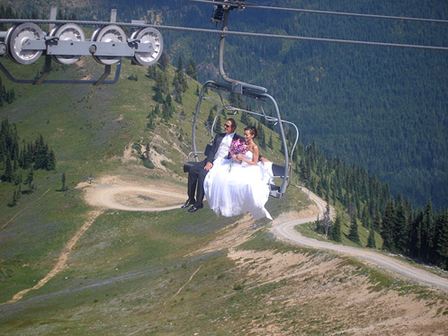
Many resorts rent out their facilities for business and festive events. The Banff Centre, located in the heart of Banff National Park, now courts the meetings, incentives, conventions and events (MICE) market. Some resorts, like Crystal Mountain in the northwest United States and Mont Sainte-Anne in Québec, actively target the destination wedding segment during the summer and rent out the facilities located on their summits.

Source: Crystalmountainresort.com

Package deals: An ideal solution

Increasingly, resorts are turning to package deals. Packages help make a destination attractive to new visitors, increase business during the off season and draw regional clientele who are interested in shorter stays. In addition, packages fulfil the varied needs of multi-generational travellers and non-skiers.

Relaxing getaways

Spas have become synonymous with the mountain resort experience. Health and wellness are now part of resort marketing and can even provide the raison d’être for a get-together, such as this year’s Wanderlust yoga festival held at Squaw Valley USA, California.

Source: First Track

Some resorts are improving their culinary offerings, sourcing food from a variety of providers and focussing on regional products. Last winter, the Samoëns ski resort in the French Alps organized its first Winemakers’ Week. Winemakers from various regions in France set up kiosks and presented workshops to introduce tourists to their wines. In Québec, Mont Saint-Sauveur recently began a major renovation of its bar and restaurant to offer patrons a wide variety of healthy foods and ensure that the bistro is the area’s trendiest restaurant.

Online marketing, mobile apps and new technology

Web marketing is now one of the most vital promotional channels available and some resorts are using it to great advantage. Wild Mountain in Minnesota posted a deal on LivingSocial, a group purchasing site, offering a discount package of lift tickets and equipment rental. The goal was to attract a new clientele of novice skiers.

Source: Livingsocial

Snowbird in Utah, one of the first resorts to develop its own app, has implemented a social media strategy by including a community page on its site where visitors can share content.

Source: SnowBird

Brighton Resort in Utah has installed two automatic cameras on one run to photograph skiers and snowboarders, who can then download their performances on the resort’s Facebook page.

Vail Resorts has created EpicMix, an application for either mobile or online use that enables clients of its five ski resorts to share their stats on their social networks. The information provided is extensive and includes rate of descent, skier and snowboarder ranking, weather and real-time location of contacts. Last winter, 100,000 people activated an EpicMix account and 40% downloaded the mobile app.

Source: Epicmix

New technology has also had an enormous impact on resort operations. At the beginning of the 2011-2012 winter season, Mont Saint-Sauveur and Mont Avila will be installing a radio-frequency identification (RFID) system on their lifts to detect skiers’ cards so they don’t have to show them, just like the system already in place at Le Massif in Charlevoix.

A wide variety of lodging options

A great number of privately owned mountain resort rentals are available online. In Québec and British Columbia, such properties represent approximately 60% of the ads listed on HomeAway. These rentals help increase a destination’s potential customer base and many resort managers feel this type of accommodation complements rental condos and hotel rooms.

However, such rentals have not slowed the real estate developments of groups like Intrawest, Boyne Resorts, Aspen Skiing and Vail Resort. Furthermore, many people are buying second homes located at the base of ski mountains. Finally, resorts are also developing new projects. At Le Massif in Charlevoix, the La Ferme hotel complex will open for business in the spring of 2012, and Mont Sainte-Anne is planning to build a new four-season resort in the next few years.

Source: Le Massif de Charlevoix

Sustainable development as a key element of restructuring

The Whistler resort community has developed a long-term plan, entitled Whistler 2020. It defines various priorities and strategies for achieving the sustainable development of the resort and uses indicators to monitor its progress on its Website.

Source: Whistler 2020

The Quebec Golf Course Owners Association (ATGQ) launched a sustainable development initiative this summer with the creation of the ParTROIS program. This measure helps golf clubs take steps towards eco-sustainable certification.

The National Ski Areas Association in the United States recently added a new component to Sustainable Slopes, its environmental charter for ski areas. Called the Climate Challenge, this friendly competition aims to reduce greenhouse gas emissions. With the help of experts, the employees of the eight resorts participating in the voluntary program took action to fight climate change.


Clientele looking for new experiences, threats of global warming, technological advances and the popularity of social media: the industry does not lack for challenges. However, it is these very issues that have led ski resorts to develop innovative ways of maintaining their attractiveness, and the recent projects launched in Québec hold the promise of a bright future for mountain destinations.


Sources:

– Bast, Morgan. “EpicMix gets nearly 100,000 activations in first season”, buzz.snow.com, April 22, 2011.

– Bergeron, Patricia. «Réaménagement à la base de la montagne- Mont Saint Sauveur se peaufine», carnetduski.com, 13 juillet 2011.

– Kahl, Rick. “Condos on the Cheap,” Ski Area Management, Vol. 50, No. 2, March 2011, p. 54.

– Morrison, Alastair M. “International Trends in Mountain Tourism, Marketing and Development,” Belle Tourism Consulting, 2010.

– Rufo, Samantha, Ken Castle, and Katie Bailey. “Best/Worst Marketing 2010-2011,” Ski Area Management, Vol. 50, No. 3, May 2011, p. 41-45.

– Ski Area Management. “Sustainable Slopes Report Highlights Resorts’ Green Efforts” saminfo.com, July 8, 2011.

– Ski Area Management. “Summer in the Mountains,” Vol. 50, No. 3, May 2011, p. 46-47.

– Urban Land Institute. “Ten Resorts Trends”, www.uli.org, consulted July 13, 2011.

– Watson, Tom. “Brighton offers freestylers an ancillary stoke,” National Ski Areas Association, Vol. 19, No. 3, July 2011.

– Wine Tourism in France. “L’oenotourisme, nouveau sport d’hiver”, winetourisminfrance.com, December 29, 2010.

– World Tourism Organization. “UNWTO congress to debate the future of snow and mountain tourism” www2.unwto.org, March 31, 2011.

See also:

Les activités hors saison pour les centres de villégiature: tendances et nouveautés

La tentation quatre-saisons des stations de ski


Catégories
Sustainable tourism

“Green” practices in British Columbia’s B&B industry

Numerous studies have examined environmental practices in hotels (Winter & Azimi, 2006; Johnson, 2008; Hanna, 2008; Gunter, 2008; Bohdanowicz, 2005), but very few have focussed specifically on the environmental practices of the B&B industry.  Bed and breakfasts (B&B) are defined as lodging establishments set in a residence that offer overnight accommodations and breakfast (Rushmore & Baum, 2001). B&Bs are, by definition, much smaller than typical lodging operations, which are usually full-service hotels; however, the B.C. Ministry of the Environment in 2007 found that residential and commercial buildings in B.C., which include B&Bs, produced 12% of total greenhouse gas emissions.  With the recent Olympics held in British Columbia, the focus had to be on environmental initiatives for all players and actions taken to further this environmental agenda. A study was done to assess the current “green” practices in British Columbia’s B&Bs as well as to determine the awareness of owner/operators about such practices and their level of participation.  The study also identified and measured what owner/operators felt were the barriers and incentives to implementing “green” practices.

The primary data used for this study was based on 146 valid responses from B&Bs in British Columbia (13% of an 1100 sample size), which were completed using an online survey tool in October 2008.  Research found that a significant number of B&B owner/operators indicated they have implemented “green” practices in their operations. The most common “green” practice was recycling; an average 73% of owner/operators “always” recycle. Owner/operators also exhibited environmental awareness by “usually” or “always” purchasing organic (40%), locally grown (66%) and low-toxic items (62%). The tendency to purchase organic and local items depended on availability and the B&B’s location, with remote locations finding this difficult. Additionally, 80% of participants indicated that they take the initiative to learn about environmental management. This shows that the trend of becoming more sustainable is apparent within B&Bs in B.C.

Barriers that hindered B&B operators from implementing “green” practices included financial restrictions, lack of resources and location. The financial restrictions cited as a barrier were also consistent with the response that a monetary incentive would be effective. The majority of respondents were not part of a “green” association that recognizes environmental initiatives through certification. In fact, no standard certification process exists for B&Bs in B.C.

Recommendations from this report outline how stakeholders could help B&Bs develop more “green” practices. First, government and associations could improve communications and increase the availability of feasible “green” practices that B&Bs could implement. The creation, implementation, communication and monitoring of government incentive programs in the field of sustainability would also improve B&Bs “green” practices. Second, an association could be created at the provincial or local level to recognize “green” initiatives through certification. Third, B&Bs could also become more aware of the current provincial and federal incentives offered to establishments for retrofitting.

Overall recommendations for government, associations and industry include the creation of a co-operative marketing initiative involving all three stakeholders.  This initiative could help increase awareness of “green” practices and specifically target the “green” niche market. The study notes that B&Bs are often not considered when discussing the impact of tourism and its contributions to mitigating climate change or moving towards more sustainable tourism. If Canada is to be seen as an eco-conscious destination, the B&B industry must not be forgotten. – new-

Bibliography
– Bohdanowicz, P., «European Hoteliers’ Environmental Attitudes: Greening the Business», Cornell Hotel and Restaurant Administration Quarterly, vol. 46 no 2, 2005, p.188-204.
– Gunter, H., «State programs help define green hotels», Hotel & Motel Management, vol. 223 no 10, 2008, p. 4.
– Hanna, E., «Setting the guestroom for the guest», Hotel & Motel Management, vol. 223 no 10, 2008, p. 48.
– Johnson, A., «Savings by the load», Hotel & Motel Management, vol. 223 no 11, 2008, p. 34.
– Rushmore, S. & Baum, E., «Hotel and Motels: Valuations and Market Studies», USA: The Appraisal Institute, 2001.
– Winter, J. P. & Azimi, S. L., «Less Garbage Overnight: A Waste Prevention Guide for the Lodging Industry», New York: INFORM, 1996.

Catégories
Sustainable tourism

The status of carbon offsetting programs in North America

Carbon offsetting is a controversial practice to reduce one’s carbon footprint; however, this practice has spread worldwide in the last decade. Offsetting attempts to counteract the impact of carbon emissions by drawing carbon out of the atmosphere and/or reducing emissions produced elsewhere. There are many methods of offsetting available, from planting trees (biological sequestration) to renewable energy production (such as wind farms). A commercial market has emerged to provide offsetting services to businesses and individuals, where consumers need only pay the offset provider, who then finances offsetting projects. However, not all types of offset projects are equally effective and each offset purchase must be ‘additional’ to ongoing offsets¹.  In the current unregulated offset market, these issues of ‘permanence’ and ‘additionality’ are difficult to ensure.  Several voluntary standards and certifications have been introduced by the offset industry attempting to ensure sound offsetting practices, but even these standards are controversial. The highest or most reputable voluntary standard is the UNIPCC Gold Standard. Lack of education on offsetting, lack of transparency within the market and scepticism about the effectiveness of carbon offsetting all create confusion for consumers and businesses exploring carbon offsetting.

A 2010 study by R. Dodds et al., “Carbon Offsetting Programs in North America: Assessing the Involvement of the Hospitality and Tourism Industry,” assessed the current marketplace for carbon offsetting providers in North America and the adoption of offsetting by the hospitality industry.  The study identified and contacted 50 carbon offset providers operating in North America. Of the 50 providers, 20 respondents participated in a telephone interview.   This study sought to determine 1) the status of the voluntary carbon offset market in North America and 2) the current level of involvement of the hospitality and tourism industry in mitigating climate change.

Key Findings of the Study

Offsetting and the Hospitality Industry

The study found that, overall, the hospitality industry was the most predominant industry utilizing offset providers, representing 19% of all offset business. Among hospitality and tourism sectors:

  • Festivals and events represented the largest share of offsetting services, accounting for 5% of all offsetting business.
  • Cruises were the least prominent sector of the hospitality industry, representing a statistically insignificant 0.2% of the client base.

Fifteen percent of respondent offset providers report that hospitality represented 75% or more of their client base. However, 32% of all respondent offset providers did not have any clients among the tourism and hospitality industry.

Respondents most often identified cost (40%) and lack of education (40%) as the barriers to buy-in by the hospitality industry and 85% of all respondents strongly agreed that there is confusion in the marketplace regarding carbon offsetting.

Offset Provider Practices

Renewable energy and biological sequestration were the most common types of offset project undertaken by offset providers, with each one used by 65%. Other common types were:

  • Energy efficiency projects (30%)
  • Methane capture (40%)
  • Half of respondents identified biological sequestration as the most popular type of project among clients

The study also found that there are numerous standards and certifications, with respondents identifying 14 different ones in use. The most commonly used standard was the Voluntary Carbon Standard (VCS). The Gold Standard, the world’s best known, was adhered to by four respondents. When asked which was the most credible method, respondents felt that ‘additionality’ was best ensured by standards (67%) and third-party verification (44%).

Implications of the Study

The findings indicate that the hospitality and tourism Industry is beginning to take action on the issues of climate change. Though the festival and events sector is a leader in adopting carbon offsetting practices, more efforts are needed to mitigate climate change, especially in the transportation sector. The study concluded that it is not clear whether the industry is purchasing offsets based on concern for climate change or in response to consumer demand; nor is it clear whether the industry is supporting the highest standard of offset providers or less reliable offset providers.

The recent economic downturn has demonstrated that the industry is highly price‑sensitive and the costs associated with adopting carbon offsetting practices were identified as a major barrier to buy-in for the hospitality industry.

Based on these survey findings, Dodds et al. (2010) call for more government regulation in the voluntary offsetting market to provide clearer standards of practice and a higher level of accountability. Further education regarding climate change and carbon offsetting within the industry is required as lack of education was a common theme among respondents (40%), yet many offset providers have not incorporated client education into their business practices. Some airlines have begun to provide carbon offset credits at the point of purchase, but few consumers are aware of the concept or knowledgeable about how it works.

As demand for offsetting is likely to increase as consumers become better acquainted with the practice, there is a need for regulation and education. If governments provide trustworthy regulation, consumers will become more confident in the value of their offset credits.  In the absence of government regulation, a number of recommendations should be considered and the hospitality and tourism industry should use discretion when adopting carbon offsetting practices. It is important to select offsetting providers that can produce a transparent accounting of their methods and offset projects. Familiarize yourself with the various offsetting methods and issues such as additionality and permanence, and look for the most trustworthy standards.

Industry should note that carbon offsetting is not a solution to the issues of climate change, but simply one part of a holistic strategy to mitigate your impact. Offsetting should be incorporated into a system-wide carbon mitigation strategy and supported by rigorous climate change education.

¹“An offset project is considered additional if it is not business as usual. Typically, this means that the project would not have happened without the extra funding from the sale of offsets.” (David Suzuki Foundation, 2009) Only with the applied concept of additionality can the offsetting program have a net benefit for the climate.

Source:

– Dodds, R., Bessada, T., Garcia-Arredondo, J., McDougall, A., and Thiesen, N. “Carbon Offsetting Programs in North America: Assessing the Involvement of the Hospitality and Tourism Industry”, 2010


Catégories
Ailleurs dans le monde @en Products and activities Sustainable tourism

Does Environmentally Friendly Golf Exist?

As far as environmental responsibility is concerned, golf is neither ahead, nor behind other sectors, and it may take some time before it is considered as ‘responsible recreation’. Golf courses have a long history of being environmentally unfriendly, due to their high water and chemical use, impact on local topography, hydrology and wildlife.1

Nonetheless, golf remains an important activity across Québec’s 362 golf clubs, while worldwide an estimated 25,000 golf courses cater to some 50 million players. Internationally, various organizations and initiatives exist to reduce golf’s environmental impact, but one of the most popular remains the Audubon Cooperative Sanctuary Program. In 2009, 783 golf courses were certified by this program worldwide, including 82 in Canada and 11 in Québec.2

Golf courses that have implemented initiatives to reduce their environmental impact can be recognized by a variety of actions, including:

  • decreased water use
  • improved irrigation systems and water application
  • water quality monitoring
  • reduced or eliminated pesticide use
  • increased natural organic fertilizer use
  • improved spill containment for pesticide mixing and loading areas
  • decreased managed turf grass area to increase wildlife habitat
  • landscaping with native plants to increase wildlife habitats
  • removed exotic invasive plants
  • vegetation planted in and around waterways
  • installed of contained equipment in wash-off area.

Where such environmental actions have been implemented, golf course managers have generally also reported a positive business value or cost savings, according to Audubon International assessments.3

Situation in Québec

Currently, there is no information that systematically documents environmental improvements implemented by Québec golf courses. However, numerous golf courses are actively working towards reducing their negative environmental impact, while several are also in process of certification by Audubon International. The most prevalent positive environmental action presently in Québec remains the reduction of pesticide use, owing to legislation implemented back in 2003 by the Provincial Government.4 According to baseline assessments for the period 2003-2005, Québec’s golf sector used 39,382 kg of active ingredients per year (according to sales figures) and 75.9%, or 29,885 kg, in the form of fungicides.5 In comparison with total pesticide use in the Province, pesticide use by golf represented about 1.1% of the total. The continuous reductions in pesticide use remains important to maintain watershed ecosystem health, but especially since their application by golf courses in Québec occurs almost entirely on permeable soils.

Since 2003, the Québec Pesticides Management Code and its associated regulations require all Québec golf courses to submit a pesticide reduction plan prepared by a certified agronomist to the ministère du Développement durable, de l’Environnement et des Parcs every three years.4 For the period 2006-2009, the objective was to achieve average reductions of 12.9% in the use of fungicides, 9.4% in herbicides, 8.2% in insecticides, 7.4% in rodenticides and 2.8% in growth regulators. The results are currently being analyzed and the objectives for the next three years will be revised in 2010.

Though golf courses in Québec have taken numerous other actions to improve their environmental management, the overall impact of these is not documented, with the exception of the Laurentides, where water use is monitored by public sector organizations. A few golf courses have also installed industrial equipment to filter, treat and reuse wastewater. However, such initiatives are limited to only a few places, since they cost up to CAD 200,000. Elsewhere, golf courses have exchanged their carts for electric versions, implemented recycling programs, and use recyclable or biodegradable balls and tees. Increasingly, some golf courses supply their restaurants with local and regional foods, as in the case of the Rawdon Golf Club, which also received Le Phénix de l’environnement Award in 2009 for having implemented a variety of initiatives to improve its environmental management.6

While there aren’t clearly any 100% eco-friendly golf courses, work is under way to improve management at some places. There is currently a move in Québec to implement a variety of voluntary initiatives in 2010. For example, the Association des terrains de golf du Québec is drafting a sustainable development policy and green program, which will address comprehensive environmental management requirements covering a range of issues, including waste and water management (composting, recycling), hazardous substance use, vegetation around waterways and others. A number of other organizations, such as the Coalition for Responsible Golf, are also working to help golf courses improve their environmental management practices in Québec.

What about green golfers?

Few studies have assessed golfers’ attitudes towards the environment, and none have been reported from Québec. However, in 2008, Golf Digest published a survey that illustrated how perceptions of 650 avid golfers compared with the general American population regarding golf and its relationship with the environment.7 According to this study, golfers were typically male, affluent and older than the general population surveyed and some similarities and differences were noted amongst the two groups concerning environmental attitudes. For example, both groups appeared environmentally conscious and participated in activities like recycling and agreed that government regulation is a necessary approach for addressing environmental issues. However, while golfers also appeared to support the idea that golf is an environmentally friendly/compatible sport, they were less likely than the general population to participate in initiatives such as carpooling. Figure 1 summarizes some of the attitudes towards specific impacts linked to water and pesticide use, which suggests that fewer golfers believe the game’s water and pesticide use has a negative impact on the environment than the general population. The Golf Digest study 7 also suggests that, while golfers agree with the need to improve the environmental management of golf courses, such improvement does not necessarily represent a big plus for increased participation in the game.

golf_vs_environnement1

Some golf courses are also focussing on player education to raise environmental awareness and several try to get players involved by having them volunteer to carry out restoration and environmental works, while others encourage the provision of financial support towards environment initiatives.

Golf clearly has the potential to be more environmentally responsible and the numerous initiatives in place by some golf courses currently leave no room for inaction by the great majority.

Source

(1) Wheeler, K. & Nauright, J. (2006). A green game?: A Global Perspective on the Environmental Impact of Golf. Sport in Society, 9(3) 427-443.

(2) Audubon Cooperative Sanctuary Program for Golf Courses

(3) Audubon International (2007). Golf’s Green Bottom Line: Uncovering the Hidden Business Value of Environmental Stewardship on Golf Courses. Audubon International. 64 p.

(4) Ministère du Développement durable, de l’Environnement et des Parcs. Code de gestion des pesticides. Last access November 4, 2009 http://www.mddep.gouv.qc.ca/pesticides/permis/code-gestion/index.htm

(5) Laverdière, C., Dion, S., and Gauthier, F. (2007). Bilan des plans de réduction des pesticides sur les terrains de golf. Ministère du Développement durable, de l’Environnement et des Parcs. 54 p.

(6) Ministère du Développement durable, de l’Environnement et des Parcs. Les Phénix de l’environnement, édition 2009. Last access October 28, 2009. http://www.mddep.gouv.qc.ca/Phenix/2009/5-realisation-entrep.htm

(7) Golf Digest (2008). Golf and the Environment: Golfer Perceptions and Attitudes Concerning the Game and its Relationship with the Environment. Golf Digest Publication. Research Resource Centre. 25 p.

Catégories
Sustainable tourism

Your Visitors are Taking Environmental Action? Reward Them!

To stimulate demand for sustainable tourism, there may be a greater need for financial incentives for consumers and businesses. Small businesses might especially benefit from financial incentives for implementing operational changes that lead to net resource conservation from measures such as rebates and tax breaks. If the savings were passed onto consumers, it might lead to greater demand and result in faster industry performance improvements. Financial incentives, even if small, have the capacity to draw the attention of market segments (such as the masses that are not yet eco-conscious) and encourage participation in initiatives that may be educational and raise awareness.

Economic incentives are considered a key component of sustainable tourism growth. Yet, there are very few examples of this when it comes to producing or purchasing tourism products. It is well known that existing “eco-conscious” tourists are not really motivated by price and that most others, and especially mass tourists still are. Moreover, studies also show that price is perceived as a significant barrier for purchasing responsible tourism experiences1.

Offering financial rewards is not relevant to all businesses since some tourism operations offer clients opportunities to participate in different activities (especially eco and nature-based) that lead them to better understand the importance of natural resource conservation. It is assumed that such experiences might be rewarding, because they are meaningful at a personal level and clients automatically benefit by learning and can often result in responsible action elsewhere too.

There are many examples of small incentives to encourage responsible behaviour, such as giving a small discount for reusing a cup in café, giving away reusable shopping bags away at stores and so on. But why not reward tourists for partaking in environmental actions? Here are some examples from around the world.

At festivals…

In 2009, Roskilde Festival in Denmark2 focussed some of its environmental initiatives on climate change with its Green Footsteps campaign. The organizers encouraged clients to take at least one environmental action, such as arriving at the festival by public transport instead by car and awarded them with green footsteps for this. A total of 40 000 actions were taken by festival-goers linked to cut energy consumption and CO2 production, and as a reward, those with enough green footsteps could reserve a spot at the camping area before it opened for the general public. Those with the most green footsteps were also invited to join the festival’s Climate Community, a camping quarter providing an enriched visitor experience for participating patrons. They were offered engageing activities, knowledge about climate change, climate friendly showers (energy from wind, sun and humans on bikes) and a dance floor.

At nature parks…

Phillip Island Nature Parks3 (PINP) in Victoria, Australia provides wildlife experiences involving a variety of species, notably the Little Penguins whose conservation and volunteer program also includes a reward component for participants. PINP manages numerous conservation projects such as revegetation and weed removal, amongst others. The park rewards every international and domestic volunteer who helps with conservation works by offering free accommodation. The park also waives park entree fees for participating international volunteers. As do many zoos and aquariums around the world PINP also runs an “adopt an animal” program, where visitors can donate funds to help with penguin and other environmental conservation works. Those who participate become members and once a year receive free tickets to see the penguins. PINP is a not-for-profit organization and does not receive ongoing funding from the government, and it generates its own revenue to ensure business viability.

On tours…

GeoEx4 is a tour company that offers all its travelers who contribute $250 or more to the Living Planet Trust (a donor-directed fund administered by the Tides Foundation of San Francisco) a $250 travel voucher toward a future trip. These tax-deductible donations to the Living Planet Trust are dedicated to offsetting the carbon emissions generated by travelers’ international air passage and to funding local initiatives at the destination they just experienced.

At ski areas…

Several ski resorts in North America have carpool and bus incentive programs, encouraging skiers to take fewer cars to the mountains. For example, at Arapahoe Basin resort5 in Colorado, guests with four individuals in a vehicle are offered a 30% discount on lift tickets. The resort also provides financial support to a local bus system to encourage public transport use and reduce vehicle congestion and air pollution. Similarly, Aspen/Snowmass6 partnered with the City of Aspen to provide carpooling guests (with two or more adults) a free parking pass for all-day parking at the resort.

At airports…

Several airports are also rewarding the eco-conscious. For example, at Boston Logan Airport7 those who drive hybrid cars get preferential parking and taxis with low emission vehicles are eligible for a US $ 25,000 grant (from the government). Hybrid taxis also have privileged front of the line passenger pick-ups at the airport. Similarly, San Francisco airport has a Green Rental Car program that rewards customers renting hybrid cars with a $15 discount8.

On islands…

Targeta Verda9 or Green Card is an initiative of the Balearic Island Foundation to raise funds from tourists for sustainable development projects while giving discounts for visiting attractions and buying commercial products. The card costs 10 euros and is valid for 15 days for visitors, and for one year for residents while its benefits include free bike hire. Funds from the card have also been put towards various ecological restoration projects on the island, heritage interpretation and visitor awareness programs.

While Shopping …

Many tourist attractions (such as zoos) already sell products in their gift shops, which are produced responsibly and in some cases, the purchase of an item may provide a portion of the cost towards some conservation effort (for example, save a threatened animal from extinction). Eco-perks Green Rewards Store10 is a California-based online store that gives eco-points to customers who buy responsibly produced products and services. These could be anything from T-shirts and carbon offsets to stays at places such as W Hotels or Chumbe Island Coral Park in Zanzibar. The company also sells a wide variety of low-impact tourism experiences at various destinations: hanggliding, birdwatching, kayaking, cycling tours and so on. The more people buy, the more eco-points redeemed that can be used to purchase other products and services sold by the company. Eco-points can also be donated to a variety of causes such as environmentally oriented NGOs and ecosystem restoration projects. The company also provides information and tools to help reduce the negative impacts of every-day life.

So what?

It might be worthwhile to provide visitors with some kind of a reward, however small, because it would help communicate some of the environmental actions a company is undertaking that may otherwise be invisible and thereby raise awareness about an issue. Since most consumer groups have expressed some kind of an interest in purchasing green products, this may help also help to attract new clients.

Sources:

1. Reem, C. (2009). PhoCusWright’s Going Green: The Business Impact of Environmental Awareness of Travel. PhoCusWright. Sherman, CT, USA. 29 p.
2. Roskilde Festival. Reserve a spot at the camping area. Last consulted July 7, 2009. http://www.roskilde-festival.dk/uk/news/singlenews/reserve-a-spot-at-the-camping-area/
3. Philip Island Nature Parks. Wildlife and habitat programs. http://www.penguins.org.au/index.php?option=com_content&view=article&id=36&Itemid=19 Last consulted June 16, 2009.
4. Geographic Expeditions. Responsible Travel. Walking the Talk. 2009 http://www.geoex.com/about_us/responsible_travel.asp Last consulted July 7, 2009.
5. Arapahoe Basin. http://www.arapahoebasin.com/ABasin/about/environment/transportation.aspx Last consulted July 6, 2009.
6. Aspen Snowmass. http://www.aspensnowmass.com/onmountain/statsfacts/statsfacts.cfm?area=Aspen%20Mountain Last consulted July 6, 2009.
7. Massachusetts Port Authority. Preferred Parking at Logan for Passengers Driving Clean Fuel Vehicles. http://www.massport.com/about/press_news_cleanvehiclehtml.html Last consulted July 13, 2009.
8. San Francisco International Airport. Save some green when you rent green. http://www.flysfo.com/web/page/tofrom/rental-cars/greenrentals/ Last consulted July 13, 2009.
9. Foundation for a Sustainable Balearics. http://www.targetaverda.com Last consulted June 4, 2009.
10. Eco Perks. http://www.ecoperks.com/ Last consulted July 2, 2009.