Catégories
Accommodation Issues

Hotels must innovate to successfully compete

At the Association des hôteliers du Québec annual convention on February 6, Alain April explained that hotel owners must be creative and update their properties to maintain and improve their competitiveness. With the exception of luxury hotels, Québec hotels seem to be lagging when it comes to ingenuity and modernization. This sector, composed primarily of mid-range hotels, must find ways to innovate. The examples below may provide some inspiration.

Top priority: Satisfy your target markets

• Women

Hotels are pampering female travellers, offering them a range of personalized services and facilities like emergency kits with all the necessities, make-up, ultramodern hairdryers, rooms with large closets, and yoga mats and DVDs. Vancouver’s Georgian Court Hotel has even set aside 18 rooms specifically for women, at no extra cost.

• Children

Hotels are treating children like little adults. The Steigenberger Hotel Gstaad-Saanen , in Switzerland, has installed a climbing wall and a kid’s spa. Le Meurice, in Paris, provides child-sized robes and slippers and serves children tea and sweets.

• Businesspeople

Flexibility is the key to attracting business travellers. As part of their loyalty program, Starwood Hotels and Resorts guarantees that customers who stay more than 75 nights per year can get a room at any time, day or night, at no extra cost.

Major changes in interior design

Hotels are transforming their decor to attract younger travellers, who like relaxed settings that encourage socializing and networking . Some hotel chains have been designed with this in mind, notably the Radisson Blu (see image, lower left) and the Hyatt House. Traditional lobbies are being replaced by common areas where guests can have a drink, enjoy a light meal or buy souvenirs. Reception desks are disappearing and self-service check-in terminals are becoming more widespread. Some establishments are making the hotel lobby a place for creativity. Le Méridien Hub (see image, lower right) reinterprets the hotel lobby as a « a gathering place for creative minds » with artwork, a lounge and a library (see also: Dessine-moi un nouveau hall!).

Sources: Chicagonista and Le Méridien Hub

So-called lifestyle hotels (see also: Hôtel lifestyle: autopsie d’un concept) are designed to meet the needs of young hip, urban travellers. The rooms in the Hôtel du Triangle d’Or in Paris are inspired by the theme of music and its lobby features a multimedia area equipped with headphones.

Source: Hôtel du triangle d’or

New must-have technologies

According to a hotels.com survey of Canadian travellers, the iPad is the second-most popular modern amenity requested by this clientele , following the high-end coffee maker. Although tablets and touch screens are increasingly common at concierge and reception desks, they are now appearing in restaurants and rooms as well. At Parisian hotel Mama Shelter, the restaurant tables feature inset touch screens and there is an iMac photo space so patrons can take pictures of themselves and display them on screens throughout the restaurant.

Source: Mama Shelter

Accor has joined forces with Microsoft to integrate video games into its new modular room concept. Created in the Novotel Vaugirard Montparnasse in Paris, room « 3120 » was tested during a three-month pilot project.

Source: MSN.fr

Sustainable choices

More and more hotels have adopted sustainable development as a guiding principle. Delta Hotels and Resorts have launched « Delta Greens, » an initiative where every employee works to achieve the company’s stated goals: reduce energy consumption, carbon emissions and water consumption by 30% in the next five years. In France, the Comfort Hotel Lille Tourcoing in 2011 created a hotel room that is 80% recyclable, the first of its kind in Europe. In Accor’s Mercure hotels, all pillows and duvets are made of recycled plastic bottles. When no longer needed by the hotel, these items are then recycled and transformed into building and auto insulation.

Business events get a makeover

Basement-level meeting rooms are no longer popular, with users seeking rooms on the upper floors, preferably those with a panoramic view of the outside. New meeting spaces are bathed in natural light, like those at the JW Marriott L.A. LIVE, or offer a warm, inviting atmosphere, like the rooms at Meet at the apartment, in New York City.

Source: JW Marriott L.A. LIVE

Source: Meet at the apartment

Eating well and staying in shape

According to an Omni Hotels & Resorts survey, 56% of business clients would like hotel restaurant menus to offer more low-fat meal options. Over 70% of respondents would like to see healthy snacks in their minibar. In response, some hotels are replacing elaborate hard-to-digest business lunches with cold lunches. In addition, Fairmont has introduced a low-cal children’s menu, while Omni Hotels offer a gluten-free breakfast buffet. Connecticut’s Delamar hotels in Greenwich Harbor and Southport now stock their minibars with local products.

Source: USA Today

The Omni group survey also shows that business travellers would like more opportunities to work out. Therefore, the group’s Los Angeles and San Diego hotels now offer Get Fit Kits and Get Fit Rooms with treadmills. To make the fitness centre more fun, Le Parker Meridien in New York City has installed a Wii gaming console.

Well-rested guests are satisfied guests!

All the technology in the world is no good to a client who can’t get a good night’s sleep. Some hotels have taken this to heart and are working to improve the quality of their guests’ sleep. The Crowne Plaza hotel chain is testing snore-absorption rooms equipped with sound proof walls and headboards, specially designed anti-snoring pillows and wedges and a white noise machine to reduce the sound of snoring.

The Dorchester Collection has enlisted the services of a Paris sleep clinic to develop a sleep aid tool. Resembling a bedside lamp, this device diffuses light wavelengths and sound frequencies that help guests fall asleep. Finally, Scandic is the first hotel chain in the world to introduce beds that guests can adjust to their height, weight, body shape and sleeping position, using a remote.

There are any number of ways to amaze customers and foster loyalty. To remain competitive, Québec’s hotels must embrace innovation in order to reinvent themselves. Take inspiration from the creative ideas of the major chains and then call on design and technology professionals to help you carry out your new projects!


Sources:

– April, Alain. « Rôle de l’hôtellerie au sein de l’échiquier touristique québécois, » talk delivered at the Association des hôteliers du Québec annual convention, Manoir St-Castin, February 6, 2012.

– É. de B. « Chez Mercure, rien ne se perd tout se transforme« , L’Hotellerie Restauration, July 26, 2011.

– Lenoir, Aude. « Nouvelles tendances en hôtellerie« , presentation given at the Association des hôteliers du Québec annual convention, Manoir St-Castin, February 6, 2012.

– Hospitality Net. « Scandic introduces personally customized beds as the first hotel chain in the world« , hospitalitynet.org, February 16, 2012.

– Nayer, Mélanie. « Dorchester Collection Introduces Innovative Luxuries to Hotels« , 4hoteliers.com, February 15, 2012.

– Poulin, Ginette. « La CITQ fait le bilan de dix années de classification de l’industrie touristique« , hrimag.com, February 1, 2012.

– PR Newswire. « New Wellness Report Released by Omni Hotels & Resorts Reveals On-The-Road Habits of Business Travelers » prnewswire.com, September 20, 2011.

– Springwise. « Hotel “minibar” offers up food for the mind » springwise.com, February 23, 2011.

– Tendance Hôtellerie. « Crowne Plaza crée la nuit d’hôtel sans ronflements » tendancehotellerie.fr, June 28, 2011.

– Tendance Hôtellerie. « Etude TravelClick® aux États-Unis: 1/4 des chambres sont réservées sur les sites web des hôtels« , tendancehotellerie.fr, January 16, 2012.

– Tour Magazine. « Lille: ouverture de la première chambre d’hôtel recyclable« , tourmagazine.fr, September 6, 2011.

– Travelpulse. « Le Meridien Hotels Unveils New Lobby Concept in Barcelona« , travelpulse.com, June 23, 2011.

– Trejos, Nancy. « Hotels cater to special diets; gluten-free food now on menus« , travel.usatoday.com, February 5, 2012.

– Trejos, Nancy. « Goodbye potato chips; Hotel mini-bars turn exotic and even healthy« , usatoday.com, February 8, 2012.

– Vong, Katherine. « Flexible Hotel Check-Ins« , trendhunter.com, February 7, 2012.

Catégories
Issues Products and activities Trends

Mountain destinations: Trends and best practices in tourism

In the past few years, mountain resorts have been engaged in a mad scramble to become four-season tourist destinations. Gone are the days when mountain resorts relied solely on skiing to maximize the return on their investment. According to a 2011 survey conducted by Ski Area Management (SAM) magazine of 100 North American ski resorts, 44% of them operate year-round.

With an eye to financial and environmental concerns, tourism providers are vying with one another to develop inventive products and services to meet an increasingly diverse demand. This article discusses some of the trends and best practices adopted by mountain resorts as they redefine themselves.

A broad range of recreational activities

Summer activities are more and more popular with mountain resort clients. (Please see: La tentation quatre-saisons des stations de ski). One-quarter of the resorts surveyed by SAM reported that summer operations accounted for at least 20% of their annual revenue. Mountain biking is currently the most popular summer attraction on offer (61%) (see: Le vélo de montagne représente-t-il un potentiel touristique sous-exploité?), after business meetings (64%) and weddings (81%).

In the next two years, the resorts surveyed plan to focus more on family-oriented activities rather than traditional activities like tennis and golf (see Figure 1). A little less than half of the destinations surveyed are planning to add ziplines (42%), and nearly one-quarter plan to build alpine coasters (23%) or a ropes course (22%).


Climbing walls and bungee jumping are becoming more popular, as are skate parks, water parks and mini golf. In fact, the Massif du Sud area in the Chaudière-Appalaches region now calls itself a “four-season adventure sports outfitter.”

New customer segments

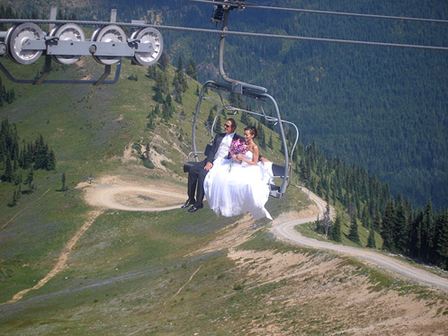
Many resorts rent out their facilities for business and festive events. The Banff Centre, located in the heart of Banff National Park, now courts the meetings, incentives, conventions and events (MICE) market. Some resorts, like Crystal Mountain in the northwest United States and Mont Sainte-Anne in Québec, actively target the destination wedding segment during the summer and rent out the facilities located on their summits.

Source: Crystalmountainresort.com

Package deals: An ideal solution

Increasingly, resorts are turning to package deals. Packages help make a destination attractive to new visitors, increase business during the off season and draw regional clientele who are interested in shorter stays. In addition, packages fulfil the varied needs of multi-generational travellers and non-skiers.

Relaxing getaways

Spas have become synonymous with the mountain resort experience. Health and wellness are now part of resort marketing and can even provide the raison d’être for a get-together, such as this year’s Wanderlust yoga festival held at Squaw Valley USA, California.

Source: First Track

Some resorts are improving their culinary offerings, sourcing food from a variety of providers and focussing on regional products. Last winter, the Samoëns ski resort in the French Alps organized its first Winemakers’ Week. Winemakers from various regions in France set up kiosks and presented workshops to introduce tourists to their wines. In Québec, Mont Saint-Sauveur recently began a major renovation of its bar and restaurant to offer patrons a wide variety of healthy foods and ensure that the bistro is the area’s trendiest restaurant.

Online marketing, mobile apps and new technology

Web marketing is now one of the most vital promotional channels available and some resorts are using it to great advantage. Wild Mountain in Minnesota posted a deal on LivingSocial, a group purchasing site, offering a discount package of lift tickets and equipment rental. The goal was to attract a new clientele of novice skiers.

Source: Livingsocial

Snowbird in Utah, one of the first resorts to develop its own app, has implemented a social media strategy by including a community page on its site where visitors can share content.

Source: SnowBird

Brighton Resort in Utah has installed two automatic cameras on one run to photograph skiers and snowboarders, who can then download their performances on the resort’s Facebook page.

Vail Resorts has created EpicMix, an application for either mobile or online use that enables clients of its five ski resorts to share their stats on their social networks. The information provided is extensive and includes rate of descent, skier and snowboarder ranking, weather and real-time location of contacts. Last winter, 100,000 people activated an EpicMix account and 40% downloaded the mobile app.

Source: Epicmix

New technology has also had an enormous impact on resort operations. At the beginning of the 2011-2012 winter season, Mont Saint-Sauveur and Mont Avila will be installing a radio-frequency identification (RFID) system on their lifts to detect skiers’ cards so they don’t have to show them, just like the system already in place at Le Massif in Charlevoix.

A wide variety of lodging options

A great number of privately owned mountain resort rentals are available online. In Québec and British Columbia, such properties represent approximately 60% of the ads listed on HomeAway. These rentals help increase a destination’s potential customer base and many resort managers feel this type of accommodation complements rental condos and hotel rooms.

However, such rentals have not slowed the real estate developments of groups like Intrawest, Boyne Resorts, Aspen Skiing and Vail Resort. Furthermore, many people are buying second homes located at the base of ski mountains. Finally, resorts are also developing new projects. At Le Massif in Charlevoix, the La Ferme hotel complex will open for business in the spring of 2012, and Mont Sainte-Anne is planning to build a new four-season resort in the next few years.

Source: Le Massif de Charlevoix

Sustainable development as a key element of restructuring

The Whistler resort community has developed a long-term plan, entitled Whistler 2020. It defines various priorities and strategies for achieving the sustainable development of the resort and uses indicators to monitor its progress on its Website.

Source: Whistler 2020

The Quebec Golf Course Owners Association (ATGQ) launched a sustainable development initiative this summer with the creation of the ParTROIS program. This measure helps golf clubs take steps towards eco-sustainable certification.

The National Ski Areas Association in the United States recently added a new component to Sustainable Slopes, its environmental charter for ski areas. Called the Climate Challenge, this friendly competition aims to reduce greenhouse gas emissions. With the help of experts, the employees of the eight resorts participating in the voluntary program took action to fight climate change.


Clientele looking for new experiences, threats of global warming, technological advances and the popularity of social media: the industry does not lack for challenges. However, it is these very issues that have led ski resorts to develop innovative ways of maintaining their attractiveness, and the recent projects launched in Québec hold the promise of a bright future for mountain destinations.


Sources:

– Bast, Morgan. “EpicMix gets nearly 100,000 activations in first season”, buzz.snow.com, April 22, 2011.

– Bergeron, Patricia. «Réaménagement à la base de la montagne- Mont Saint Sauveur se peaufine», carnetduski.com, 13 juillet 2011.

– Kahl, Rick. “Condos on the Cheap,” Ski Area Management, Vol. 50, No. 2, March 2011, p. 54.

– Morrison, Alastair M. “International Trends in Mountain Tourism, Marketing and Development,” Belle Tourism Consulting, 2010.

– Rufo, Samantha, Ken Castle, and Katie Bailey. “Best/Worst Marketing 2010-2011,” Ski Area Management, Vol. 50, No. 3, May 2011, p. 41-45.

– Ski Area Management. “Sustainable Slopes Report Highlights Resorts’ Green Efforts” saminfo.com, July 8, 2011.

– Ski Area Management. “Summer in the Mountains,” Vol. 50, No. 3, May 2011, p. 46-47.

– Urban Land Institute. “Ten Resorts Trends”, www.uli.org, consulted July 13, 2011.

– Watson, Tom. “Brighton offers freestylers an ancillary stoke,” National Ski Areas Association, Vol. 19, No. 3, July 2011.

– Wine Tourism in France. “L’oenotourisme, nouveau sport d’hiver”, winetourisminfrance.com, December 29, 2010.

– World Tourism Organization. “UNWTO congress to debate the future of snow and mountain tourism” www2.unwto.org, March 31, 2011.

See also:

Les activités hors saison pour les centres de villégiature: tendances et nouveautés

La tentation quatre-saisons des stations de ski


Catégories
Issues Sustainable tourism

Who is Carbon Neutral in Tourism in Québec?

Visitors to and from Québec contribute to Greenhouse Gas emissions (GHG), regardless of the mode of transport, distance traveled, or the activity undertaken during a stay. To date, no study assessed neither travelers’ nor the tourism sector’s contributions to GHG emissions, or attitudes or actions towards mitigation in Québec. This creates a knowledge gap about net reductions, and about compensations for unavoidable emissions. In this context, the aim of this article is to provide a brief overview of carbon neutrality in Québec’s tourism sector.

Offset Providers

The choice of offset providers internationally continues to augment, while the Carbon Catalogue presently lists 12 providers across Canada with an offset price range of 12.50 $ to 39.90 $ per ton CO2e.(1) For those wishing to purchase offsets from organizations based in Québec, the four principal providers include Planetair,(2) Carbone Boréale,(3) Zero GHG Inc.(4) and ZÉRØCO2.(5)

(1) Planetair is a not-for-profit organization managed by the Unisféra International Centre, also a non-profit organization. (2) Planetair is the exclusive distributor of Myclimate, one of the most respected offset supplier worldwide, since all their projects conform to the Kyoto Protocol’s Clean Development Mechanism (CDM)* and Gold Standard.** These projects finance only renewable energy and energy efficiency projects in various developing countries. Planetair plans to offer Canadian projects in the future depending on sales volumes.

(2) Carbone Boréale (CB) is both a program, and a laboratory of researchers at the University of Québec in Chicoutimi. CB offsets finance tree plantations in a deforested area of Québec and contributes to supporting research. The plantations are verified and managed according to ISO 14064-3 norms, and are registered by the Canadian EcoProjectsTM GHG.(3)

(3) ZeroGHG Inc. is a private consultancy firm offering offsets in a variety of renewable and energy efficiency projects in addition to their consulting services to develop GHG reduction strategies, quantifying emissions and performing audits. ZeroGHG projects are located in various countries, and at least 80% must meet CDM* and Gold Standard**.(4)

(4) ZÉRØCO2 is a private enterprise selling offsets that finance reforestation projects in various communities. Since 2006, ZERØCO2 has reforested more than 20 hectares of land, creating green spaces equivalent to just over 40 football fields in the heart of communities. (5)

Indirect Offset Sellers

Some tourism businesses have partnered up with various offset-selling organizations. For example, since 2007, Air Canada (AC) encourages its customers to purchase offsets via non-profit organization ZeroFootprint that invests in forest restoration project in British Columbia. To date, AC customers bought $187,612 of offsets, equivalent of 11725 tones of GO2.(6) In contrast, Air Transat does not sell offsets for reasons relating to the efficiency of such projects in their ability to solve climate change related problems amongst other reasons.(7)

For those traveling by rail, VIA Rail also does not directly offer offsets to its customers, however it also encourages its customers to calculate their GHG emissions with Tree Canada, an Ottawa-based offset company. Since 1990, VIA Rail has reduced its GHG by 15% approximately, although it is responsible for only 0,03% of total GHG emissions compared to 13% generated by motorists in Canada.(8) For travelers that hire vehicles, numerous car rental companies also offer carbon offsets on-line such integrated into their reservation forms such as Alamo, Enterprise and National Car Rentals amongst others.(9)

Tourism Operations Buying Offsets

Some Québec and other travelers to Québec probably purchase offsets, however none of the above named organizations had data available at the time of writing this article about their clients. Some tourism operations also buy offsets in Québec, but no study assessed their transaction value to date.

Some accommodation establishments also have a carbon neutral policy. For example, the Chicoutimi Hotel has been offsetting its heating and electricity use and has been encouraging its clients to offset their stay with CB.(2) Since 2006, the hotel l’Auberge des Seigneurs in St-Hyacynthe has been offering Eco-Friendly Packages to its clients and in 2008, it has also engaged to calculate guest’s travel related GHG contributions amongst other environmentally friendly services.(10) This establishment also compensates emissions of meetings and events held in the hotel by planting trees. Similarly, in an effort to be carbon neutral, Novotel Montreal plants a tree for every online booking. (11)

Montreal based tour company, Karavanniers du monde has also taken climate change mitigation serirosly and since January 2009, its price structure includes carbon compensation costs with Planetair. (2, 12) The company’s client’s base is approximately 97% Québécois and based on discussions with the operation’ owner, there have been no complaints at all concerning the price increase resulting from mandatory carbon compensations. On the contrary, clients are pleased to see such an effort by the company. Some other travel companies such as Omnitour, Voyages Tour Étudiants also offers offsets to its customers. (2) Similarly, since 2006, the regional-based operation WeLa Aventure organizes eco-friendly hiking and cycling trips in the Saguenay,(13) and it compensated for its clients travel related CO2 emissions to and from the region via supporting tree plantations by ZIP Saugenay (14) and the cooperative COOP4Temps.(15)

Increasingly festivals and events across Québec are also eco-friendly, and some compensated for GHG emissions.(16) For example, since 2008, Montreal’s International Jazz Festival is carbon neutral.(17) Both Québec and Montreal Convention Centers offer eco-friendly events with their partner organizations (18, 19) and both centers offer offsetting as an option for such events. For example, In 2004, the Québec Convention Centre committed to reducing its energy consumption by 33% per m2 and its total GHG emissions by 50%.(20) Since 2007, it hosted 32 eco-friendly events of which 7 involved carbon compensations.

At Montreal’s Jean-Drapeau Park (JDP), sustainable development policy integrates GHG mitigation and compensation strategies for the organization and activities (about 100 events per year) on the park’s territory. (21) JDP created a fund (Fonds Oxygène) to implement this policy, and partners and suppliers will be asked to contribute to this fund, which will finance specific environmental improvement projects (22). Additionally, drivers to JDP will be required to pay $1 extra to leave their vehicles in the parking to help offset GHG emissions with CB.

Conclusion

Although it is well known that carbon compensation projects do not represent an ultimate solution to mitigating GHG emissions, the purchase of offsets in credible projects can raise awareness, and provide funds towards worthwhile initiatives.(23) Although buying offsets in tree plantations remains controversial, in certain cases they can deliver net environmental improvements, while buying offsets in renewable energy projects and technology developments permit a shift away from using fossil fuels.

This brief synopsis of the situation in Québec shows that carbon neutrality in the tourism sector is a patchwork. The analysis also highlights the need for measuring net contributions of greenhouse gases by the travel and tourism sector in order to enable a coordinated approach to assessing how this could be effectively mitigated.

* CDM certifies emission reductions that are sold on the voluntary market and it ensures that developed countries’ carbon credits comply with Kyoto Protocol regulations.
** The Gold Standard is an independent organization that certifies carbon credits sold on the voluntary market. Such carbon credits need to meet sustainable development objectives. This means that a carbon-offset project must lead directly to a net GHG emission reduction. Gold Standard does not certify forestry projects.

Sources:

(1) Carbon Catalogue Project: Find a Carbon Offset: Canada. Last Consulted Apr 25, 2009.  http://www.carboncatalog.org/projects/canada/
(2) Planetair. Offset Projects. Last Consulted Apr 2, 2009. http://planetair.ca/
(3) Éco-conseil. Plantations Compensatoires de GES. Last Consulted Apr 15, 2009.  http://dsf.uqac.ca/eco-conseil/ges/frame_ges.html
(4) ZeroGHG Inc. Last Consulted Apr 25, 2009.   http://www.zeroghg.com/
(5) ZeroCo2. Last Consulted Apr 15, 2009.  http://zeroco2.com/welcome.php
(6) Air Canada. Carbon Offset Program. Last Consulted Apr 25, 2009.  http://www.aircanada.com/en/travelinfo/traveller/zfp.html?src=hp_ql
(7) Transat AT (2009) Greenhouse gas reduction and fuel management. Last Consulted Apr 2, 2009. http://www.transat.com/en/social.responsibility/gas.reduction.fuel.management.aspx
(8) Via Rail Canada. Environment: Helping To Reduce Greenhouse Gas Emissions Last Consulted Apr 17, 2009. http://www.viarail.ca/corporate/en_environment/reducing_greenhouse_gas.html
(9) Terra Pass Inc. (2009) Rental Car Carbon Offset Program Proves Most Popular With Consumers. Published on-line in Earth News, April 6, 2009. Last Consulted Apr 25, 2009.  http://www.earthtimes.org/articles/show/rental-car-carbon-offset-program-proves-most-popular-with-consumers775734.shtml#%23
(10) l’Auberge des Seigneurs à St Hyacynthe. Last Consulted Apr. 24, 2009.
http://www.hoteldesseigneurs.com/notre_environment.asp
(11) Novotel Montréal Centre. http://www.novotelmontreal.com/home/novotel_news.shtm Last Consulted June. 2, 2009.
(12) Karavaniers du Monde. Destinatons: Fiche technique. Last Consulted Apr. 3, 2009.  http://www.karavaniers.com/voyages/calendrier/?voyage_depart=134
(13) Wela Aventure. Horaire et parcours. Randonnées des cols du Fjord 2009. Fiche d’information. Last Consulted Apr 25, 2009. http://www.welaaventure.com/
(14) ZIP Saguenay. Réalisations. Last Consulted Apr 27, 2009.  http://www.zipsaguenay.ca/zipsaguenay/index.php?option=com_content&task=category&sectionid=1&id=5&Itemid=12
(15) Coop Quatre Temps. Mission. http://www.coop4temps.com/ Last Consulted Apr 27, 2009.
(16) Réseau québécois des femmes en environnement. Sustainable Event. Last Consulted Apr 2, 2009. http://www.evenementecoresponsable.com/
(17) Festival International de Jazz de Montréal. Une édition 2008 carboneutre. Last Consulted Apr 27, 2009.  http://www.montrealjazzfest.com/Fijm2008/planetAir_fr.aspx
(18) Centre des congrès de Québec. Développement Durable. Évennements éco-responsables. Last Consulted Apr 27, 2009.  http://www.convention.qc.ca/tiki-index.php?page=devdurable_eve_resp
(19) Palais des congrès de Montréal. Environnement. Last Consulted Apr 2, 2009. http://www.congresmtl.com/fr/visiteurs/environnement.aspx
(20) Centre des congrès de Québec. Lauréate du prix Stellaris: Efficacité Énergétique. Press Release 2 April, 2004. Last Consulted Apr 2, 2009. http://www.convention.qc.ca/tiki-read_article.php?articleId=41
(21) Société du parc Jean-Deapeau (2009) Politique de développement durable. Montréal. 8 p.
(22) Société du parc Jean-Deapeau (2009) Fonds Oxygène.Le fonds de compensation de gaz à effet de serre Montréal. 4 p.
(23) Broderick, J. (2008). Voluntary Carbon Offsets. A Contribution to Sustainable Tourism? In Sustainable Tourism Futures. Perspectives on Systems, Restructuring and Innovations. In Gössling, S., Hall, C.M. and Weaver, D.B. (Eds.). Routledge, New-York. 169-197.

Catégories
Issues Sustainable tourism

Sustainable purchasing policies: Does your business have one?

Green purchasing or sustainable procurement is a tool to mitigate the environmental impacts of consumption. It simply means looking at what products are made of, where they come from, how they are made and how they will be disposed of at the end of their life cycle. Green purchasing is also an initiative to consume responsibly and move towards a more sustainable society.

Most governments, large companies and, increasingly, small and medium enterprises in tourism have some sort of purchase or procurement policy that incorporates environmental and socially responsible objectives. The number of tourism businesses that operate with a green purchase policy has not yet been quantified. The public sector spends 45-65% of its budget on procurement, which amounts to 13-17% of the GDP of OECD nations. Overall, tourism has the potential to significantly improve its sustainability performance by implementing green purchase policies because it is an industry that consumes products and services from almost every economic sector. For example, some hotel chains like Scandic as well as the Resort Municipality of Whistler have integrated sustainable purchasing goals into their procurement policies and developed a number of resource tools to encourage better purchasing choices.

What is a sustainable green product?

In simple terms, sustainable products must meet one the following criteria: they must be made from abundant and/or renewable sources, recyclable, organic, made or grown locally, powered efficiently, durable (i.e., have a long life cycle) and/or be reusable. In effect, a sustainable product best meets the aims of environmentally responsible management at all stages of the product’s life cycle. Life cycle analysis is a very important part of responsible consumption. It refers to the analysis of all the stages involved in the production and consumption of something:

  • materials initially used to produce it
  • amount of energy used to extract materials
  • waste outputs involved in acquiring the raw materials
  • manufacturing processes
  • consumer use
  • maintenance
  • final disposal

Traditional products do not reflect the full cost of their social and environmental impact. For example, the price of polluting products such as chemicals and non-biodegradable products does not include the cost of cleaning up the pollution they cause. Instead, this cost is the responsibility of the communities affected and is usually paid by public funds. It is almost impossible for a tourism business or consumer to analyze the life cycle of every product. To make it easier to identify more socially responsible products, a variety of organizations are developing standards, labels and certification programs (see figure with logos). In Canada, Environment Canada’s Environmental Choice Program provides a list of products that have been tested and certified environmentally responsible throughout their life cycle. Such products are the least damaging compared to alternatives on the market and they are permitted to display the EcoLogo. Various other organizations across North America and elsewhere offer certification for a diverse range of products.

It is difficult to assess products that are not labelled. It is also necessary to pay close attention to labels and marketing tactics as the market is currently being saturated with “environmentally friendly” products that do not truly live up to their claims. A product can be assessed by checking product Websites and obtaining information directly from suppliers. If a company does not have a clear description of their sustainability policy, it is also advisable to check its accreditation for general compliance with standards as well as whether it belongs to Canadian Business for Social Responsibility (CBSR).

Why sustainable purchasing should be the norm

Green purchasing influences the market by encouraging businesses to offer more innovative and sustainable options. Besides being generally more responsible, businesses enjoy numerous other advantages by adopting a sustainable purchasing policy. This includes many savings, especially over the long term, as well as an enhanced brand image. As consumers are becoming increasingly green-oriented, companies who have already embraced more responsible practices are realizing opportunities to differentiate themselves from competitors. Other specific benefits can include:

  • savings due to lower operating costs because energy, water and other resources are used more efficiently
  • savings from lower waste management fees
  • easier compliance with environmental regulations
  • avoidance of unnecessary health and safety risks associated with toxic product use

It must be noted that several of these benefits may only be realized over the medium or long term. When companies who have adopted sustainable purchasing policies educate the public and build awareness of their economic and environmental benefits, employees develop a sense of pride across the organization.

Practical steps for implementing a sustainable purchasing policy

1. Reconsider each purchase

A lot of businesses consume products that are not necessary. To determine whether a specific product needs to be purchased, the following questions must be asked:

  • How does this product contribute to the company’s service?
  • Can the company deliver its service without this product?
  • (if relevant) Has the product been used to the end of its life cycle?

In the case of consumable items, it is worthwhile to assess the possibility of reducing the rate of consumption. Reducing the purchase of unnecessary items will create savings for purchasing or encouraging more sustainable products.

2. Rent, lease or buy it second-hand

Infrequently used products like office furniture, tools, machines and computers, for example, can be also rented, leased or even shared with other businesses. Renting means that the initial purchase price is reduced, so it saves money and avoids the risks and costs associated with disposing of these products. Some companies that purchase durable goods are legally responsible for the waste and recycling of their products. In the case of renovations and building, construction materials can increasingly be purchased recycled or second-hand.3. Choose a durable or longer life productIt is better to choose products that are longer lasting and, preferably, multifunctional to reduce one’s overall rate of consumption. This requires comparing the cost of a non-disposable version with a less durable or disposable product to determine the cost per use and estimate whether money can be saved. For example, throwaway items such as foam cups can be replaced with recyclable equivalents, including glass. Most products on the market, like light bulbs and batteries, have “longer life” versions. Products such as electronics and machinery have a long service life and can often be repaired.

4. Choose products or services designed to address specific environmental or social concerns
If possible, it is preferable to choose labelled products that have been tested by reliable organizations. If a labelled product is not available, consider the following:

  • For all chemical-based products, check the product’s content. Cleaning products, fertilizers, lighting, paints, piping and wood products all have specific assessments to show how toxic they are and these are often available on government department web pages or other publicly accessible sites. Certain computer hardware components and cleaning products contain toxic ingredients such as formaldehyde, mercury, lead, cadmium, chromium, phosphate and volatile organic compounds. These products need to be replaced with low polluting, less toxic alternatives. For example, oil-based paints have water-based equivalents and so on. Some plastics and furniture can emit gas, which is not only harmful to the environment in general but also dangerous to human health.
  • For all non-perishable products, check whether the product can be recycled and reused. These include products such as toner cartridges, oils, glass, plastics, paper, pens, beverage containers, batteries, and so on.
  • For products that use water and/or energy, check the availability of more efficient alternatives that use less of these resources. This applies to anything from plumbing fixtures, to kitchenware and light bulbs.
  • Check whether the product is recyclable, or contains recycled materials or reusable parts. Sometimes new products are available from recycled materials and the purchase of these items promotes recycling instead of using virgin materials. These products are labelled to show the percentage of content that was produced from recycled sources. Some products are made from materials that are less and less abundant and nearly exhausted, including furniture.
  • For products that use non-renewable energy such as petrol-based fuels, check whether alternatives exist that use a cleaner source of energy or renewable energy. This applies particularly to cars. The variety of fuel-efficient equivalents is growing rapidly in all vehicle categories and in Quebec the government provides a tax rebate for buyers of some hybrid vehicles.
  • For perishable food items, check whether they have been organically and/or locally grown. If you run a dining establishment, you must pay particular attention to foods like fish to avoid serving species whose stocks are overharvested. Sustainable Seafood Canada is a coalition of conservation organizations that has developed a guide to encourage sustainable consumption patterns.
  • For imported products from less developed nations, check whether they have been produced in accordance with fair trade principles.

5. Source products locally as possible

In an effort to reduce greenhouse gas emissions, it is really important to source as much as possible from local sources.

How to get started?

Implementing a sustainable purchasing policy will take time because purchasing staff need to consider trade-offs. This includes environmental objectives versus operational requirements, price competitiveness and product quality and availability. For most tourism businesses, implementing a sustainable purchasing policy will not be easy because of the need to strike a balance between these aspects. However, it is better to start with a simple plan that can be improved continually. Organizations that have implemented such sustainability actions have the following advice:

  1. develop a clear policy statement about the organization’s vision and objectives regarding sustainability, including a new purchasing plan with clear priorities
  2. involve everyone in the organization in the process
  3. set clear, measurable targets for implementation
  4. regularly monitor the organization’s progress towards achieving the objectives

Sustainable purchasing is an effective tool that helps businesses prevent pollution at the source. It is also an effective way to educate everyone to be responsible. As purchasing affects every phase of the production process, from the extraction of raw materials to waste management, via responsible consumption, an organization’s financial and environmental performance can improve because every buying decision has an impact on the economy, the environment and society. Buying “green” products helps suppliers that produce responsible products to realize economies of scale. This reduces their costs and encourages a wider distribution of their product, probably at lower prices. Today’s responsible products are produced at low volumes and cost more partly because the market is still small. This should change as demand increases.

Every person and every business needs to be more responsible and change today. Consumers cannot shop the planet out of its problems, but responsible patterns of consumption will help mitigate some issues.

Sources:

Catégories
Facts and figures Geographic markets Issues

Dollar (dis)parity is only part of the problem

Now the Canadian dollar has reached parity with its US counterpart, many questions are being raised. Without doubt, Canada’s performance in the American tourist market has been disappointing in recent years and the inexorable rise of the Canadian dollar in 2007 has only increased the level of anxiety in our industry. However, is our tourism deficit closely tied to the vagaries of the exchange rate? Is it a given that the flying loonie will aggravate our poor performance? By examining the issue from a broader perspective, we find that the reality is much more complex. We shouldn’t be too quick to blame all our tourism woes on the dollar exchange rate.

Concerns for the US market

The rise of the Canadian dollar in relation to that of Uncle Sam has been truly spectacular over the past five years. In 2002, the exchange rate for US$1.00 was CN$1.57 (average annual rate). For many years, the exchange rate was one of the incentives used to attract our neighbours from the south with slogans like “Stretch your dollar!” Clearly, the dollar’s sudden parity is of great concern, given that stakeholders across the board are looking for ways to stimulate this declining market, so key to the health of our tourism industry.

Since 2002, a record year for the number of American tourists in Canada, the numbers have been falling steadily, apart from a brief respite in 2004. And yet, is the exchange rate truly the prime culprit? Have we overestimated its influence on the travel behaviour of Americans?

The situation elsewhere

To better understand and put into perspective how the exchange rate truly affects the travel decisions of Americans, we have compared changes in the value of the loonie with those of other currencies (see Figure 1). We have examined fluctuations in the US dollar since 1995 in relation to the Canadian dollar, the euro, the Mexican peso and the Japanese yen. At the same time, we have charted the annual number of US citizen international departures to Canada, Mexico and overseas. To make the data comparable, we have established 1995 as the reference year, with an index of 100. The lines in the graph below illustrate the increases and decreases noted in relation to the reference year.

CP_2007-09_taux_change_grphq1

This graph shows the decline of the US dollar in relation to the Canadian dollar (red line) is much more dramatic than the drop in the number of American tourists to Canada (broken red line). The departures in question refer to stays of one night or more, as day trips have, in fact. recently dropped more precipitously.

Venturing further afield

It is a mistake to believe Americans no longer travel due to a combination of factors like a weak currency, security concerns, a turning inward, etc. The line tracking the number of Americans travelling overseas (broken blue line) eloquently shows that Americans are more interested than ever in discovering new destinations. For example, according to a survey of AAA travel agencies, reservations for US travellers to Eastern Europe jumped 55% in the summer of 2007.

Though there was certainly a temporary drop in the period immediately following 9/11, interest in far-flung destinations rebounded as of 2003. In fact, the euro is the most relevant currency in the analysis of how exchange rates influence US travel abroad (though we have included the yen for information purposes). Like that of the Canadian dollar, the euro’s value has appreciated significantly (dark blue line) vis-à-vis the US dollar since 2001. And yet, during the same period, the number of international departures from the US increased dramatically.

The example of Mexico

Mexico is a very interesting case because its geographic proximity to the US is similar to that of Canada. Unlike the Canadian dollar, the Mexican peso has been falling steadily in value against the US dollar since 1995 (green line). However, this growing purchasing power has not affected the decision to travel to Mexico, with the number of US tourists to the country remaining relatively flat (broken green line).

A closer look at two other indicators

A basic notion in economics is the idea of “All other things being equal.” This is often used as a premise when analyzing economic phenomena. However, in real life, all other things are never equal, a caveat that must be kept in mind when referring to the analytical model presented in Figure 1.

CP_2007-09_taux_change_grphq2

The travel intentions of citizens are often tied to their country’s economic performance. For this reason, we felt it was interesting to compare the change in the number of American tourists travelling to Canada and overseas with two other economic vectors: the level of personal consumer spending (purple line) and the price of gas (yellow line).

Without doubt, skyrocketing gas prices do nothing to encourage proximity tourism among Americans who usually travel to Canada by car. Over the past few years, the drop in the number of these travellers has been much more pronounced than the decrease in air travellers.

The change in US personal consumer spending is another interesting indicator of Americans’ ability and desire to spend. In fact, the graph shows that the significant increase in international departures is more or less in step with the spending indicator. Though our analysis may not be truly scientific, it does illustrate that Americans’ travel interests are evolving to the detriment of Canada.

Better understand the impact

Surveys show that the exchange rate can influence travel intentions, particularly among certain customer segments. When it comes to international travel, Americans demonstrate a lower sensitivity to currency fluctuations than Canadians.

Certain outside factors can enhance the potential impact of currency fluctuations. One such factor in particular is the media coverage lavished on the phenomenon; it would seem the Canadian media is more interested than the American media in the rise of our dollar.

It is also true that although Americans may not be very aware or influenced by the loss of their purchasing power, they definitely feel it once they reach their destination. The firm Moneris Solutions has studied US credit and bank card transactions at Canadian merchants. Total transactions in US dollars dropped in July and August 2007 compared to the same period in 2006.

This study did not take into account the number of visitors involved. Nonetheless, the numbers do indicate that spending budgets have dropped in a greater proportion than the number of American tourists. Other factors like falling room prices in 2007 also had an affect on the expenditure base. The study reveals the sectors most severely affected: specialized retailers (-35%), campgrounds and trailer parks (-22%), public golf courses (-14%), hotel reservations (-13%), bus travel (-13%) and restaurants (-8%)

A major challenge

Canada’s current difficulty recovering its share of the American market is deep-rooted and not due solely to economic factors. Other studies have reached the same conclusion: Americans no longer find Canada as attractive as they once did and would prefer to set their sights on new destinations. An unfavourable exchange rate and high gas prices are merely additions to the list of deterrents, particularly when it comes to proximity tourism. Now that our currency has reached parity, we must use innovation and an enriched tourism supply to change their minds!

Sources:
– Montet, Virginie. “Les touristes américains découvrent l’Europe de l’Est,” La Presse, September 26, 2007.
– Office of Travel & Tourism Industries.
– Turner, Riva. “US Spending in Canada Sees Significant Decline,” Moneris Solutions [www.moneris.com], September 24, 2007.
– US Census Bureau.

Catégories
Issues Sustainable tourism

Is flying really that sinful?

The tourism industry already has a plethora of environmental issues to address, but more than ever, flying is considered as the biggest sin. Travelers are increasingly preoccupied with the environmental and social ethics of their consumption patterns and some reports claim that more people choose not to travel, in an attempt to curb their contribution to anthropogenic climate change. For example, a recent bulletin of the Canadian Tourism Commission reported that 29 % of UK travelers confirm having already cut back on air travel because of environmental concerns. Thus, the travel and tourism sector need to demonstrate it is taking its share of responsibility towards sustainable development. If not, more consumers may continue to choose to avoid travel, which will adversely impact on the entire tourism sector.

Atmospheric pollution from aircrafts contributes 2 % to 3 % to global greenhouse gas emissions annually, which is less than other sectors, such as road transport, forestry, or agriculture. According to current scenarios of civil aviation carbon dioxide emissions, in 2050 they will increase by factors of 3.3 to 5. Thus, if aviation emissions continue to grow while other sectors reduce their emissions, the relative importance of tourism’s contributions to greenhouse gas emissions will grow. Consequently, tourism involving flying will become a more significant contributor to environmental problems.

The problem

At least the airline industry is addressing the problem and it was the first sector to commission a special report to determine its baseline performance from the Intergovernmental Panel on Climate Change in 1999. A recent International Civil Aviation Organization (ICAO)1 conference, and first ever on aviation emissions, outlined the nature and magnitude of the current problem. Discussions also extended to mitigation measures, where the tourism sector has an important role to play. However, the near absence of tourism industry representatives at the conference is a clear sign that many opportunities remain for a cooperative approach to finding solutions to current problems.

Scientists today confirm that new aircrafts are more efficient than the average car on the road. Engine fuel consumption and aircraft fuel burn per seat improved 70% since the 1960s. Nonetheless, planes use non-renewable natural resources, and between 1990 and 2004, fuel consumption by the aviation sector increased by 2 to 3% per year. Despite alternative fuel technology developments, kerosene remains the primary fuel for planes in the short to medium term. Alternate fuel developments continue to deliver major advances, however fuel source and production raises other environmental issues. In addition, unlike conventional fuels, alternative fuels such as biofuels are currently not regulated nor standardized.

Aircraft emissions are complex and many scientific uncertainties remain. There is pollution from fossil fuel combustion on the ground and in the air at high altitudes. Besides the well-known carbon dioxide emissions, planes also emit water vapors, nitrous oxides, hydrocarbons, carbon monoxide, sulfur gases, soot aerosols and metal particles. At high altitudes these gases behave differently and emissions also change the radiation balance of the troposphere. Planes also contribute to condensation trails that cause cirrus cloud formation, which is unique to aviation in the climate change debate.

Today the aviation sector’s target for 2020 is to reduce fuel burn and carbon dioxide emissions by 50%. It is currently estimated that technological improvements alone can bring more than 1% improvements per year. In order to achieve further engine innovations from technology development means environmental trade-off between low gas and noise emissions (especially nitrous oxides) and these also impact on operational costs. Thus powerful research and development advances are needed, coupled with appropriate programs and strong collaboration effort by stakeholders, such as airlines, airports, traffic managers, regulators and governments.

The ICAO conference also included discussions about local air quality and emission standards for aviation. Although standards exist for several gases2, presently there are none for particulate matter and carbon dioxide. The setting of standards is a very complex procedure. Current research is investigating how to enable appropriate monitoring and standard setting of aviation emissions.

At airports aircraft are responsible for about 50 % of the emissions produced on average. Other emissions result from ground transportation and use of support equipment. Airport efficiency is highly variable at different destinations, thus many opportunities exist to improve operations. For example, the time taken to taxi in and out, take-off climb and subsequent descent and landing procedures contributes very differently to emissions. For example, on average (all flights globally) it is estimated that 6.5 kg of carbon is emitted per passenger during take off and landing, compared to 0.02 kg per passenger at cruising level. There appears significant emission and fuel burn savings by optimally assign aircraft amongst available altitudes. Calculations also suggest that current traffic flow is inefficient and rerouting may improve emission performance as well prevent conflicts (with other planes, weather and on ground). Even a 2 km reduction in average distance flown by planes could lead to over 200 million km of travel per year, resulting in over 2 million tones of carbon dioxide savings.

Major issues remain

Although mitigation measures via technology and traffic management promise continued improvement in the future, market-based solutions are also part of the solution. However, questions still remain as to who is really accountable for aircraft emissions? Is it fuel suppliers, aircraft operators, airport and navigation service providers, or the manufacturers? Or is the end user, i.e. travelers? Or – the tourism industry responsible for destination marketing?

Current market-based solutions to greenhouse gas emissions include taxes, carbon trading and voluntary reduction mechanisms, such as carbon compensation schemes. Environmental taxes are already part of tourism at several destinations in various forms and they are not generally popular with everyone. Since the early 1990s several European airports notably in Switzerland, France, Sweden, UK, Germany have implemented local air quality charges to respond to local air pollution problems.

Aviation fuel is currently exempt from taxes. Some transport research3 suggests that the potential impact of a carbon tax on international tourism would be small. Even if a very high global tax of $ 1000 per tone of carbon emitted were applied in the year 2010, it would not change travel behavior and only reduce carbon dioxide emissions from aviation by 0.8 %. Under such a scenario, tourist destinations on short haul flights may see a decline in international tourist numbers. Island destinations would be losers in general. Eastern and Central Europe and countries such as China and India would gain, while Western Europe, the Americas and Africa would lose. Modeling also suggests that a carbon tax on aviation fuel would affect medium distance flights least.

The ICAO conference also offered discussions about voluntary reduction mechanisms. There is a clear increase in carbon neutral travel and the carbon market is growing exponentially. However this raises new issue concerning the credibility and the effectiveness of carbon compensation mechanisms (the next topic to be covered by J.Priskin in a forthcoming Globeveilleur).

Where to next

The ICAO conference suggests the airline sector needs to be a part of post Kyoto (2012), thus it endorses development of an emission trading system for international civil aviation. Air transport is, and has been an enabler of economic growth and it is a catalyst for growth. ICAO believes that global problems need global solutions and we need a co-coordinated approach to problem solving. The airline industry also knows that it will take Promethean solutions to improve the sector’s environmental performance.

As global forecasts suggest a growth of international arrivals by air, averaging up to 5 % till 2015, the tourism industry cannot continue to hide behind its clean image because it is a part of the service sector. Nor can it conveniently stay focused on destinations, and ignore that travel to and from them is up to 90 % of environmental problems, such as contributions to greenhouse gas emissions.

The good news is that some segments of the tourism market are showing signs of willingness to pay, although attitudes are highly diverse (Figure 1). Last May, the Canadian Tourism Commission reported that nearly 70% of Canadians would be willing to pay an extra $ 10 or more for every $ 1000 they spend on air travel, if the funds collected were used to develop sustainable resources of energy (Figure 1)

Figure 1: Amount Canadians are willing to pay to offset carbon emissions when traveling by air

JP_2007-07_vol_avion_conf_grphq1

Source: Canadian Tourism Research Institute, The Conference board of Canada.

Notes:

1. International Civil Aviation Organization (ICAO) is a specialized agency of the United Nations created in 1944 by the Chicago Convention. It has 190 contracting States and one of its strategic objectives is to minimize the adverse effect of global civil aviation on the environment. ICAO has a Committee on Aviation Environmental Protection (CAEP), composed of public and private sector reps and NGOs representing the aviation industry.

2. At present emission standards exist for carbon monoxide, nitrous oxides, unburned hydrocarbons and smoke.

3.. This research was on international tourism only and also excluded business travel for data reliability purposes concerning international arrivals by air.

Sources:
– Canadian Tourism Commission (2007) Travelers Keen on Going Green. Tourism Intelligence Bulletin Issue 39, May 2007. – Canadian Tourism Research Institute, The Conference board of Canada, Vancouver. 5 pp.
– International Civil Aviation Organization 2007. Presentations and statements from the ICAO Colloquium on Aviation Emissions with Exhibition, held in Montreal Canada 14 – 16 May 2007. [http://www.icao.int/EnvClq/CLQ07/Documentation.htm]
– Intergovernmental Panel on Climate Change (1999) Special Report: Aviation and the global atmosphere. Summary for policy makers. Geneva. 23 pp.
– Tol, R. S. J. (2007) The impact of a carbon tax on international tourism. Transportation Research. Part D 12. p. 129-142.
– United States Environmental Protection Agency (2000) Aircraft Contrails Factsheet. EPA430-F-00-005. Washington DC. 6 pp.
– Weissman, A. (2007). Binge Flying, sinful travel and paranoia. [www. travelweekly.com] 21, 2007. 2 pp.

Catégories
Human resources Issues

Putting HR and tourism in context

Understanding the environment in which tourism is evolving will help us understand the challenges facing human resources, for owners, managers and employees. However, when human resources issues themselves are in the midst of dramatic change, everyone in the industry is impacted. The world is changing: society is changing, tourism is changing, tourists themselves are changing, and everything is moving at a faster pace!

Understanding the markets

The tourism industry is evolving in a turbulent market.

  • Terrorism, natural disasters, climate change, and epidemics are destabilizing the industry, and security plays an important role.

Canada is losing ground on internationally; it must structure and reposition its tourism product and regain its market share on the world stage.

  • Canada has not been in the top ten world destinations since 2004 and its market share is dwindling.
  • Over the past several years, we have observed a significant decline in American clientele (Canada’s primary market) and international competition is increasing.
  • New destinations are emerging, and some of them are gaining status; several destinations are investing heavily in infrastructure development and marketing.

Travellers are becoming more knowledgeable.

  • Socio-demographic changes are influencing travel behaviour and products.

New business models are taking hold.

  • At the turn of the present century, low-cost carriers were on the fringes of the air sector, but now they are bringing regular carriers to their knees and carving out their share of the market.
  • And of course, the Internet has completely revolutionized the quest for information as well as reservation and distribution methods.

The quality of the tourism experience

Travellers are very demanding customers.

  • The standard tourist profile is educated, high income, experienced – and able to evaluate performance.
  • Tourists want to take full advantage of, and enjoy, their downtime.
  • They do not simply want to « see »; they want to participate
  • They are looking for experiences, authenticity, and the unusual.
  • And nowadays, welcoming this clientele requires additional knowledge, such as understanding their language and culture.

Niche products are developed concurrently with mass tourism.

  • A highly competitive environment requires a constant search for new things and the need to stand out in order to satisfy a heterogeneous clientele.
  • Products and services are becoming specialized – and fragmented – in a search for personalization.

The variety of products available is exploding.

  • One-upmanship, excessiveness, originality, and the unusual are setting the pace for developing products.
  • Types of lodging are no longer solely defined by stars and services offered. Now, you can pay according to how much you weigh, or you can sleep in a tree, hanging from a crane, or in a wine barrel. You can rent a house – or just a sofa – in a foreign destination.

The concept of experience goes far beyond the simple notion of service.

  • The client experience depends on the quality of the human resources involved in delivering it, requiring not only know-how, but also personal skills: relational skills, communication skills, a willingness to serve, the ability to exceed client expectations, and the ability to work as part of a team and to understand customers’ needs.

Sustainable development is definitely on the agenda

  • The integration of sustainable development concepts is becoming imperative, as much to safeguard the product as to prioritize local jobs and give human resources the importance they are due.
  • A new perception of the role and responsibility of « the company in society » requires it to act as a responsible citizen.

Appreciation, promotion, and recruiting

Is it a myth, or is it a reality, that tourism occupations are not synonymous with employment stability?

  • The precariousness of tourism jobs remains a problem: atypical hours, part-time positions, seasonal character, and low pay.
  • Tourism seasons are slowly being extended.
  • Jobs in the tourism sector are often considered to be transitional work leading to another job in another sector.
  • A high employee turnover rate prevents the tourism sector from being competitive.

Labour shortages are predicted to be a problem throughout the tourism industry.

  • Competition between the various sectors to attract workers will complicate tourism recruiting, and employers will have to « court » potential recruits.
  • The aging population will result in massive departures due to retirement, resulting in a loss of industry expertise.
  • Difficulties in recruiting qualified staff in outlying regions will increase, and the exodus of young people to major centres will further complicate the situation.
  • Although considered to present a solution to the predicted labour shortage, people 55 and older are often confronted with persistent prejudices (high pay, less productive, lack of technological ability, resistant to change, etc.).
  • The multi-ethnic population and people being reintegrated into the community (drop-outs, troubled youths, and people with physical or intellectual disabilities) will help enlarge the labour pool, but will require some adaptation.

New employment dynamics are taking hold.

  • Harmonization of generation gaps makes it possible to reconcile different worker profiles and expectations, to use each person’s skills and avoid conflicts.
  • An individual will hold several jobs throughout his or her professional life.
  • Many retired people are re-entering the labour market – but they are looking for conditions adapted to their needs.

There is a lack of vision and of joint action between the various sectors, regions, and organizations.

  • This lack of synergy complicates the development of permanent jobs that – for example – could be a combination of complementary summer/winter activities.

The need to support human resource management

Managers of SMEs (the majority in tourism) are caught up in the whirlwind of operations.

  • Those in charge are always in reaction mode: under pressure from investors and lacking the time and tools to manage their company effectively.
  • Only a few managers have mastered the hiring process (recruiting, selection).
  • They tend to relegate employee integration, supervision, and support to a secondary position, even though these things are their raw material.

Skills development and manager and employee training

The complexity of changes to the company environment requires understanding and monitoring.

  • Abundant and increasingly complex information, an understanding of structural changes and their impact on the industry, as well as advances in the workplace, make it hard to upgrade knowledge.
  • Bridging the gap between academic training and the company’s needs requires additional employee training.
  • The pace of technological development – including the Internet – means there are changing ways of doing things in all spheres of the industry.

– This text was prepared for le Conseil québécois des ressources humaines en tourisme to generate discussion during the development of its 2008-2011 strategic plan.

Catégories
Accommodation Issues

Restaurant industry in change: be proactive!

New regulations are being introduced in the restaurant industry. Now that consumers want to eat better and know more about the origins and composition of their food, some lawmakers are taking action. Not to be outdone, Canada will likely follow suit and pass its own new regulations in the near future. The hotel and food service industries can wait and then react to such legislation, or businesses can, as some chains have done, be proactive and take advantage of this trend to distinguish themselves from the competition.

New York City gets things started

The New York City Department of Health and Mental Hygiene has unanimously voted to phase out the use of artificial trans fats* in the city’s 24,000 restaurants by July 2008. In another first, the same department has also adopted a measure requiring restaurants with standardized menus (in other words, approximately 10% of all restaurants) to post calorie information on menus or menu boards. Although New York is the first city to adopt such regulations, if the large number of states and municipalities currently considering such measures is any indication, this is indeed a growing restaurant industry trend.

Reactions to these measures have been varied, but the NYC health department maintains that 95% of the comments received during the public consultation process supported the proposal. Complying with these new regulations may be onerous and costly for many establishments. For major restaurant chains, changing a recipe is a major logistic challenge. In addition, posting the number of calories on menus not only involves research and printing costs, it can create a crowded display.

Three days after NYC’s announcement, the Loews hotel chain was the very first such chain to announce its intention to eliminate artificial trans fats from all restaurants, shops and mini-bars in its 18 US and Canadian properties by June 2007. Restaurant chains like Taco Bell and KFC are preparing similar strategies, while Wendy’s International has already phased out trans fats from its 6,300 restaurants. Marriott International will be the second hotel chain to follow suit by eliminating all trans fats from its 2,300 establishments in the US and Canada.

The sale and production of foie gras

In addition to trans fat bans and calorie labelling, there are other regulatory measures affecting food. For example, the production of foie gras is now prohibited in many countries (e.g., Germany, Denmark, Finland, Ireland, Israel, Italy, Norway, the Netherlands, Poland (the world’s 5th largest producer before the 1999 ban), the UK, Sweden and Switzerland) and Chicago has outlawed its sale. In this case, the goal is to discourage cruelty to animals. California will also outlaw the sale of foie gras as of 2012 and the city of York in Great Britain is considering adopting a similar measure. The restaurant industry is therefore being subjected to new standards that may, in some cases, be very restrictive.

Where does Canada stand on the issues?

When it comes to foie gras, Canada remains a country open to both its production and sale. However, the elimination of trans fat is another matter. Since November 2004, Health Canada has been working with the Heart and Stroke Foundation of Canada to develop recommendations and strategies for reducing trans fats in foods to the lowest level possible. Canada was also the first country in the world to make trans fat labelling mandatory (December 2005). A proposal to phase out trans fats was tabled, but in the fall of 2005, agro-food industry representatives successfully petitioned the federal government to postpone the measure to give them time to develop alternate solutions.

Nonetheless, Canadian lawmakers are very aware of the issue and will most likely move to outlaw or severely restrict the use of trans fats in the near future. Some establishments have already adapted their menus accordingly. As of December 2006, the Pacini restaurant chain was still the only Canadian chain to have completely eliminated all artificial trans fats from its menu. This change was made with the help of clinical nutrition and cardiology specialists from the Centre hospitalier de l’Université de Montréal (CHUM) and is a concrete example of the feasibility of such adaptations. The A&W chain has significantly reduced the use of trans fats, while Starbucks has committed to eliminating them from its menu by the end of 2007, in both Canada and the US.

At the present time, there are no proposals in Canada to require calorie labelling for restaurants offering standardized menus. However, it will be interesting to follow the evolution of this awareness-building trend in other cities and states; we may be pulling out our calculators in restaurants sooner than we think!

A plus for tourism?

Although the regulations discussed here have been implemented for other reasons, their impact on tourism is also worthy of consideration. A key element in the tourist experience, food can even be the primary travel motivator. At the same time, consumers are increasingly health conscious, especially with the advent of more information about the dangers of trans fats, GMOs (genetically modified organisms), mad cow disease and the avian flu, in addition to being motivated by ethical or environmental considerations. As such, the number of regulations and incentives to reflect these consumer concerns are likely to increase.

The elimination of trans fats is part of this trend. Whether it is the subject of a municipal ordinance or simply a hotel or restaurant policy, it could be a differentiation strategy worth studying. Like the smoking ban enacted in bars and restaurants, it is attractive to many types of tourists. Although such changes can be costly, they will have to be made sooner or later. Be proactive and help your business take full advantage of its foresight!

Sources:
– The New York City Department of Health and Mental Hygiene. Press releases of September 26 and December 5, 2006, [www.nyc.gov].
– Association des restaurateurs du Québec. Press releases of October 4, 2006, and September 8, 2005, [www.restaurateurs.ca].
– Boyd, Christopher. « Loews Hotels Set To Ban Trans Fat, » Orlando Sentinel, December 9, 2006.
– Rosolen, Deanna. « Marketing to Quebecers, » Food in Canada, June 2004, Vol. 64, No. 5.
– Quan, Shuai and Ning Wang. « Towards a Structural Model of the Tourist Experience: An Illustration from Food Experiences in Tourism, » Tourism Management, June 2004.
– Health Canada. [www.hc-sc.gc.ca].

Catégories
Issues Sustainable tourism

Going Carbon Neutral – The Greening of Travel

In the face of growing concerns about climate change, businesspeople, rock stars, and increasingly ordinary travelers are going ‘carbon neutral’ to counterbalance their contributions to greenhouse gas emissions. This trend is an important step towards improving the environmental performance of travel.

Tourism contributes to human-induced climate change, because it consumes non-renewable natural resources en-route and at the destination. Transportation constitutes approximately 80% of the total environmental impact of an average tourist while the rest is attributed to consumption of various goods and services such as accommodation, hospitality, entertainment, activities and so on. However, since tourism is a non-traditional industry involving many economic sectors, no comprehensive statistics exist on its exact resource consumption pattern.

The Intergovernmental Panel on Climate Change estimates that globally, the transportation sector contributes about 13% of all carbon dioxide emissions, with passenger aviation alone representing 2 3%. The percentage attributed to other tourism-related land or sea transport is not commonly documented. Both tourism and passenger aviation are forecast to grow 4-5% respectively per annum till 2015. Thus, the growth of the travel industry remains one of the biggest issues in sustainable tourism.

The aviation industry continues to invest substantially to ‘green’ the sector and mitigate its contribution to climate change. The rest of the tourism industry also continues to improve its eco-efficiency, but milestones are yet to be made across the entire sector. For example, aircraft fuel efficiency improved 5% in 2004-2005 alone and an A380 or a B787 can transport 100 passengers for 3 L of fuel per km, which compares favourably to most cars. However, no air travel can be considered sustainable at the moment, due to the burning of non-renewable fossil fuels. Additionally, airplanes emit many noxious gases, whose impact is 4 times worse at 30 000 feet than at ground level.

Therefore, individual travellers must become more responsible via their consumption patterns. Although there is a trend towards ‘greener’ consumerism, recent research indicates that most tourists are not fully aware of their individual environmental impact or contributions to climate change. Despite the growing surcharges on air travel, the real price of travelling does not reflect its true environmental costs.

Options to mitigate the impacts of travel

Two options exist to improve the sustainability of travelling. One is to reduce emissions directly and the other is to compensate for the pollution. At some destinations, one can sometimes choose less polluting forms of transport, as well as ‘more responsible’ tourism products and services. Since simply travelling less is not favourable in terms of economic development, option 2 becomes a necessity.

Carbon neutral travel involves the voluntary purchase of carbon credits in offset projects, which compensate for the emissions generated. The cost and choice of carbon-offset projects depends on where one buys the offsets (Table 1). Most companies offer a range of investment options in energy efficient technology or Renewable Energy Certificates in wind, solar, biomass or geothermal power. The contribution to carbon sequestration projects via tree plantations is also a common mechanism.

Voluntary emission offsetting is a growing trend and globally it has grown from 1 million tonnes of carbon in 2001 to 9.5 million tonnes in 2004. There are no readily available statistics on the size of the overall voluntary carbon market, and certainly none yet for the tourism sector. The Kyoto Protocol outlines compulsory and voluntary strategies to compensate for emissions. The tourism industry, including the aviation sector is not (yet) regulated, so at present it has no obligation to address matters concerning climate change. In 2005, British Airways launched its own carbon offset scheme and encourages its clients to contribute to sustainable energy projects. In fact, carbon neutral travel is a mechanism to assuage one’s guilt about travel and consumption. For this reason, some people don’t agree with emission compensation because it is perceived as the ‘right to pollute.’

Table 1: Emissions estimates and the equivalent cost of offset certificates
offered by five companies for a return plane between Montreal and Orlando.

** based on emission calculations provided on the websites of respective
companies for a return trip of 3500 km. Currently, the average price for
a tone of C02 equivalent from the voluntary offset market is $1.25 at the corporate rate.

Some offset projects are controversial, as most have inherent disadvantages. For example, biodiesel from crops such as sugar and corn raises issues about genetic engineering. Further questions surround the real benefits of certain projects in developing countries, such as monoculture tree plantations for carbon sequestration. These plantations also lead to biodiversity loss, amongst other problems, and their effectiveness is altogether questionable. In the Kaikora District of New Zealand, the local council provides tourists with the opportunity to plant a tree during their visit, which is numbered and can be revisited in the future.

Overall, emission offsetting has been criticized because of costs, measures and certification and because compensating does not put pressure on people to switch from using fossil fuels to renewable energy. It also does not regulate polluting activities. Nonetheless, it needs to be encouraged as an interim measure. Clearly, the use of alternative energy from renewable sources will appear more viable and cost effective as technology advances.

In the meantime, travellers can choose to travel more responsibly by investing in offset projects, especially in technology, that will ensure a more sustainable future. In any case, sustainable development implies the ‘polluter pay’ principle and so travellers must improve their environmental performance. As Table 1 shows, the costs are not exorbitant. But first and foremost, travellers need to be educated about the consequences of their impact and the associated benefits of counteracting them before they can choose to become more responsible.

* Carbon refers to carbon dioxide gas. Carbon offset projects sometimes involve compensating for other greenhouse gases.

Sources:
– Baral, A. and Guha, G.S. (2004) «Trees for carbon sequestration or fossil fuel substitution: the issue of cost vs benefit.» Biomass and Bioenergy, 27 p.41-55.
– Becken, S. and Lane, B. (2006). «Air travel and the environment. An interview with Hugh Somerville.» Journal of Sustainable Tourism, 14(2) p.216-219.
– Becken, S., Simmons, D. G. and Frampton, C. (2006) «Energy use associated with different travel choices.» Tourism Management, 24. p. 267-277.
– Department for Environment, Food and Rural Affairs (2005) «News Release: Carbon offset scheme launched.» 12 September, 2005. 2 pp.
– Gössling, S., Bredberg, M., Randow, A., Sandström, and Svensson, S. (2006) «Tourist Perceptions of climate change: A Study of International Tourist in Zanzibar.» Current Issues in Tourism, 9(4-5) p.419-435.
– Intergovernmental Panel on Climate Change (1999) «Special Report: Aviation and the global atmosphere. Summary for policy makers.» 23 pp.
– Lynes, J. K. and Dredge, D. (2006) «Going Green: Motivation for environmental commitment in the airline industry. A case study of Scandinavian airlines.» Journal of Sustainable Tourism, 14(2) p.116-138.
– Van Kooten, G.C., Eagle, A.J., Manley, J. and Smolak, T. (2004) «How costly are carbon offsets?
A meta-analysis of carbon forest sinks.» Environmental Science and Policy, 7 p. 239-251.
– Various authors (2006) «New Internationlist.» July 2006. Issue 391.
Sur le web:
Atmosfair
Climate Care
Intergovernmental Panel on Climate Change
International Air Transport Association website
My Climate via Sustainable Tourism International
Native Energy
Carbon Neutral Company

Catégories
Issues Sustainable tourism

Towards a realistic sustainable regional tourism?

This year’s Solidarité rurale du Québec’s annual conference highlighted the numerous challenges facing rural areas, which are a direct consequence of globalization, technological change and economic restructuring. The conference looked at many development issues, as well as solutions for a more secure, long-term rural livelihood. Discussion focused on the emergence of integrated rural policy, the mobilization of social capital, decentralization and the role of government intervention. Clearly, there is no panacea for sustainable rural and regional development on a planet where there are no borders.

A striking feature of the conference was the recurring mention of tourism, especially its potential to deliver positive economic and socio-cultural outcomes. Yet, the conference did not provide a formal discussion forum on rural tourism issues and opportunities. Given the on-going regional issues in Quebec, tourism would have really merited a more serious attention.

Many of the solutions discussed during the conference apply directly to tourism, most notably to such aspects as decentralization and governance. Tourism is a complex multifaceted, and therefore fragmented industry comprised mainly of small and medium-sized enterprises. In this sense, tourism is very different from traditional rural sectors, and its successful development hinges on factors common, as well as external to traditional rural industries.

One of the great advantages of tourism is that it can be integrated with relative ease into existing economic and social structures. However, a real inter-sectoral symbiosis, especially with traditional land uses such as agriculture, fishing, forestry and mining, is inherently complex. This challenge also applies to culture and natural resource conservation. Indeed tourism can also have adverse effects, which is the primary reason why the principles of sustainable tourism require that destinations invest in serious planning and visioning exercises involving all major stakeholders, in order to find a REALISTIC BALANCE between the pillars of economy, society and the environment. This also implies a balance between different economic sectors.

Another advantage of tourism is that it can be developed locally to many different extents with the participation of the community, and not necessarily depend on large-scale investments from outside the region. Apart from resorts or similar large-scale infrastructures, tourism can be relatively less costly to develop than other sectors.

The role of tourism varies greatly across Quebec. In most regions, its role could be enhanced in order to capitalize more on the potentials of the province’s natural and cultural resources. Of course, not all regions have the same potential, nor do all regions have a realistic tourism potential, especially in an international context. Nevertheless, a more systematic assessment of issues and opportunities could help establish a priority agenda for both public and private sectors to invest in regional tourism. The challenges of globalization and fierce competition between destinations will not disappear; in fact, they are likely to intensify, due to the rapid evolution of new destinations as well as ever-changing markets.

There is no magic formula for achieving tourism success, since every region has different environmental, economic and socio-cultural characteristics. Realistic solutions must be tailored to reflect local and regional attributes. Fortunately, there is a wide range of guidelines to assist with this endeavor.

Some of the basic key success factors for sustainable rural tourism development include:

  • a diversified natural and cultural attraction base, which can be packaged as a destination and that encourages people to visit, stay, spend and preferably return in the future;
  • promotion done at the destination level;
  • adequate infrastructure for access (roads, rail, airports, ports), signage, parking, power, water, recreation facilities, etc.;
  • adequate accommodation, restaurant, and retail services, to ensure that tourists’ needs are met and, if possible, expectations exceeded, via the delivery of high-quality services and products;
  • hospitality that is genuinely welcoming and positive;
  • good visitor bureaus or convention centers.

In terms of sector level organization at the local or regional scale, success factors include:

  • recognition of issues and problems;
  • identification of local and regional comparative advantages, and maximization of the development of nearby social and natural resources;
  • reduction of overlaps with other destinations;
  • an ability to mobilize and connect people, businesses and the community through appropriate networks and forums;
  • good leadership;
  • widespread community support for tourism;
  • support and participation from government agencies (especially in terms of planning and providing information); and
  • sufficient funds for maintaining and enhancing infrastructure and services.

As tourism involves a wide range of private sector enterprises, it is really important to establish a favorable environment for the development of small and medium-sized enterprises. Maximizing local growth is a major key to success. It is also important to work towards coordination and cooperation between enterprises and the local/regional authorities; collaboration creates power and synergy, which can both attracts investment and projects a positive image.

There must be a clear definition of common aims, otherwise businesses and stakeholders won’t be able to trust one another or truly cooperate. In addition, conscious efforts must be made to reduce economic leakages out of the destination; this can be done by maximizing the use of locally and regionally produced goods and services, with an aim to developing local and regionally unique brands. It is important to aim for partnership, rather than unhealthy competition.

Although government policies and strategies should guide development, it is important to achieve it through local and regional initiatives. Some regions can achieve successful tourism independently, whereas others need help.
Because sustainable tourism is not a shortcut to regional economic prosperity, successful tourism initiatives must start with strategic planning. Tourism needs to be part of a regional development framework, and its progress must be measured. It is important to acknowledge that rurality and remoteness are not necessarily obstacles to successful tourism.

In the context of current tourism and rural policy for Quebec, as well as recent debates surrounding several tourism projects, it appears there is a need for a more precise vision for tourism in each region, as well as a series of medium and long-term strategies and action plans.

It is often said that understanding the past is the key to the present, and vice versa. In a borderless, constantly changing world it is important to recognize that previously successful regional development strategies will not necessarily work in the future. This statement may also hold true for sustainable regional tourism development.

Sources:
– Branwell, B. and Lane, B. (2000). « Tourism Collaboration and Partnerships: Politics, practice and sustainability (Aspects of Tourism, 2), » Channelview Publications, Clevedon, 343 pp.
– Gouvernement du Québec (2005). « Vers un tourisme durable – Politique touristique du Québec, » 36 pp.
– Gouvernement du Québec (2001). Déclaration en faveur du monde rural, 1 p.
– Hall, D., Kirkpatrick, I. and Mitchell, M. (2005). « Rural Tourism and Sustainable Business (Aspects of Tourism, 26), » Channelview Publications, Clevedon, 370 pp.
– Paquet, G. (2006). « Gouvernance: le scandale de la bonne volonté, Notes on the 14e Conférence nationale de Solidarité rurale du Québec, » March 9, 2006, Sherbrooke, Québec, 4 pp.
– Solidarité rurale du Québec (2006). « 14e Conférence nationale de Solidarité rurale du Québec, Background document – À l’agenda des territoires: ruptures, reconversion et prise en charge, » March 8-10, 2006, Sherbrooke, Québec, 22 pp. [http://www.solidarite-rurale.qc.ca/]
– Wilson, S., Fesenmaier, D. R., Fesenmaier, J. and Van Es, J. C. (2001). « Factors for success in rural tourism development, » Journal of Travel Research, p. 40, 132-138.
– World Tourism Organization (1994). « National and Regional Tourism Planning: Methodologies and Case Studies, » Routledge, London, 249 pp.