Catégories
Marketing @en Products and activities

Adventure tourism goes sustainable

According to TripAdvisor, in 2012, 70% of American travellers said they planned to make more environmentally responsible travel choices in the next twelve months; for its part, Trendwatching predicted that in 2013, tourists will be trying to make more tangible, environmentally beneficial contributions to destinations. What follows are the trends and best practices of a promising niche: sustainable adventure tourism.

A booming market

Outdoor travel companies are becoming more and more profitable. In fact, according to a study from the Adventure Travel Trade Association (ATTA), 63% of adventure tour operators saw gross revenues increase in 2011. The study goes on to say that adventure tourism receipts went up by 17% between 2009 and 2010, indicating the market is in a growth phase.  The Adventure Tourism Development Index noted that, globally, one in four trips in 2011 included an adventure travel component. If this trend continues, adventure could be a reason behind nearly 50% of all trips by the year 2050.

Tourists increasingly sensitive to sustainability issues

Several 2012 studies reveal that consumer values are evolving; many of today’s travellers attach a great deal of importance to sustainable development.

  • The Global Corporate Citizenship Survey, an online survey of 28,000 consumers in 56 countries by research firm Nielsen, reports that two-thirds of individuals surveyed prefer to buy products and services from companies that benefit the host community. Furthermore, almost half of respondents were willing to pay more for services from such socially-conscious companies.
  • A TripAdvisor survey of 700 American travellers shows that 71% plan to engage in more environmentally responsible travel in the next twelve months.
  • A Travel Foundation report indicates that 70% of international tourists believe that businesses should be committed to preserving the environment.

In Quebec, according to the March 2011 Ipsos online survey conducted with the Tourism Intelligence Network (see: survey highlights in French), 43% of respondents consider respect for sustainable development principles as a primary factor in their decision to patronize a tourism company. Also, when selecting an online travel supplier, 38% of consumers prefer those that offer eco-friendly products and services.

The ATTA interviewed a number of adventure tour operators from Europe, North America and Latin America for their opinions on the industry’s current realities. Those surveyed mentioned, among other things, the growing importance of sustainable values among adventure travellers in the last few years. Other phenomena mentioned in these interviews support this trend:

  • the search for personalized, intense, authentic tourist experiences
  • an interest in local culture and the desire to give back to host communities
  • a concern for the environment and equity
  • an interest in health, physical activity and a « greener » lifestyle

According to Chris Doyle, ATTA Executive Director-Europe, the tourism industry must develop in a more responsible manner and redouble its efforts to preserve culture, flora and fauna. He adds that the best way for the industry to increase its impact is to convert travellers into defenders of destinations and their local cultures and environment. For this reason, more and more travel companies are adopting social and environmental best practices to meet the needs of adventure tourists.

Inspiring examples

The economic contribution of bicycle tourism

In addition to its limited ecological footprint and enhanced opportunities for interaction with local culture, the phenomenon of bicycle touring generates interesting economic benefits for rural communities. Since cyclists advance at a slower pace, they often spend their money in smaller municipalities, in other words, locations that are sometimes less popular with automobile tourists. The following clip clearly illustrates this reality.

le_tourisme_daventure_sur_la_voie_durable_image_3

Source: The Path Less Pedaled

In Brittany, towns that belong to the « Station verte » label (green resort villages) rely on bicycle touring to attract visitors. These destinations, which offer accommodations, services and nature activities, have created a 1,000-km route linking 30 stations vertes. The region is now developing other itineraries, given the success of the first one.

Hotels involved in their community

The Playa Nicuesa Rainforest Lodge, located on an island in Costa Rica, offers its clientele a « 5-leaf » experience, the country’s highest rating in the certification for sustainable tourism program. In addition to numerous traditional activities (hiking, kayaking, scuba diving, etc.), tourists can participate in discussions about ecology and even go and plant their own tree in the tropical forest!

le_tourisme_daventure_sur_la_voie_durable_image_1

Source: Playa Nicuesa Rainforest Lodge

Preservation as a prime concern

Clients of Aube Aventure, a company located in Gaspé, can enjoy sleeping in yurts as well as activities like sea kayaking and sailing. Winner of the Sustainable Development award from the city and chamber of commerce of Gaspé, Aube Aventure is known for its efforts to protect the environment and marine mammals as well as its contribution to the St. Lawrence Water Trail (route bleue). Its Quality Tourism Gaspésie certification guarantees the quality of its local services, facilities and menus. Aube Aventure is also a member of the Leave No Trace program, which aims to reduce the impact of outdoor activities on the natural environment.

 le_tourisme_daventure_sur_la_voie_durable_image_2

Source: Aube Aventure

Changes in consumer behaviour are influencing the development of many tourism companies, including some working in the outdoor travel industry. Which ones do you feel have done the most to adopt more sustainable products and services?

This article was written for the EspaceTourismeDurable.com Website, which serves tourism stakeholders in the Gaspé Peninsula and Magdalen Islands.

Catégories
Facts and figures Products and activities

The rising popularity of snowshoeing

Methodology

The Transat Chair in Tourism, Sépaq and several regional and sector-based tourism associations recently conducted a survey on the recreational habits and travel behaviours of cross-country skiers and snowshoers. The following data were taken from a sample of 373 respondents who had used Quebec snowshoeing trails over the course of winter 2011-2012. Of these respondents, 95% lived in the province. In some cases, it is interesting to compare the snowshoer’s profile with that of the cross-country skier.

Enjoying the great outdoors as a couple or with friends

The pastime of snowshoeing primarily attracts individuals aged 45 to 54 (Figure 1), but it is also popular among young women aged 25 to 34 (26%).

ND_Snowshoeing_figure1

Although a quarter of respondents have been snowshoeing for two years or less, nearly a third have engaged in the sport for at least ten years (Figure 2)[ES-C1] . Most participants usually go out three to nine times per year (53%), but nearly one-third (32%) slip on their snowshoes more than 10 or even up to 20 times each winter.

ND_Snowshoeing_figure2

More than half of respondents usually go snowshoeing with their spouse (this is especially true of those aged 45 and up) and 50% go with friends (Figure 3)[ES-C2] . Among young people aged 25 to 34, 63% snowshoe primarily with friends.

ND_Snowshoeing_figure3

The quality of the scenery and the chance to be outside are major draws for these slow moving hikers (Figure 4). Many of them also appreciate the opportunity to explore new regions (50% compared to 37% for cross-country skiers), and the chance to interact with friends and family (47% compared to 35% for cross-country skiers).

ND_Snowshoeing_figure_4

Winter walking, ice skating, cross-country skiing and downhill skiing are other winter activities enjoyed by snowshoers. However, one quarter of enthusiasts prefer to devote themselves solely to snowshoeing (Figure 5).

ND_Snowshoeing_figure5

Snowshoers and their most recent excursion

The Quebec City region attracted a high percentage of all snowshoers (29% of respondents had taken its trails), followed by the Eastern Townships (20%) and the Laurentians (18%) (Figure 6).

ND_Snowshoeing_figure6

On their most recent excursion, more than one snowshoer out of four (26%) visited the region for the first time, indicating that participants tend towards repeat visits.

When asked about their most recent snowshoeing excursion, more than half of respondents (56%) stated they were already familiar with the destination. Furthermore, 38% either sought advice from friends and family or consulted the Internet, in equal numbers. They began their research by seeking information about the trails and services offered by the various national parks (62%), then turned to general search engines (Figure 7).

ND_Snowshoeing_figure7

Among snowshoers who surfed the Web, the majority looked for practical information (trail maps, location, services) before seeking out area activities and attractions (Figure 8). Unlike cross-country skiers, snowshoers were more influenced by promotional offers (41%) and the variety of on-site experiences.

ND_Snowshoeing_figure8

Nearly one out of two respondents (47%) chose a destination close to home, travelling only a short distance (less than 40 km) to reach it. However, more than one out of four travelled over 100 km (Figure 9). With an average travel distance of some 73 km to their starting point, snowshoers appear somewhat mobile.

ND_Snowshoeing_figure9

During their most recent excursion, most respondents snowshoed for three hours or less, but 43% did go out for more than three and, in some cases, up to five hours (Figure 10). Like hikers, snowshoers like to take their time and linger on-site, which is conducive to observing nature and sharing experiences with friends and family.

ND_Snowshoeing_figure10

Furthermore, while many respondents opted to snowshoe with just one other person (43%), group outings were also popular. One snowshoer out of three was accompanied by two to four people (34%), while one in seven was in a group of more than five individuals (14%).

How can destinations attract these visitors?

Snowshoers demonstrated an obvious interest in the following criteria:

  1. An extensive network of available trails: above all, they are seeking a variety of terrains.
  2. Destination discounts or on-site packages: for example, incentives could include post-snowshoeing activities, entrance fees, restaurants or leisure activities in the area. Snowshoers seem to be looking for a comprehensive product.
  3. The existence of attractive packages offering access to more than one snowshoeing site: willing to travel to explore other regions, snowshoers seek more flexible packages.
  4. A place to change one’s clothes, grab a bite, relax or simply organize one’s excursion in adapted facilities protected from the elements.
  5. A variety of accommodations and food services: inns, hotels, B&Bs and other lodgings would be well-advised to take advantage of this and enhance their visibility so as to attract this accessible and impressionable clientele.
  6. Interpretation tools available on the trails: such tools are an effective way to retain the clientele and enhance its site experience.

The search for multiple activities

More than two snowshoers out of five (42%) would be willing to engage in additional activities and about the same percentage (40%) would be likely to prolong their visit if they could dine on-site. Also, evening events seem to attract snowshoers (36%) even more than cross-country skiers (27%), as do guided tours (23% compared to 17%).

A growing pastime with a diverse clientele, snowshoeing presents an opportunity for businesses who would like to improve, diversify and complement their existing products. Are you ready to welcome snowshoers this winter?

Catégories
Products and activities Sustainable tourism

Eco-Friendly Beaches Lead to Higher Profits

As the spring and summer months approach, our heads begin to fill with thoughts of sun, sand and surf, but with every beach offering plenty of all three, locations need to find other ways of setting themselves apart from the competition. Many beaches in Europe and now Ontario are accomplishing this by adopting the Blue Flag certification program: a widely recognised eco-label developed especially for beaches.

Source: Rachel Dodds

About Blue Flag

The Blue Flag program was developed in France in 1987 by the Foundation for Environmental Education in Europe (FEEE) and has since certified over 3000 beaches in 44 countries across the globe, making it the most well- recognised eco- certification program for beaches (www.blueflag.org). While the majority of the certified beaches are in Europe, the program has been gaining popularity in Canada and 16 have been certified in Ontario. For a beach to become Blue Flag certified, it must meet standards in the 4 categories outlined below:

  • Environmental education and information
  • Water quality
  • Environmental Management
  • Water safety

Once these standards are met, the beach can begin flying its Blue Flag and enjoying free promotion on the Blue Flag website (www.blueflag.org).

Choosing a Beach for Your Vacation

A recent study in Ontario funded by the Ausable Bay Conservation Region (Dodds, 2010), found that the health of a beach was a key factor in their overall beach satisfaction and although many Canadians don’t check the health and safety status of a beach before embarking on their vacation, 26% would pack up and leave for another beach if it was deemed unsafe for swimming.

In Ontario, Blue Flag certification was not found to be a significant influencing factor for beach selection as the majority of beach- goers are still generally unaware of the program. However, a similar survey in done in Wales, a country with 42 Blue Flag certified beaches (over 2.5 times as many as the amount in Canada), found that over 63% of survey respondents were aware of the program and that a beach’s certification status was more important than the distance they had to travel to reach the beach (Dodds, 2010). Since Canada is currently planning to expand its portfolio of Blue Flag beaches, it can be expected that certification will become an increasingly significant factor in years to come.

Source: Rachel Dodds

What This Means for a Beach’s Popularity and Profitability

Since local residents spend about $10 each time they visit a beach in their area (about 3 times per week during the summer), their total beach expenditures for July and August total $270. Meanwhile, tourists visit less often, but spend closer to $50 each time they visit a beach. This means that a beach will lose a significant amount of income if patrons, especially locals, decide to leave for another location if their current beach becomes unsafe for swimming.

If a beach chooses to become Blue Flag certified, it will ensure that the beach consistently meets and exceeds safety standards by making sure that water clarity, quality and cleanliness are up to standard and that lifeguards and beach patrols are ready available in case of emergency. These standards will put beach- goers at ease and keep them happy and spending money for longer periods of time.

In addition, certification also requires beaches to have garbage and recycling containers, washrooms and change rooms, access for persons with disabilities and dog- friendly beach areas. Research has found the presence of these features be related to overall beach satisfaction, further improving the beach’s profitability.

Forward Thinking

A sustainable beach can enjoy a wide variety of benefits expanding out not only to the environmental side of sustainability with improved water quality and clarity and protection against erosion, but also towards the social and economical sides of the equation by improving beach patron satisfaction and increasing local business. European beaches have found that by implementing the Blue Flag certification program and increasing its awareness, they have been able to successfully promote this concept. As this idea is just in the process of developing in Canada, it can be expected that as more beaches become certified, Blue Flag status will begin to play a more significant role in influencing where patrons choose to spend their beach vacations.


Sources:

– Blue Flag. “Programme eco-label for Beach and marinas” www.blueflag.org, 2012

– Dodds, R. “Determining the Economic Impact of Beaches: Lake Huron Shoreline from Sarnia to Tobermory”. Ryerson University and Ausable Bayfield Conservation Authority, Toronto, 2010

– Tudor, D. & Williams, A. “A rationale for beach selection by the public on the coast of Wales, UK”, Area, vol 38 no 2, 2006, p. 153


Rachel Dodds, Professor, Ted Rogers School of Hospitality and Tourism Management à l’Université de Ryerson
spitality & Tourism Management, Ryerson University
Rachel Dodds is recognized around the world as an expert on sustainable tourism. She is professor at the Ted Rogers School of Hospitality and Tourism Management at Ryerson University and Director of Sustaining Tourism consulting firm. She is the author of the books « Power and Politics » and « Sustainable Tourism in Islands ». Her fields of expertise focus on sustainable tourism, climate changes and social responsibility firms. She holds a Ph.d. from the University of Surrey in England and a master’s degree in tourism management at Griffith University in Australia. She is a founding member of the Canada’s Icarus Foundation, participated in the Sustainability Council for the Tourism Industry Association and is former member of the Travel and Tourism Research Association of Canada. She has lived and worked on four continents and traveled in more than 75 countries. Web siteRachel Dodds analysis


Catégories
Around the world Products and activities

Urban creativity in the spotlight!

Over half of the world’s population lives in urban areas. By the year 2050, this percentage is expected to climb to 70%, while in North America alone, it will reach 90%! City-dwellers are already exposed to a dizzying array of options when it comes to recreational activities, entertainment, socializing and experiences of all kinds. Harbour swimming, rooftop hiking tours and camping in a chic hotel are just a few eloquent examples of urban creativity. Often urbanites themselves, tourists want to experience the city as residents do, visiting their haunts and discovering their well-kept secrets. The following article provides a quick overview of initiatives outside Quebec that help define a city’s personality and make it more dynamic for residents and tourists alike.

Harbour swimming

Since 2002, following major investments to clean up the water, it has been possible to swim in Copenhagen Harbour, the former site of significant industrial activity. An area of the city’s waterfront has been completely transformed and its new uses now include swimming and boating. Wooden boardwalks outline the swimming areas and a boat-shaped structure is used as a diving platform. The facilities are very popular during the summer months.


Source: R&R Associates

Breathtaking experiences

Have you ever wanted to climb up a rollercoaster…on foot? A sculpture built in the city of Duisberg, Germany, lets visitors do just that. Eleven metres high, this walkway offers visitors a unique view of the surrounding area. Located on a knoll atop an old zinc production site, the work of art is composed of steel and zinc.

Source: Inhabitat

For the past several years, visitors have been able to explore the city of Stockholm from the rooftops. Participants in this very special guided tour must don a harness and pull a safety cable along with them as they stroll above the city and take in the fabulous views while listening to commentary from a guide. Talk about a unique memorable experience!

Source: Visit Stockholm

Also in Stockholm, sightseers can ride two spherical glass gondolas to the top of the Ericsson Globe, the city’s major indoor sports and entertainment facility. In operation since 2010, SkyView offers an incredible birds-eye view of the city, a little like the funicular on the Olympic Stadium Tower in Montreal.

Source: Visit Stockholm

Urban camping

In the heart of Brooklyn, New York, the site of an old airport is set to become the largest urban campground in the United States. The National Park Service is planning to create approximately 600 campsites, making this location the ultimate in urban camping.

To satisfy the desire for outdoor urban experiences and, more importantly, offer something out of the ordinary, some hotels are inviting their guests to sleep in a tent. At Affinia Gardens in Manhattan, people staying in suites can sleep in a tent on their terrace and enjoy a s’mores-making kit (marshmallows, chocolate and graham crackers). Many visitors think that camping out in the heart of downtown New York City seems like fun.


Source: USA Today Travel

A different way to discover art and history

The Arenc Grain Silo in the French port of Marseille, listed as a 20th-century heritage building, has been turned into a concert hall. While retaining the building’s original façade of half-cylinders, the renovation opened them up with large windows. The ultra-modern theatre can seat 2,000 spectators. Built in 1926, the colossal structure was saved from demolition in 1996 and protected by a heritage rating. Nicknamed the “Olympia sur mer” in reference to Paris’ famous music hall, the theatre opened in September 2011.


Source: Ministère de la Culture et de la Communication et TreeHugger

In downtown Rouen, France, a fake radar device signals pedestrians to slow down so they can appreciate the city’s urban heritage. Entitled “zone 3,” this amusing project was developed by an artist as part of the contemporary art festival, “Rouen impressionnée.” When people walk faster than 3 km/hour, the “radar” flashes to indicate that they are moving too quickly. The humorous installation is accompanied by an explanatory sign.


© AFP   Source: Cyberpresse

The idea of surprising people in their daily travels has also been taken up by another art festival. As part of Chicago’s Art on Track festival, artists invade the subway with their creations. One Saturday, a train car wound its way through the city disguised as a mobile garden, with its floor and seats covered with a thick layer of grass that invited passengers to take a seat.

Source: Inhabitat

Calling all creative cities!

The cities of Quebec are also engaged in urban creativity. Competition among destinations is fierce and the world is becoming increasingly urbanized. To make our cities stimulating places to live and attractive destinations to visit, we must encourage artists, designers, architects and other creative thinkers to contribute to their growth and development (See: La créativite au service du développement urbain compte rendu de conférence).


Sources

– Agence France-Presse. «Un radar pour inviter les piétons à ralentir…», cyberpresse.ca, november 15, 2011.

– Glow, Justin. «Floating Swimming Pool Spotted in Germany», www.gadling.com, july 17, 2007.

– Guyennon, Patrick. «Marseille: un ancien silo à grains transformé en salle de spectacle», Urbanews.fr, september 22, 2011.

– Gwiazdzinski, Luc. «Ephemeral, Festive and Event-orientedCities», présenté à l’occasion de la table ronde intitulée New Times, New UrbanTourism Destinations du séminaire Urbantourism, heritage and urbanquality in Europe à Rennes, march 2009.

– Hattam, Jennifer. «Huge New Urban Campground Planned for Brooklyn», www.treehugger.com, june 15, 2011.

– Jones, Charisse. «Hotels offer visitors a chance to snooze under the moonlight», USA TODAY, agust 1st, 2011.

– Morgan, Helen. «Germany’s Roller Coaster Walkway Thrills Visitors with Views to The Surrounding Landscape», inhabitat.com,  november 20, 2011.

– Trendwatching.com. «CityLights», Trend Report 2012, november, 2011.

– Zimmer, Lori. «Chicago Subway Train Transformed Into Lush Mobile Garden on Wheels!», inhabitat.com, september 19, 2011.

Websites

• Badeschiff

• Skyview

• Stockhlom Roof Top Hiking

• World Urbanisation Prospects:


Catégories
Products and activities

Capitalize on winter!

While some Quebeckers dream of beaches and a turquoise sea with the approach of winter, outdoor enthusiasts look forward to the first snowfall. However, sporting types are not the only people who can take advantage of cold-weather outdoor activities. Winter also means Christmas fairs, winter festivals, winter fruit picking or even sliding downhill in a taxi ski. There are scores of products out there to help us make the most of the snowy season. In the last few years, Quebec has developed an increasing number of creative events and activities. The following article presents some of these, though it primarily discusses innovations from outside the province to provide inspiration.

Sports and outdoor activities

Resorts now propose numerous alternatives to traditional downhill skiing. Valfréjus, a resort in the Savoie region of the French Alps, offers courses in speed riding, an activity that combines skiing and paragliding. Equipped with a type of small paragliding sail, skiers can jump and fly several metres above the snowy slope.

Source: Ataka Speedriding

The Smugglers’ Notch ski resort in Vermont offers airboarding to thrill seekers. Wearing a helmet and lying flat on their stomachs on an inflated sled, airboarders must learn to use their body weight to steer headfirst down the slope. In fact, a short instructional clinic is mandatory for first timers. The practice of this sport is outlawed in many resorts, because of the risk of collision with skiers and snowboarders. Other resorts allow it only in specially marked areas.

Airboarding. Source: Smugglers Notch Vermont

Snowscooting is another sport that is becoming more popular in Quebec ski areas. Similar to a snow bike without a seat, a snowscoot is a two-piece snowboard, held together with a frame. Snowscooters use the handle bars to steer down the hill.

Snowscooting. Source: Canoë

Although better known in Europe, ski joring, which combines skiing and horseback riding, is also practised in Quebec, notably at the Ferme L’Auteuilloise in Laval. Skiers, wearing downhill boots and skis, are pulled by a horse in this form of “equestrian skiing.”

Ski joring. Source: Le Grand Club

In Switzerland, the floodlit Preda-Bergün toboggan run is a winding six-kilometre toboggan run connecting the villages of Preda and Bergün. Tobogganers take the train to reach the top of the run.

Source: MySwitzerland.com

Taxi skiing (sometimes called adapted or seated skiing) enables non-skiers and those with reduced mobility, such as those who used to ski but no longer can, to hit the slopes and enjoy the alpine scenery while comfortably seated in a ski-chair guided from behind by an instructor. Taxi skiing is offered at Mont Blanc in the Savoie region of France. The short video below illustrates the concept in action.

Events and locales celebrating winter

Innovative urban events such as Igloofest, the Montreal High Lights Festival and the many activities organized by the Québec Winter Carnival help create a festive atmosphere that gives winter destinations a competitive advantage.

Some orchards invite visitors to pick apples in the winter, for the production of ice cider, making it into a family-oriented activity a little like the U-pick system popular in the fall. For example, for a few weekends in January, the Vergers Lafrance in the Lower Laurentian town of Saint-Joseph-du-Lac offer cross-country ski trails, toboggan runs and special activities to members of the public who help harvest the apples.

In Switzerland, the Portes du Soleil ski area, which includes 12 different resorts, will host the second edition of the Festival des concerts sauvages, which has been renamed the Rock the Pistes Festival. During this event, French pop singers perform on temporary stages built right on the ski slopes. The exact time and location of these free shows are texted to festival-goers, the day before.

Source: Freeride Co

Christmas fairs have gradually become a tradition and a major event for many Quebec municipalities. They showcase regional products, provide a boost to the surrounding area, and create an enchanting ambiance that attracts locals as well as tourists.

Source: Marché de Noël et des traditions de Longueuil

Any discussion of winter in Quebec must, of course, include Quebec City’s Ice Hotel, which is rebuilt every year and is always very popular. This year, Montreal is following suit with an ambitious plan for a Snow Village on Ile Sainte-Hélène. In addition to an ice hotel, the village will feature an ice chapel, heated glass igloo, meeting rooms and a restaurant.

Adjusting prices along with the temperature

Some businesses are making winter weather conditions part of their marketing strategy. For example, the Mt. Bachelor ski resort in Oregon has implemented a sliding price scale that varies according to precipitation, wind, visibility, temperature and number of lifts in service. A non-holiday lift ticket ranges in price from $53 to $73, depending on the weather forecast. The price is set the day before and then posted on the resort’s Website and in social media.

Take advantage of winter

A Quebec winter lasts four to six months, more than 200 cm of snow falls, and average January temperatures often dip below -10°C. We can either suffer the consequences, hibernating until the return of warm weather, or we can tackle it head on, promoting winter culture and making it a powerful brand of our tourism industry.


Sources:

– Bissonnet, Jacques et Francine Plourde. «Montréal aura son hôtel de glace», Radio-Canada.ca, 27 septembre 2011.

– Demers, Alain. «Initiation au snowscoot à Sutton», Canoe.ca, 15 février 2011.

– Folie-Boivin, Émilie. «Un jardin de givre», Le Devoir.com, 8 janvier 2010.

– Laflamme, Isabelle. «Plus c’est froid, moins c’est cher», Canoe.com, 10 janvier 2011.


Websites:

– Ataka Speedriding

– Rock the Pistes festival

– Hôtel de Glace

– La Ferme L’Auteuilloise

– The Atlas of Canada

– Les vergers Lafrance

– Marché de Noël et des traditions de Longueuil

– Mt. Bachelor

– MySwitzerland.com

– Savoie Mont Blanc

– Smugglers’ Notch


Catégories
Products and activities

What’s new and different in spas

A successful innovation combines something new and different with something that consumers need. All spas try to offer a memorable experience and, even more importantly, tangible results in terms of client health and well-being. In their push to innovate, spas are trying to differentiate themselves with luxurious decors, unique or green architecture, exclusive treatments and local natural resources.

A bold design, (literally) anchored in the community

Installed in a former ferryboat, Bota Bota is moored at the Quays of the Old Port of Montréal; this floating spa offers a unique experience of well-being in an environment that is both urban and maritime. Sid Lee Architecture won a Design gold at the Cannes Lions International Festival of Creativity for this new attraction in Old Montreal.

Source: Bota Bota

The Stonewater Cove luxury resort in the heart of Mark Twain National Forest welcomes clients to its Treehouse Spa. The individual elevated treatment rooms feature nearly a full window wall and offer relaxation and massage in harmony with nature.

Source: Discover Spas

Increasingly health-oriented

Many spas have moved more towards health and wellness, and the trend is likely to continue. According to Amy McDonald , a spa development consultant, a growing number of clients are seeking healthy lifestyles and looking for something more spiritually oriented.

Among the establishments offering more advanced health care is Sanctuary Spa in Arizona, which recently gave all of its therapists special training so they could provide therapeutic massages to cancer patients. In addition, the London Syon Park spa in the Waldorf Astoria has joined forces with a plastic surgeon to develop advanced non-surgical rejuvenating treatments.

Though such products do not usually appeal to the majority of spa clients, they do help the establishment stand out from its competitors, which can be very profitable.

Pioneers in environmental practices

If an establishment is going to be a true oasis of well-being, to be credible, it must adopt environmentally-friendly practices. Many spas follow this guideline and some stand out with their innovations. Located in a UNESCO reserve in Malaysia, The Andaman resort only uses 100% certified organic products and treatments in its spa. The primary challenge of using green treatments is their effectiveness; it is therefore important to take the time to test them properly.

Architecture can also be a part of how a spa innovates when it comes to the environment. For example, the Spa Mont Saint-Hilaire in Montérégie uses a geothermal heating and cooling system. A spa’s outdoor heated pools consume a great deal of energy, particularly during the winter. Green and renewable, geothermal power enables the Spa Mont Saint-Hilaire to meet nearly all of its energy needs: heat and cool a 7,500 sq. ft. building, melt the snow on its paths and maintain the temperature of its pools. Although this technology requires considerable start-up costs, it then provides substantial savings on energy costs.

On par with a tourist destination

Located in a UNESCO biosphere reserve, the Spreewald Therme (Spree Forest Thermal Bath) in Germany is a health resort that uses mineral water from more than 1,300 metres below the ground, composed of salts and minerals similar to those found in the Dead Sea. Since the discovery of this hot spring, the destination has quickly attracted more visitors who go to the new spas, hotels and resorts that have sprung up to offer body treatments. A theme-based itinerary called the kurortroute (spa route, in English) and a bike path wind through the community. A top attraction for the region, the Spreewald Therme is a certified spa destination with a modern complex of nine pools fed by spring water. With temperatures that vary between 18°C and 38°C, these pools cover 772 m2.

Source: The New York Times

China, which is a booming tourist destination, is developing a hot spring resort, the Liaoning Wulong International Hot Spring Town. The overall cost of the project is estimated at US$1.5 billion . The developers hope it will become another international hot spring destination like Evian in France.

Historic charm and ancient traditions

The city of Bath in the United Kingdom has been associated with hydrotherapy since the Roman Empire and was also very popular during the Georgian era. The English Heritage organization recently confirmed a grant that will help create one of the country’s first genuine spa hotels in over 100 years in the city of Buxton . This development will enable the city to restore a gem of architectural and cultural heritage. Also in the UK, a luxury spa has opened in Ellenborough Park, a 16th-century estate in the Cotswolds region.

Spas inspired by ancient cultures are very popular. The last decade has seen a proliferation of Asian-influenced establishments in the Zen style. Now spas are inspired by Native American traditions, offering rituals based on ancient remedies and treatments tied to the earth. In the Marriott hotels of Dubai and Qatar, Saray spas offer a journey through the history and culture of the Middle East. In Quebec, the Auberge du Lac-Taureau offers a Native American spa package.

Alternative treatments and high luxury

A spa in Madrid, CosquilleArte, has developed the art of tickling. Rather than titillating guests or making them laugh, this gentle treatment engages the body and the mind.

Aromatherapy is also an innovative trend. The NoMi Spa at the Park Hyatt Chicago offers a complete sensory experience, during which specialists create a personalized mixture of essential oils that are integrated into every step of the treatment.

As for the height of luxury, the new Six Senses Spa at Hotel Missoni Kuwait offers a variety of treatments and activities in a sumptuous décor.

Source: Luxe Magazine

The spa industry has long defined itself as part of a healthy lifestyle rather than a frivolous indulgence, and now it is focussing on authenticity, prevention and design.

Sources:

– Bagel Storck, Ann. “Next-Generation Spas,” Hotels, June 2011.

– Bradley, Kimberly. “Hot Water Below Brings Pleasures Above in Germany,” The New York Times, August 26, 2010.

– Discover Spas. “New Spa Treehouses to Premier at Stonewater Cove Resort on the Shores of Beautiful Table Rock Lake Memorial Day Weekend,” February 3, 2011.

– Gayot.com. “The Current Spa & Salon – Native American Rituals in Washington State”, June 2010.

– Gayot.com. “CosquilleArte, the World’s First Tickle Spa, Debuts in Madrid”, July 2011.

– HMM Editorial Staff. “Top Ten luxury spa openings in 2011”, Hospitality World Network, August 10, 2011.

– Lafrance, Annie. “Des spas urbains dépaysants à Montréal,” Le Soleil, July 28, 2011.

– Luxe-Magazine.com. “Six Senses Spa opens at Hotel Missoni Kuwait”, May 2011.

– Perreault-Labelle, Anick. “La géothermie est aussi rentable pour les petits projets,” Les Affaires, April 23, 2011.

– Spa Opportunities. “English Heritage grant for Buxton spa hotel”, July 8, 2011.

– Spa Opportunities. “Spa opens at historic estate”, June 15, 2011.

– Tendance Hôtellerie, “Projet de plus d’un milliard d’euros en Chine pour concurrencer les plus grandes références du thermalisme”, August 17, 2011.

– Turenne, M. “Sid Lee : La créativité absolue fait recette,” Les Affaires, July 9, 2011.


Catégories
Issues Products and activities Trends

Mountain destinations: Trends and best practices in tourism

In the past few years, mountain resorts have been engaged in a mad scramble to become four-season tourist destinations. Gone are the days when mountain resorts relied solely on skiing to maximize the return on their investment. According to a 2011 survey conducted by Ski Area Management (SAM) magazine of 100 North American ski resorts, 44% of them operate year-round.

With an eye to financial and environmental concerns, tourism providers are vying with one another to develop inventive products and services to meet an increasingly diverse demand. This article discusses some of the trends and best practices adopted by mountain resorts as they redefine themselves.

A broad range of recreational activities

Summer activities are more and more popular with mountain resort clients. (Please see: La tentation quatre-saisons des stations de ski). One-quarter of the resorts surveyed by SAM reported that summer operations accounted for at least 20% of their annual revenue. Mountain biking is currently the most popular summer attraction on offer (61%) (see: Le vélo de montagne représente-t-il un potentiel touristique sous-exploité?), after business meetings (64%) and weddings (81%).

In the next two years, the resorts surveyed plan to focus more on family-oriented activities rather than traditional activities like tennis and golf (see Figure 1). A little less than half of the destinations surveyed are planning to add ziplines (42%), and nearly one-quarter plan to build alpine coasters (23%) or a ropes course (22%).


Climbing walls and bungee jumping are becoming more popular, as are skate parks, water parks and mini golf. In fact, the Massif du Sud area in the Chaudière-Appalaches region now calls itself a “four-season adventure sports outfitter.”

New customer segments

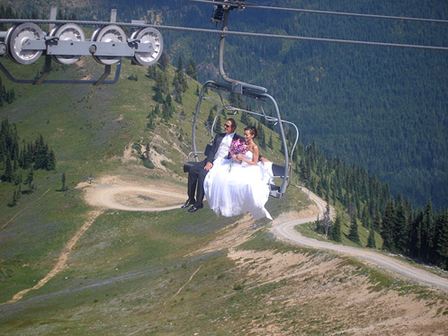
Many resorts rent out their facilities for business and festive events. The Banff Centre, located in the heart of Banff National Park, now courts the meetings, incentives, conventions and events (MICE) market. Some resorts, like Crystal Mountain in the northwest United States and Mont Sainte-Anne in Québec, actively target the destination wedding segment during the summer and rent out the facilities located on their summits.

Source: Crystalmountainresort.com

Package deals: An ideal solution

Increasingly, resorts are turning to package deals. Packages help make a destination attractive to new visitors, increase business during the off season and draw regional clientele who are interested in shorter stays. In addition, packages fulfil the varied needs of multi-generational travellers and non-skiers.

Relaxing getaways

Spas have become synonymous with the mountain resort experience. Health and wellness are now part of resort marketing and can even provide the raison d’être for a get-together, such as this year’s Wanderlust yoga festival held at Squaw Valley USA, California.

Source: First Track

Some resorts are improving their culinary offerings, sourcing food from a variety of providers and focussing on regional products. Last winter, the Samoëns ski resort in the French Alps organized its first Winemakers’ Week. Winemakers from various regions in France set up kiosks and presented workshops to introduce tourists to their wines. In Québec, Mont Saint-Sauveur recently began a major renovation of its bar and restaurant to offer patrons a wide variety of healthy foods and ensure that the bistro is the area’s trendiest restaurant.

Online marketing, mobile apps and new technology

Web marketing is now one of the most vital promotional channels available and some resorts are using it to great advantage. Wild Mountain in Minnesota posted a deal on LivingSocial, a group purchasing site, offering a discount package of lift tickets and equipment rental. The goal was to attract a new clientele of novice skiers.

Source: Livingsocial

Snowbird in Utah, one of the first resorts to develop its own app, has implemented a social media strategy by including a community page on its site where visitors can share content.

Source: SnowBird

Brighton Resort in Utah has installed two automatic cameras on one run to photograph skiers and snowboarders, who can then download their performances on the resort’s Facebook page.

Vail Resorts has created EpicMix, an application for either mobile or online use that enables clients of its five ski resorts to share their stats on their social networks. The information provided is extensive and includes rate of descent, skier and snowboarder ranking, weather and real-time location of contacts. Last winter, 100,000 people activated an EpicMix account and 40% downloaded the mobile app.

Source: Epicmix

New technology has also had an enormous impact on resort operations. At the beginning of the 2011-2012 winter season, Mont Saint-Sauveur and Mont Avila will be installing a radio-frequency identification (RFID) system on their lifts to detect skiers’ cards so they don’t have to show them, just like the system already in place at Le Massif in Charlevoix.

A wide variety of lodging options

A great number of privately owned mountain resort rentals are available online. In Québec and British Columbia, such properties represent approximately 60% of the ads listed on HomeAway. These rentals help increase a destination’s potential customer base and many resort managers feel this type of accommodation complements rental condos and hotel rooms.

However, such rentals have not slowed the real estate developments of groups like Intrawest, Boyne Resorts, Aspen Skiing and Vail Resort. Furthermore, many people are buying second homes located at the base of ski mountains. Finally, resorts are also developing new projects. At Le Massif in Charlevoix, the La Ferme hotel complex will open for business in the spring of 2012, and Mont Sainte-Anne is planning to build a new four-season resort in the next few years.

Source: Le Massif de Charlevoix

Sustainable development as a key element of restructuring

The Whistler resort community has developed a long-term plan, entitled Whistler 2020. It defines various priorities and strategies for achieving the sustainable development of the resort and uses indicators to monitor its progress on its Website.

Source: Whistler 2020

The Quebec Golf Course Owners Association (ATGQ) launched a sustainable development initiative this summer with the creation of the ParTROIS program. This measure helps golf clubs take steps towards eco-sustainable certification.

The National Ski Areas Association in the United States recently added a new component to Sustainable Slopes, its environmental charter for ski areas. Called the Climate Challenge, this friendly competition aims to reduce greenhouse gas emissions. With the help of experts, the employees of the eight resorts participating in the voluntary program took action to fight climate change.


Clientele looking for new experiences, threats of global warming, technological advances and the popularity of social media: the industry does not lack for challenges. However, it is these very issues that have led ski resorts to develop innovative ways of maintaining their attractiveness, and the recent projects launched in Québec hold the promise of a bright future for mountain destinations.


Sources:

– Bast, Morgan. “EpicMix gets nearly 100,000 activations in first season”, buzz.snow.com, April 22, 2011.

– Bergeron, Patricia. «Réaménagement à la base de la montagne- Mont Saint Sauveur se peaufine», carnetduski.com, 13 juillet 2011.

– Kahl, Rick. “Condos on the Cheap,” Ski Area Management, Vol. 50, No. 2, March 2011, p. 54.

– Morrison, Alastair M. “International Trends in Mountain Tourism, Marketing and Development,” Belle Tourism Consulting, 2010.

– Rufo, Samantha, Ken Castle, and Katie Bailey. “Best/Worst Marketing 2010-2011,” Ski Area Management, Vol. 50, No. 3, May 2011, p. 41-45.

– Ski Area Management. “Sustainable Slopes Report Highlights Resorts’ Green Efforts” saminfo.com, July 8, 2011.

– Ski Area Management. “Summer in the Mountains,” Vol. 50, No. 3, May 2011, p. 46-47.

– Urban Land Institute. “Ten Resorts Trends”, www.uli.org, consulted July 13, 2011.

– Watson, Tom. “Brighton offers freestylers an ancillary stoke,” National Ski Areas Association, Vol. 19, No. 3, July 2011.

– Wine Tourism in France. “L’oenotourisme, nouveau sport d’hiver”, winetourisminfrance.com, December 29, 2010.

– World Tourism Organization. “UNWTO congress to debate the future of snow and mountain tourism” www2.unwto.org, March 31, 2011.

See also:

Les activités hors saison pour les centres de villégiature: tendances et nouveautés

La tentation quatre-saisons des stations de ski


Catégories
Products and activities Transportation

Tourist Taxis

The following text is a translation of the French original, which can be found at: (Les taxis touristiques)


Taxi drivers interact with many tourists on a daily basis and sometimes even constitute the first human contact a visitor has on arriving at his or her destination. This realization of the importance of their role has brought significant change to the global tourism industry. Whether on land or water, the mission of so-called “tourist taxis” sometimes goes beyond merely transporting their clients from point A to point B to focus on the overall visitor experience.

Québec taxis: a highly-regulated industry

In Québec, the number of taxi owner permits is restricted. According to the Montreal Economic Institute, in 2010 there were 84 taxis in Sherbrooke, 629 in Québec City and 4,445 on the island of Montreal. When they have a fare, drivers may not travel outside the zone for which they have a permit. These regulations are designed to protect the consumer and ensure quality service.

Montréal-Trudeau International Airport is the taxis’ most coveted client. To avoid disputes, it was decided in 2009 that a draw would be held for the right to purchase the 297 permits for this destination. The greater profit from trips and high volume of business and tourist clientele explain the popularity of this location.

A different kind of taxi service

Tourist taxis are different from other types of taxis in that they focus on the visitors’ experience and helping them discover a given destination. Often, the drivers will either have some relevant training or work closely with the destination’s Tourism Board. These companies usually offer a range of tours, as well as some customized ones.

In Québec City, for example, TaxiCoop Québec offers six tours of the city ranging in length from two to six hours.

  1. Québec City, its life and history
  2. Montmorency Falls and Orléans Island
  3. Québec City and Montmorency Falls tour
  4. Religious sites and surrounding area of Québec City
  5. Québec City adventure tour
  6. Québec City, its life and history (includes a cruise)

These tours, which can also be customized, are conducted by drivers who are certified as tourist guides by Merici College. The hourly rate for a group of 4 people is $65.

There are several reasons to use a tourist taxi, such as:

  • Flight layovers often take up precious travelling time. Rather than spending tedious hours at an airport, some travellers would rather use that time to see as many sights as possible without necessarily renting a car. The solution? Hire a taxi. In Singapore, Taxi Tourist Guides are targeting those travelers, offering their captive clientele guided city tours that leave from Changi Airport and last a minimum of three hours. These guides have been certified by the Tourism Board and the Singapore Taxi Academy. The three-month long theoretical and practical training teaches drivers the main tourist attractions, some history, guiding techniques and client relations.


  • Driving a car when on a wine tasting tour is problematic and possibly dangerous. Several French Tourism Boards have recruited taxi companies in order to resolve this problem. In the Bordeaux region, for instance, visitors can take a guided taxi tour of the region’s great wineries.

Boat taxis

In many cities, bodies of water have at least some impact on transportation. This fact has inspired some communities to provide water-based transportation. Water taxis bring visitors to otherwise inaccessible locations, enable them to avoid long detours and offer a pleasant boating experience. They can be found in a few major cities around the world as well as in some nature parks. We have provided three examples:

  • Rowes Wharf Water Transport, a Boston company that operates a water taxi service, offers transportation to many of the city’s major attractions and has exclusive rights to a few destinations, such as the New England Aquarium and Logan International Airport.

Source : Rowes Wharf Water Transport

  • At New Zealand’s Abel Tasman National Park, water taxis play an important role in getting people around. Since the park has no roads, visitors travel along the coastline either on foot or by kayak. A water taxi is an excellent alternative for exploring the shores, visiting seal colonies on neighbouring islands and making sure the travelers get back to dry land.

Source: Marahau Water Taxi

  • For the past five years, Québec’s own Excursions Maritimes has been providing a water taxi service in the capital region for visitors and residents alike. The company offers a number of different tours and packages from predetermined boarding points such the Quai des cageux on Champlain Boulevard, the Port de Québec Marina and île d’Orléans.

Source: Excursions Maritimes Québec

The company also offers more customized services. For example, passengers can ask to be dropped off at a certain point in the tour and be picked up at the same place a few hours later. In order to offer a wider range of services, the company has developed partnerships with other players in the local tourism industry.

The importance of quality service and innovation

The value of tourist taxis is based on the training of driver-guides, the flexibility and relevance of the services they offer, and how those services mesh with the existing tourism product. Although the taxi industry is highly regulated in Québec, whether they operate in the city or in outlying areas, taxi owner permit holders are free to implement this innovative business model.

Sources:

– Conseil canadien des ressources humaines en tourisme. «Normes de compétence nationales».

– Institut économique de Montréal. «Industrie du taxi: en route vers une réforme», août 2010.

Websites:

– Excursions Maritimes Québec

– Bordeaux Tourism Board

– Abel Tasman National Park

– Rowes Wharf Water Transport

– Singapore Taxi Academy

– TaxiCoop Québec

– City on the Move


Catégories
Ailleurs dans le monde @en Products and activities

What’s new in tourist routes

This article was inspired by Ms. Marie-Pierre Langis, project leader for the Circuit gourmand, la nature aux mille délices, who submitted the topic as part of the contest to select the 1000th TIN analysis. Our thanks to everyone who took part, as well as our partner, Air Transat!

Thematic tourist routes abound in Quebec and around the world; there are routes to discover vineyards, cider, flowers, whales, heritage, history, the farming community, the arts and the St. Lawrence. Visitors can explore them on their own, guided and informed by a GPS, an MP3 player or a smart phone; the number of formats available is on the rise. Technology is enhancing the appeal of this type of tourist product, offering a wealth of possibilities in addition to meeting the needs of autonomous yet demanding tourists who seek experiences related to their personal interests. Welcome to a “tour” of some innovating and inspiring initiatives, as well as some of the factors behind their success. Happy trails!

What exactly is a tourist route?

A tourist route follows an itinerary featuring various sites of interest to tourists. The term “tourist circuit” is most often associated with a loop, while a “route” usually has different starting and ending points. However, these terms are not limited exclusively to these definitions. Routes vary widely in length, content and mode of transport (e.g., on foot, by bike, car or coach). Some are comprised of attractions aimed at the general public, while others group together sites of interest to a niche market.

In urban, near-urban and rural environments, tourist routes and circuits are an ideal vehicle for systematically developing and marketing a carefully planned tourism product. A means for local stakeholders to work together, routes also give regions, which are sometimes off the beaten path, an opportunity to differentiate themselves and attract new visitors. At the same time, travellers enjoy being presented with a number of clearly identified activities along the way that correspond to their interests.

A comprehensive, planned and systematic strategy

Tourism Queensland, in Australia, offers a perfect example of good management practice. This organization developed a strategy to plan the development of tourist routes within its territory and guide tourism-based businesses in the steps to follow. In the case of Queensland, we are talking about self-guided drive routes. The organization has made its guide available online: Developing & Marketing Tourism Drive Routes. Written for all stakeholders involved in planning a tourist route, this document discusses the possible benefits of a tourist route, but also mentions what it cannot do:

  • single-handedly solve all the problems facing a region’s tourism industry
  • provide a substitute for low-quality tourism products
  • easily promote a region
  • be developed quickly and inexpensively

According to Tourism Queensland, the partners involved in a thematic tourist route must make a commitment and, although they can be used to represent a large number of products, a single bad experience can ruin the reputation of all the participants along the route. After explaining how tourist routes work and listing the pitfalls to avoid, the guide provides a flow chart of the entire process, listing all the steps involved and the organizations to consult at each stage. By taking the reins, Tourism Queensland is helping ensure that its tourist routes are developed systematically and are of high quality.

Effective marketing relies on technology

A route’s use of effective marketing technology is increasingly a factor in its success. Well-equipped visitors–and there are more and more of them–want to be self-sufficient and appreciate being given the means to do so. At the very least, a route must have a Website with dynamic mapping and the option of printing the map. Many destinations now provide MP3 audio guides for download. Now, however, mobile technology is becoming indispensable, thanks to the myriad possibilities it offers. Several destinations have developed mobile applications or created Websites that enable users to view the route directly on their smart phone or GPS, locate businesses through augmented reality or even access a wealth of information simply by scanning 2D barcodes (Flashcode).

For more information on these technological tools, please see:

Le Web mobile, choisir sa présence et sa stratégie marketing

GPS et tourisme: Suivez la direction!

La réalité augmentée au service de l’expérience client

La démocratisation des audioguides: l’ère du numérique

Les «mutations génétiques» du code-barres traditionnel ouvrent des horizons au tourisme

Some eloquent examples

The Route des vins de Bordeaux en Graves et Sauternes Website suggests itineraries that encompass a number of wine-themed regional attractions. Simple and easy to use, the site features a dynamic map illustrating the location of the selected itinerary’s attractions, or visitors can use the map to plan their very own route. Local tourism bureaus also rent out multimedia GPS units to visitors, who can then follow a route at their own pace, receive alerts when they get close to a site of interest and view nearby restaurants. They can also create their own route by selecting the types of sites that interest them. A personalized, self-guided tour enabled by technology—now that’s a 21st-century tourism product!

Tourist_routes_Carte1

Tarn Tourisme, another French organization, offers a free iPhone application that presents seven tourist circuits for exploring the region by car. Travellers follow a map identifying the attractions or a list of steps displayed on their cell phone screen and get information from the videos, audio commentary and photos provided by the application. Certain stages of the route feature a family quiz. This is an excellent way to motivate children when sightseeing, for the teams with the best results of the week win prizes! For more details, view the Tarn Tourism video (in French) that introduces the mobile application.

Tarn_circuits_touristiques

Source : Tourisme-tarn.com

Strength in numbers

To improve and better coordinate the promotion of tourism in their regions, five Wallon provinces in Belgium have developed several initiatives, including Tourisme GPS, a collection of more than 170 multimedia GPS tourist circuits downloadable from the Website. Visitors input their preferences, such as mode of transport, geographic area or starting city, use key words or select a route from a list of favourites.

Tourisme_gps

Source: Tourismegps.be

Factors of success

Taken from various studies on the topic (see the sources listed at the end of this article), the prerequisites below are key elements for the development of a successful tourist route or circuit. Stakeholders must have:

  • a well-established high-quality resource to provide a focus or theme
  • familiarity with the target clientele
  • cooperation among the stakeholders involved
  • a clear, shared vision the image to project
  • a sufficient number of businesses and attractions
  • high-quality tourism products
  • a consistent level of quality from one supplier to another
  • quality controls
  • a common time schedule
  • effective signage
  • complementary tourism services and infrastructure (toilet facilities, regional tourist information, accommodations, restaurants, etc.)
  • a dedicated resource to provide a framework for the member businesses
  • a publicist
  • high-quality promotional tools with attractive visuals
  • creative use of technology

The situation in Quebec

Tourisme Québec lists some 46 thematic tourist routes and circuits, while the Association de l’agrotourisme et du tourisme gourmand (formerly the Fédération des Agricotours du Québec) proposes forty or so on its site under the heading “Québec Routes and Circuits for Food Lovers.” There are also a number of local initiatives that enhance what Quebec has to offer tourists.

It would appear that this type of tourist experience is particularly attractive to non-Quebeckers. In fact, visitor statistics from the Bonjour Québec.com site show that markets outside Québec have a greater tendency to opt for this type of product. Approximately one-third of site visitors overall are from outside the province, but this number climbs to nearly 60% when the topic is specifically tourist routes and circuits.

Quebec could actually take some inspiration from the Tourism Queensland initiative. For example, a comprehensive, planned strategy would give businesses wishing to develop a tourist route or circuit a procedure to follow. Such a strategy could also be used to organize a destination’s different themed attractions into separate centres of tourism, leading to more effective marketing on the global marketplace. Technological tools, shared strategies, unique routes—let your imaginations run wild!

Sources:

– Berki, Mónika and Janos Csapó. “Existing and future tourism potential and the geographical basis of thematic routes in south Transdanubia, Hungary,” University of Pécs, Faculty of Sciences, Institute of Geography, Department of Tourism, 2007.

– Lourens, Marlien. “Route tourism: a roadmap for successful destinations and local economic development,” Development Southern Africa, Vol. 24, No. 3, September 2007.

– Rob Tonge & Associates, Queensland Heritage Trails Network, Queensland Government and Tourism Queensland. “Developing & Marketing Tourism Drive Routes”, June 2004.

– Rogerson, Christian. “Tourism Routes as Vehicles for Local Economic Development in South Africa: The Example of the Magaliesberg Meander,” Urban Forum, Vol. 18, No. 2, Springer Science and Business Media B.V., 2007.

– Zins Beauchesne and Associés. Agrotourisme : Diagnostic sectoriel/plan de développement et de commercialisation – Rapport d’analyse de la situation et diagnostic sectoriel, June 2006.

Websites:

– Route des vins de Bordeaux en Graves et Sauternes

– Terroir et Saveurs.com

– Tourisme GPS

– Tourisme Tarn

Catégories
Products and activities

A look at the cruise destinations competing with the St. Lawrence

The St. Lawrence River is still a relatively new destination on the North American cruise market. Recent federal and provincial spending on ports of call has helped upgrade reception facilities and improve the quality of the visitor experience. In this highly competitive industry, where a single cruise ship call can generate thousands of dollars as well as significantly increase a destination’s visibility, do we measure up to our competitors? Firstly, who are they? Secondly, how do they market themselves and what is their market share of this sector?

Some basic observations about Canada and Québec

In 2007, Business Research and Economic Advisors (BREA) calculated that 2 million cruise passengers visited Canada during nearly 1,000 calls. In total, the industry generated some $2.3 billion and created 16,600 jobs. BREA estimates that 6% of this money was spent in Québec while 21% was spent in the Maritimes. In 2009, Québec welcomed some 166,000 passengers and 63,000 crew members. According to estimates from the Québec Ministère du Tourisme, cruise passenger spending will rise from $73 million to $275 million by 2014, an annual growth rate of 17%.

Table 1: St. Lawrence River ports in 2009:
Number of calls and number of passengers


Source: Visitor statistics from 2006 to 2010, compiled by the Québec Ministère du Tourisme

The Maritimes

A well-established cruise destination, the Maritimes have engaged in promotional and representational efforts for many years. They can be considered both competitors and business partners, because Maritime calls can enhance the itineraries of cruises headed to Québec.

The primary ports of call are Charlottetown, Gros-Morne, Halifax, Saint John and Sydney. Though history is the main attraction (museums, heritage sites, historic villages), outdoor recreational activities are also a big draw (hiking, beaches, kayaking, golf, whale-watching and other excursions). Table 2 illustrates the cruise visitor numbers recorded for the year 2009 in the major Maritime ports of call; Québec City was added by way of comparison.

Table 2: Cruise statistics for the Maritimes – 2009

* 2008 data

According to a 2008 study by the PEI Tourism Research Centre, 80% of the cruise passengers visiting Charlottetown came from the United States, 69% were 55 years or older and 85% were on their first visit to the Maritimes.

Source: Vacationstogo.com

New England

Let us take a closer look at our neighbours to the south. New England benefits enormously from its proximity to the major client bases of New York and Boston, which are the departure points for numerous cruises heading to Canada, as well as those for Bermuda and the Caribbean. The table below provides a brief overview of the cruise industry spin-offs generated in New England.

Table 3: Overview of the cruise statistics for New England – 2008

Source: CLIA, 2008 State Economic Fact Sheets

According to these findings, the state of New Jersey attracts fewer passengers than the province of Québec. However, according to figures from BREA, Québec attracted far fewer cruise-related spin-offs, generating only $138 million in 2007, compared to $387 million for New Jersey in 2008. In terms of employment, all of Eastern Canada (including the Maritimes) generated only 2,000 cruise-related jobs, compared to the 6,814 for New Jersey recorded by the CLIA.

Cruise Maine presents the change over time in the number of cruise ship calls since 2003.

Table 4: Number of stopovers in Maine ports, 2003 to 2009

*Projected figures
Source: Cruise Maine

According to a 2008 study by Todd Gabe and Jim McConnon, two economists from the University of Maine, cruise passenger spending injects approximately $5.8 million to $8 million into the Portland regional economy each year. On average, a single passenger spends about $81 per day, the major part of it spent as follows:

  • food – $28
  • clothing – $21
  • arts and jewellery – $6
  • household items – $5
  • transportation – $5

In 2008, Portland welcomed a total of 48,000 passengers, during 35 calls. In 2009, the numbers rose to 69,852 passengers during 45 calls. Reservations for 2010 are predicting 76,867 passengers during 70 calls.

The Baltic Sea

The Baltic Sea region is booming. Europeans are increasingly attracted to the area and North Americans are also showing greater interest in these destinations. The biggest consumers of cruises, North Americans are already well-acquainted with destinations like the Caribbean, the American West Coast and Alaska. The search for new destinations has led them to look at Mediterranean and Northern European cruises. The Baltic Region’s position on the cruise market is, in many ways, similar to that of the St. Lawrence: a destination offering culture, history, Northern landscapes, outdoor activities, coastal villages, etc.


Source: Vacationtogo.com

Baltic Sea destinations vary widely in terms of economic spin-offs and port facilities.

Table 5: Most popular Baltic Sea ports: wharf length and cruise statistics – 2008-2009

Source: Cruise Europe.com

Port facilities in the Baltic Region are undergoing numerous improvements. The city of St. Petersburg has built a new terminal for cruise passengers that should be completed sometime in 2010. Hamburg inaugurated its new cruise terminal in August 2009. The CLIA also reports that Stockholm, which has been operating one new terminal since 2008, will be opening another in 2010. It will house a museum of photography, among other things.

The Baltic Region has also decided to take steps to reduce the environmental impact of cruises by pushing the Clean Baltic Shipping Program. This plan has five main objectives:

  • encourage ships with low sulphur and nitrogen emissions
  • reward the initiatives that best reduce the environmental impact
  • introduce a certification process
  • equip all boats with wastewater treatment systems
  • install a wharf-based power supply system for every port in the region by 2015

All signs indicate that St. Lawrence ports are competing in an increasingly well-organized and diverse market. This means it is vital to continue developing port facilities and, more importantly, work to create a high-quality product that stands out from the competition.


Article written for the Ministère du Tourisme intelligence gathering project


Sources:
– Business Research & Economic Advisors (BREA). “The Economic Contribution of the International Cruise Industry in Canada 2007,” NorthWest CruiseShip Association, Cruise Newfoundland and Labrador, Cruise the Saint Lawrence, Atlantic Canada Cruise Association, Cruise BC, p. 4.
– Cruise Europe, Cruiseeurope.com.
– Cruise Line International Association (CLIA). “2008 State Economic Fact Sheets”, Cruiseindustryfacts.com, consulted January 2010.
– Cruise Line International Association. “Fantastic Cruise Record for Stockholm, Fast Facts”, November 2009, p. 3.
– Cruise Maine, Cruisemaineusa.com.
– “Cruise ships brought $3M to P.E.I. in 2008”, Telegraph Journal, May 2nd, 2009.
– Department of Tourism, Culture and Recreation. Backgrounder Year-End: “Provincial Tourism Performance 2009 and Early Tourism Outlook 2010”, New Foundland and Labrador, Tcr.gov.nl.ca, consulted June 23, 2010.
– Malhère, Manon. “Baltic Region: OPS for Sustainable Port Development”, Europolitics Regional, Europolitics.info October 12, 2009.
– Ministère du Tourisme.  “Les statistiques d’achalandage de 2006 à 2010”, 2010, special compilation.
– Peter, Tom. “Cruising right along; Ports officials pleased with tourist season”, The Chronicles Herald, Halifaxemployers.com, January 4, 2010.
– UK and EIRE, “Seatrade Cruise Review”, Seatrade Communications, September 2008, p. 45.
– Sondage effectué auprès des passagers et membres d’équipage au cours de la saison 2009, ministère du Tourisme, 2009.